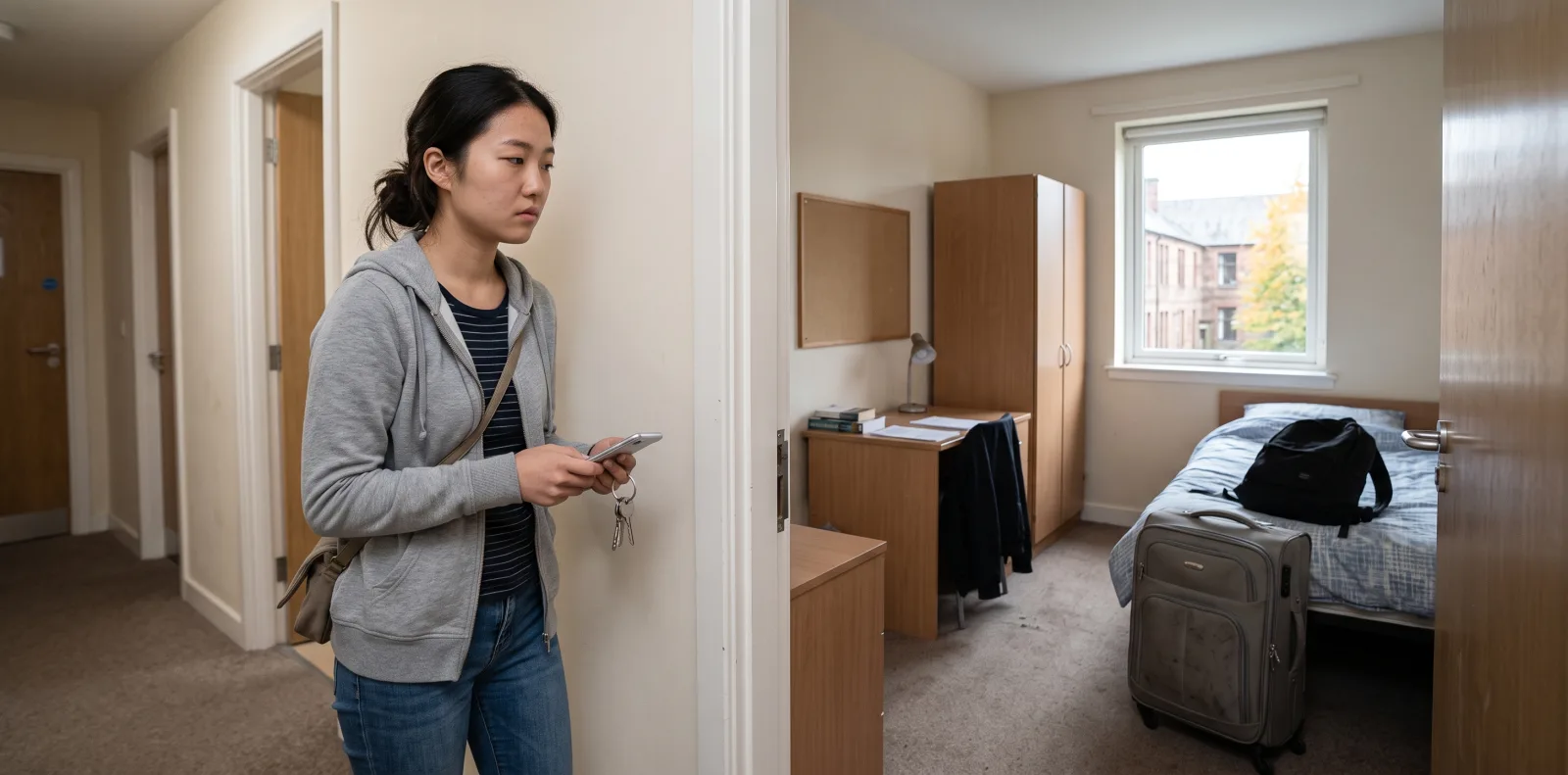

The seminar room moment no one prepares you for#
You find the room, find a seat, and do the maths without meaning to. The student to your left could plausibly be your child. Someone mentions a television programme from your childhood as if it were ancient history, and nobody laughs, because nobody else has heard of it.
It is a specific kind of loneliness, and it hits before the coursework does. You haven't found the library yet, and you've already decided you don't belong there.
The maths is probably wrong, though. Mature students, defined by UK higher education bodies as those starting an undergraduate course aged 21 or over, made up around 37% of all undergraduate entrants in the UK in 2019/20, according to House of Commons Library analysis of HESA data. That's roughly one in three people on the average course, not the lone exception the empty chair suggests. The age gap is a fact to manage, not a problem to hide from, and the evidence helps more than pep talks do.
What actually counts as a mature student, and how common are you#
"Mature student" is a specific administrative category, not a vibe. HESA, UCAS and the Office for Students define an undergraduate mature student as someone who is 21 or over at the start of their course. For postgraduate study the threshold moves to 25. Student Finance England runs its own age-related tests for independent status, a separate question from whether your university calls you mature, so the two definitions can pull in different directions on a funding form.
Numerically, mature students are not a niche group. Alongside the 37% of undergraduate entrants figure, House of Commons Library analysis puts mature entrants at half of all postgraduate entrants in 2019/20, around 202,000 people. HESA's Higher Education Student Statistics release for 2024/25 shows the proportion of first-degree entrants aged 30 or over rising from 11% to 15% over five years, even as the same report flags a decline in part-time study that has hit mature students hardest. Office for Students data separately shows the participation rate for students over 25 climbing from 25.5% in 2018/19 to 29.9% in 2024/25.
None of that erases the feeling of being the oldest person in a specific room on a specific Tuesday. Cohorts cluster unevenly: a part-time evening course looks nothing like a traditional three-year course recruiting mostly from school leavers. What the numbers correct is the story that you're rare. You're just distributed unevenly across courses and time slots.
The advantages an eighteen-year-old simply hasn't had time to build#
Some of what mature students bring cannot be taught in a study skills workshop, because it comes from having already run a household, managed a team, or survived a redundancy. A 2023 study of mature students' transition into an English university, published in the Journal of Further and Higher Education, found many arrived with genuine confidence built from prior work and study experience, even while still adjusting socially to campus life. The confidence is real. It just doesn't automatically extend to feeling like you belong at the seminar table.
In practice, this shows up as a different relationship with the material. You have almost certainly written a difficult email or made a decision on incomplete information, and a case study asking you to do the same thing on paper holds less mystery. Time management, for anyone juggling a course around work or caring responsibilities, tends to be non-negotiable rather than aspirational, which flattens some of the procrastination that younger cohorts describe.
None of this makes mature students better in any blanket sense. Younger classmates often outpace you on stamina for late library sessions or comfort with fast-changing technology. The advantage is specific: judgement under uncertainty, built from years you'd honestly rather not have needed.
Fitting in without pretending to be twenty-two again#
The instinct to prove you belong can push mature students toward two unhelpful extremes: over-identifying with younger classmates' social patterns, or withdrawing entirely and treating the degree as a transaction between fees and a certificate.
Neither serves you well. The 2023 Journal of Further and Higher Education study found its mature student participants were often academically engaged from early on, keeping up with reading and contributing in seminars, but socially and emotionally still on the margins of university life well into their first year. Academic confidence and social belonging developed on different timelines, and the gap between them was where a lot of the discomfort lived.
That gap is manageable once you stop expecting to close it the way an eighteen-year-old would, by moving into halls and hitting every social event on the calendar. A coffee before a seminar or one small society tied to your actual interests does more than forcing yourself into a student union crawl you won't enjoy. The goal isn't to look like the other students. It's having two or three people who'd recognise you in the corridor and ask how the essay went.
The assumptions staff and classmates make, and how to handle them#
Being visibly older changes how people read you before you've said a word. Some staff assume you already know how to reference properly or use the library catalogue, when your last formal study might predate both by two decades. Others swing the other way, treating you as a fragile beginner who needs encouragement you never asked for. Younger classmates sometimes defer to you automatically in group work, expecting you to take charge, or leave you out of social planning on the assumption you wouldn't want to come.
None of this is usually malicious, and most responds well to a plain, unbothered correction. If a tutor assumes a skill you don't have, ask the question. Seminar rooms are one of the few academic spaces where admitting a gap costs almost nothing and saves weeks of guessing. If a group assumes you'll lead, decide deliberately whether you want that role.
The Office for Students, which tracks equality of opportunity across the sector, lists mature students among the groups still facing measurable gaps in outcomes compared with younger entrants, evidence that these frictions are structural rather than personal failings to absorb quietly.

Finding your people when the standard mould doesn't fit#
University social infrastructure is built around eighteen-year-olds moving away from home for the first time. Freshers' fairs, halls socials and the entire first-week calendar assume free time and priorities most mature students don't have. Finding that mould uncomfortable isn't a personal failure. It wasn't built with you in mind.
What tends to work better is finding smaller, more specific communities. Many universities run mature student societies or dedicated support services, and institutions with a long history of adult learners, the Open University being the clearest example, or campuses like the University of Essex, where over a quarter of students are mature learners, show what a critical mass of older students looks like day to day. Course-specific groups, a WhatsApp thread for your seminar group, often build stronger connections than anything organised centrally, because they form around a shared task rather than a shared age.
The National Union of Students has also flagged financial pressure and caring responsibilities as recurring reasons mature students feel isolated. A study group that meets during school hours does more for belonging than a social calendar you can't attend.
The point where the age gap actually stops mattering#
Somewhere around the middle of a course, for most mature students, the age gap quietly stops being the main story. It doesn't vanish, but it gets crowded out by more urgent, shared concerns: a looming deadline, a confusing reading, a supervisor who's gone quiet. Group work organised around a task rather than a friendship group flattens age differences fast, because a project due on Thursday doesn't care how old anyone is.
Placements and final-year projects often accelerate this, rewarding the judgement and reliability that come with age. By that stage, classmates who once seemed unreachably young are colleagues on a shared piece of work, and the maths from that first seminar has stopped being relevant to anyone, including you.
Mature student questions worth asking before you enrol#
What actually counts as a mature student in the UK?#
For undergraduate study, HESA, UCAS and the Office for Students define a mature student as someone aged 21 or over at the start of their course. Postgraduate study uses 25. Student Finance England applies its own separate age tests for financial independence, so check funding rules on their own terms.
How many other mature students will really be in my seminars?#
More than the empty chairs suggest. House of Commons Library analysis of HESA data puts mature students at 37% of undergraduate entrants and 50% of postgraduate entrants in 2019/20, and HESA's 2024/25 release shows first-degree entrants aged 30 or over rising from 11% to 15% over five years. Distribution varies by course: a part-time or evening course usually skews older than a full-time, school-leaver-heavy one.
Will my old qualifications and grades still count?#
Most UK universities run separate admissions routes for mature applicants, weighing relevant work experience and Access to Higher Education diplomas alongside, or instead of, traditional school qualifications. Requirements differ by institution, so check admissions pages directly.
Is it normal to feel like a fraud in seminars, even with decades of experience?#
Yes, and it's documented. The 2023 Journal of Further and Higher Education study on mature students' transition found many arrived academically confident but still socially and emotionally on the margins of university life during their first year. Feeling capable and feeling like you belong develop on different timelines.
Does studying part-time make isolation worse?#
It can, partly because part-time study leaves less time on campus for informal contact, and HESA's 2024/25 data shows mature students have been hit hardest by the broader decline in part-time enrolment. Building small, specific connections, a study group or a course rep contact, matters more when your time on site is limited.
Are mature students actually more likely to drop out?#
Office for Students data shows a real continuation gap between young and mature entrants, which widened to 9.4 percentage points by 2020-21. The Higher Education Policy Institute argued in early 2026 that this gap is poorly understood because age is rarely examined alongside social class, disability or caring responsibilities, the more likely underlying drivers. The gap is real, but it reflects circumstances more than capability.
What if a lecturer or younger student makes an unhelpful assumption about me?#
Correct it plainly and move on. Most assumptions, that you already know a skill or that you need extra reassurance, aren't intended unkindly, and a direct response resolves them faster than letting them sit unaddressed.