
Nobody is calm at 8am, which is exactly why the sequence matters#
Clearing has a reputation for chaos. Phones ringing off the hook, places vanishing by mid-morning, a scramble for whatever is left. That reputation is mostly wrong, and believing it makes people do worse on the day.
Clearing is a queue with rules. The rules are published, the timings are fixed, and almost everything that goes badly on results day goes badly because someone did not know what happens at 1pm. Once you can see the shape of the day, the panic has nowhere to go.
Clearing 2026 is still running as of mid-September and stays open until 19 October, so this matters now as well as next August.
What Clearing actually is, in plain terms#
Clearing is the system UCAS runs to match students without a confirmed university place to courses that still have vacancies. It is not a consolation round. High-tariff universities use it routinely, and in the 2026 cycle they added thousands of placed applicants over results weekend.
A few terms you will hear all day.
Your firm choice is the offer you accepted as your first preference. Your insurance choice is the backup, usually with lower grade requirements. If you meet your firm offer, the place is confirmed automatically and Clearing does not apply to you. If you miss both, you become eligible for Clearing.
Your Clearing number is a short reference that appears in your UCAS Hub once you are eligible. Universities ask for it, along with your Personal ID, which is the ten-digit number on your application. Those two numbers are what let an admissions team pull up your file while you are on the phone.
The UCAS Hub is the online account where your application lives. It is where your status updates on results day and where you eventually add a Clearing choice.
Clearing opened on 2 July 2026 and closes on 19 October 2026. The busy phase started at 8am on Thursday 13 August, which was A-level results day in England, Wales and Northern Ireland. Scottish results landed earlier, on 4 August, with Scottish Clearing opening at 9am that day.
Before 8am: twenty minutes that save you two hours#
Everything in this section can be done the night before, and almost nobody does it.
Write your UCAS Personal ID on paper and put it in your pocket. Phone batteries die, and the Hub is not the fastest thing to log into while shaking.
Build a shortlist of five to eight courses you would genuinely accept, with the Clearing hotline number for each one saved as a contact. The UCAS search tool lists vacancies from the moment Clearing opens in July, so this is a July job, not an August one. Being honest about "genuinely accept" matters, because the alternative is agreeing to three years of something you picked at 9:40am.
Write down your actual grades in every subject, including GCSE maths and English, because some courses have a specific requirement there and the person on the phone will ask.
Make sure you can take a call. A landline in a quiet room beats a mobile in a school hall. If a parent or carer is going to help, agree in advance that you do the talking, because universities will not discuss an application with someone who is not the applicant.
08:00 to 09:00: what actually appears on screen#
Two things happen at once, and they do not always agree with each other.
Your school releases your results slip. Separately, exam boards send results directly to UCAS, and the Hub updates your application status at around 8am.
The Hub tells you one of three things. Your place is confirmed, in which case you are done. Your firm was unsuccessful but your insurance was accepted, in which case you are also done unless you want to change. Or both were unsuccessful, and a Clearing number appears.
There is a fourth, more confusing state. Some applications sit as "unconditional changed course" or stay unchanged for a while because the university has not processed the decision yet. That is normal. Universities work through thousands of files that morning, and a blank screen at 8:05 is not a rejection. If nothing has moved by mid-morning, ring the university and ask.
The vacancy lists refresh throughout the day. Courses appear as well as disappear, because universities release places as their own confirmation decisions settle. The idea that everything worthwhile is gone by 10am is not how it works.
The call: what they ask, and what they are deciding#
The call is shorter and less interrogative than people expect. Most run to five or ten minutes.
You will be asked for your Personal ID and Clearing number, your grades subject by subject, and which course you are ringing about. Then, usually, one open question: why this course.
You do not need a speech. Two or three sentences that show you know what the degree covers is enough, and it is the difference between sounding like someone who wants this course and someone working down a list. If you are ringing about a subject you did not originally apply for, say why the change, and say it plainly.
What they are deciding is whether your grades and profile clear their threshold for that course, which may be lower than the advertised entry requirement or may not be. Some will decide on the call. Some take your details and ring back within a few hours, which is normal and not a brush-off.
If they say yes, what you have is an informal verbal offer. It is not binding on either side, and it is not a place until it appears in your Hub. You can collect several. Collecting several is sensible.
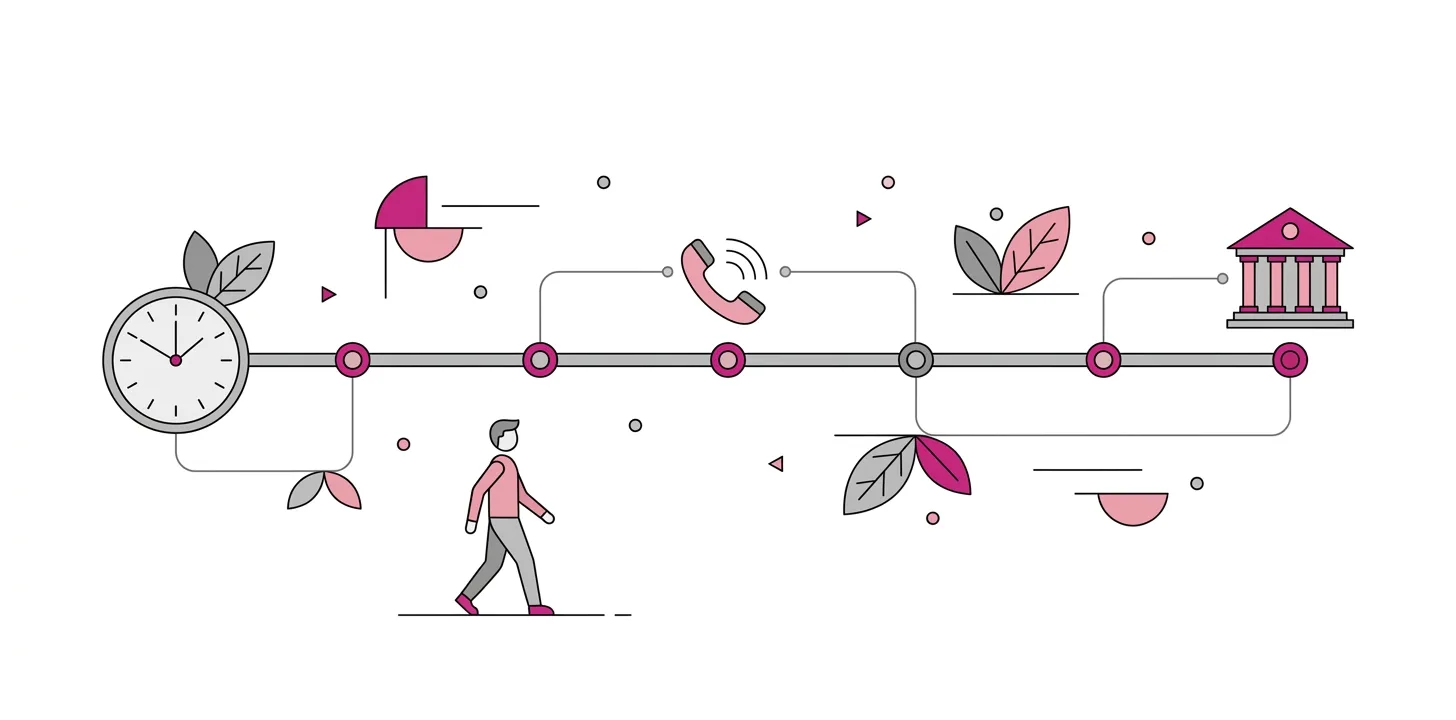
13:00: the gate that changes the shape of the day#
You cannot add a Clearing choice in the UCAS Hub until 1pm on results day.
This single rule explains the whole structure. The morning is for calls and the afternoon is for committing, which is why the sensible strategy is to gather informal offers until lunchtime rather than trying to lock something in at 8:30.
You can only hold one Clearing choice at a time. When you add it, that university has to accept it before it becomes a confirmed place, and if they decline you can add another. So the sequence is: collect offers, pick the one you want, add it, wait for it to turn green.
Add the choice the same day if you can. A verbal offer that sits uncommitted for forty-eight hours can evaporate, because the university is filling the same course from other calls.
If you did better than expected: self-release and its one-way door#
Students who beat their predicted grades sometimes want to trade up. The mechanism is self-release, which lets you decline the place you have already been confirmed for and enter Clearing.
It works, and it is genuinely irreversible. Once you release yourself, your original place is gone and the university is under no obligation to take you back.
The only safe order is: ring the university you actually want, get a verbal offer from them first, then self-release, then add the choice. Doing it the other way round means standing in the open with no place at all.
Universities also run adjustment-style arrangements informally through Clearing, so ringing to ask is free. The release is the part that is not.
After the day: Clearing does not close for another two months#
Results day is the loudest part of Clearing, not the whole of it. The system stays open until 19 October, and thousands of places are filled in late August and September, including by applicants who took time to think, by students who withdrew from a course in freshers' week, and by people who applied for the first time in the autumn.
If you are reading this in mid-September without a place, you have not missed it. Vacancy lists are thinner and fewer courses are available with late starts, but the phone lines still work the same way.
Frequently asked questions#
Am I eligible for Clearing if I only missed my firm offer? Not necessarily. If your insurance choice accepts you, that place is confirmed and you are not in Clearing. You become eligible if both firm and insurance are unsuccessful, if you applied after 30 June, or if you declined all your offers.
What is a Clearing number and where do I find it? It is a short reference generated for you once you are eligible, and it appears in your UCAS Hub alongside your Personal ID. Universities use it to identify your application on the phone.
Can I hold more than one Clearing offer? You can hold as many informal verbal offers as you can collect. You can only add one Clearing choice to your application at a time, and only from 1pm on results day.
Do I have to ring, or can I apply online? Most universities still run phone hotlines because a conversation resolves borderline cases faster. Many also take online Clearing enquiry forms. UCAS runs a matching tool, Clearing Plus, that suggests courses based on your application. A phone call is usually quicker than waiting on a form.
Is a Clearing place worth less than a normal offer? No. It is the same course, the same degree and the same certificate. Universities use Clearing to fill genuine vacancies, including at selective institutions, and nothing on your transcript records how you were admitted.
What if I want to appeal a grade instead? You can request a review of marking through your school, but it takes weeks and you may lose Clearing options while you wait. Ring the university first and tell them a review is underway. Some will hold a place informally.
Can I go through Clearing for a deferred start next year? Sometimes. It depends on the course and the university, and it is worth asking directly on the call. Taking a year out and reapplying in the normal cycle is often the cleaner route.
What happens if I find nothing I want? Reapplying the following year is a legitimate outcome, not a failure. You apply with achieved grades rather than predictions, which strengthens the application, and Clearing will still be there in the autumn if the reapplication does not land.