The Takeaway You Didn't Notice Adding Up#
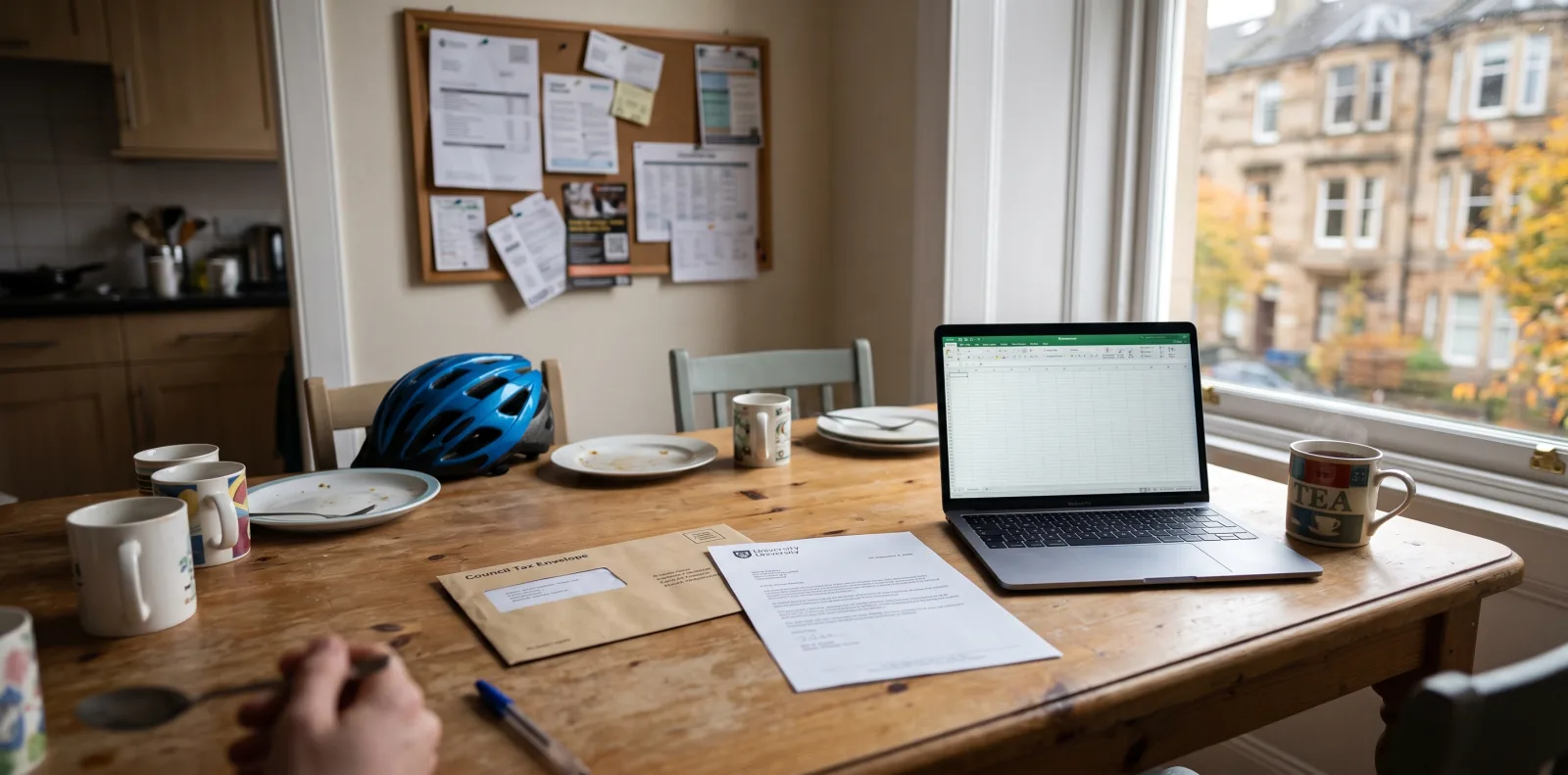
It's Wednesday, nothing's defrosted, and the shared fridge has one sad pepper in it. So it's a £9 delivery again, plus the fee and the tip you feel obliged to add. Multiply that by two or three nights a week across a term, and it's the difference between a loan instalment that stretches and one that doesn't.
Save the Student's National Student Money Survey puts groceries as the second-biggest student expense after rent, around £146 a month, assuming you actually cook with what you buy. The gap usually gets filled by exactly this scenario: good intentions at the shop, then a takeaway out of necessity.
Batch cooking is the practical fix for that failure, not a lifestyle, and one of the few money habits with decent evidence behind it. Most guides skip what decides whether it saves you anything: doing the sums properly, and not giving yourself food poisoning by week three.
What Batch Cooking Really Means, and Why Cost Per Portion Beats Price Per Item#
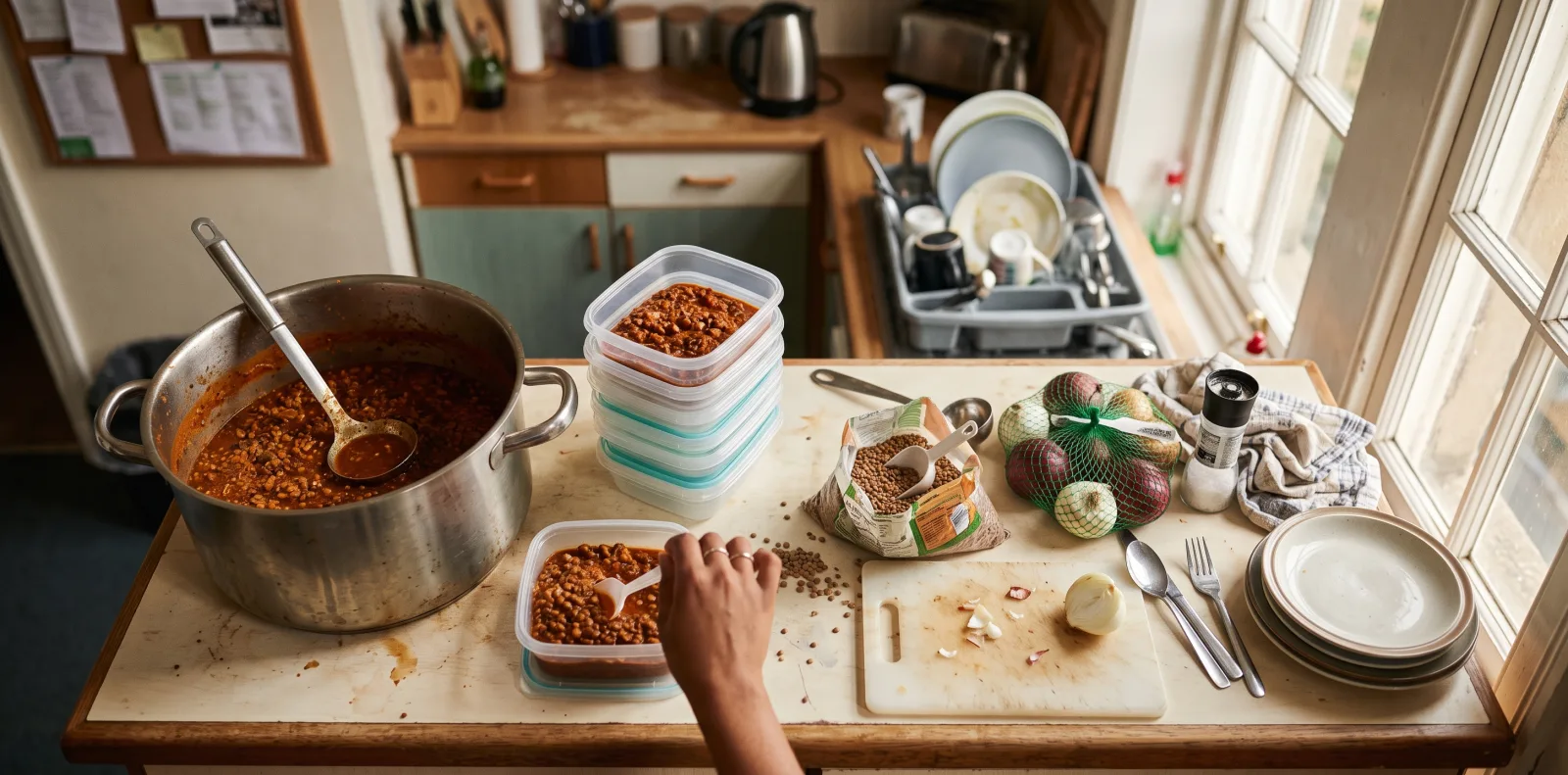
Batch cooking means cooking a large quantity of one dish, splitting it into portions, and freezing or fridging most for the week ahead. It isn't meal prepping a different dish daily, which takes more planning and washing-up than most schedules allow. The appeal is one session, one pan to scrub, several days of dinners.
What matters is cost per portion, not price per item. A jar of curry paste at £2.80 looks expensive next to a 10p stock cube, but if the jar makes six portions and the cube feeds one, the paste is cheaper per plate. Comparing baskets item by item, instead of dividing by meals produced, is why students often think home cooking costs more than it does.
The other concept worth flagging upfront is the safety window: cooked food isn't sterile once off the heat, and every cycle of cooling, storing and reheating risks bacterial growth if handled sloppily. The FSA's specific rules are covered further down, but it's worth naming now, since most student meal guides skip it, and it's the part that actually protects the money you're saving.
Six Meals Worth Learning Before Anything Fancier#
You don't need thirty recipes, just five or six that freeze well, reheat cleanly, and vary enough that you don't hate them by Thursday. Chilli, bolognese and dahl are the classic trio, built on cheap mince or lentils and tinned tomatoes, and none of them turn to mush in the freezer. A big vegetable and lentil soup does the same job for less.
Curries improve after a day in the fridge as the spices settle in, and freeze well in individual portions. Baked pasta is the exception: it freezes better as single portions than as one large dish reheated in stages.
The trick to keeping this repertoire interesting is varying it at the point of eating, not cooking. The same base chilli becomes a jacket potato topping one night, a wrap filling the next, and a nachos base after that: one session, several different-feeling meals.
Shopping to Cut Cost Per Portion, Not Just the Big Shop#
Batch cooking only saves money if the shopping behind it is deliberate. Building meals around dried staples (rice, pasta, lentils, oats) and tinned goods (tomatoes, beans, chickpeas) keeps the base cost low, since these rarely spoil while you decide what to do with them. Swapping some or all of the meat for lentils or beans cuts the most expensive ingredient without changing the method.
Frozen vegetables deserve defending against the instinct that fresh is always better: they're cheaper per gram, don't wilt in a fridge you're not checking daily, and hold up nutritionally. Own-brand staples, and checking the price per 100g rather than the pack price, catch the cases where a bigger bag isn't the better deal.
Planning meals before the shop, not after, avoids the classic trip that produces four unrelated ingredients and a takeaway anyway.
The Kit That Earns Its Cupboard Space in a Shared Kitchen#
You don't need a slow cooker, a food processor and a stand mixer, and buying all three defeats the purpose. One large pot or big non-stick pan is the actual requirement, since it determines how much you can cook in a session. Matching, stackable containers with lids beat old takeaway tubs for quick portioning and less wasted freezer space.
A permanent marker or masking tape for labelling contents and dates sounds unnecessary until you're staring at three identical frozen blocks with no memory of which is chilli and which is bolognese. A decent chopping board and sharp knife matter more than any gadget, since most of the time goes on chopping, not cooking.
A slow cooker is the one genuinely useful upgrade, turning cheap cuts and dried pulses into a finished dish with almost no effort. It's a nice-to-have, and worth checking your accommodation contract first, since some halls restrict extra appliances.
Cooling, Freezing and Reheating Without Giving Yourself Food Poisoning#
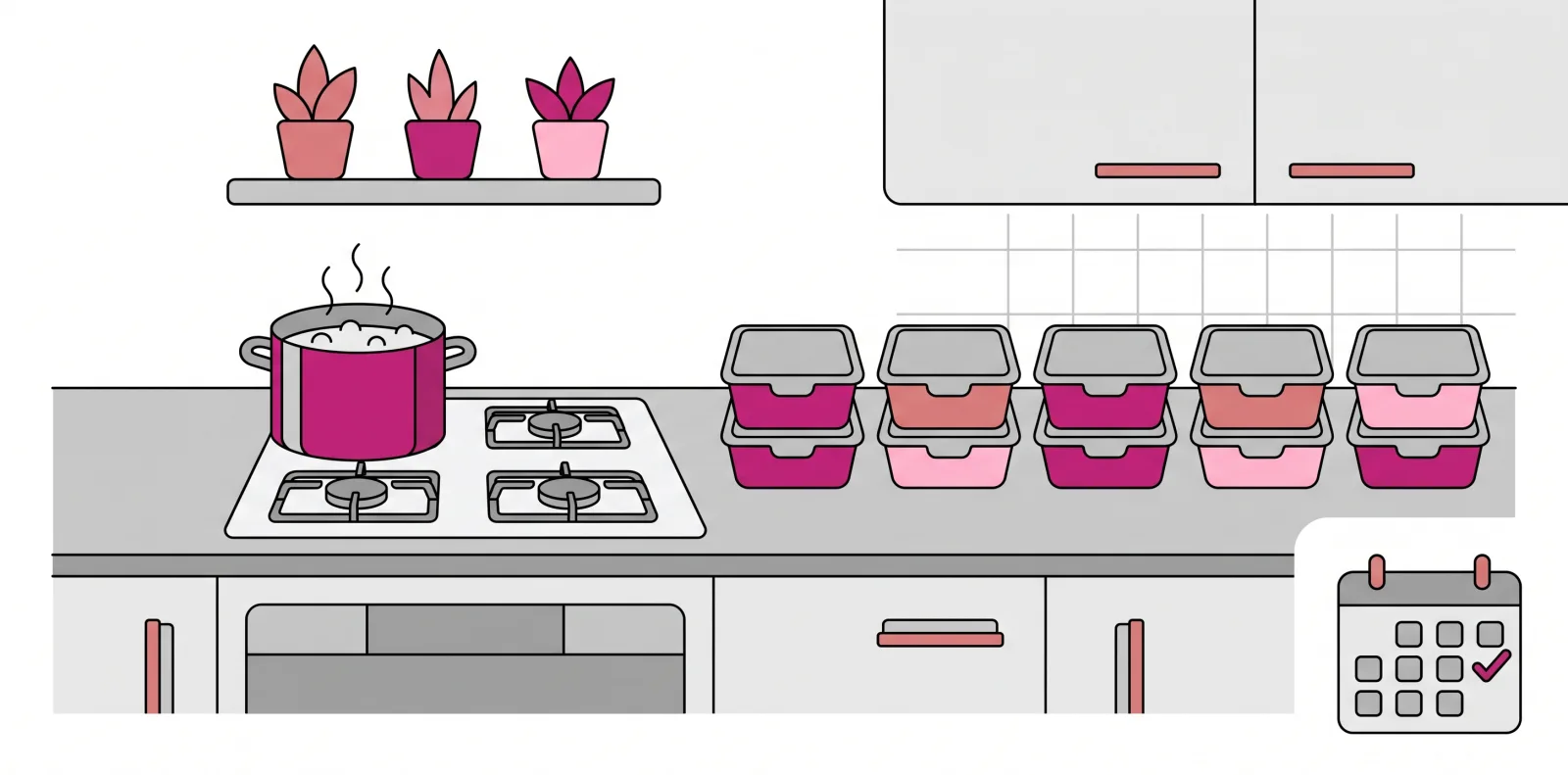
This section protects the money-saving logic of batch cooking, since a binned batch or a week of stomach trouble cancels out weeks of careful shopping. The FSA's core guidance is to cool cooked food quickly, ideally within about two hours, before it goes in the fridge or freezer, since a hot pan left out overnight gives bacteria time to multiply.
Portion food before freezing rather than freezing one large block: it cools faster in smaller amounts, and you only defrost what you're eating that day. Defrosting is safest done slowly in the fridge overnight, in a container that catches drips; a microwave's defrost setting works too, but that food should be cooked straightaway. Once thawed, don't refreeze it raw, and use it within 24 hours.
Reheating has its own rule that's easy to ignore when hungry: only once, reaching a core temperature of 75°C for at least 30 seconds, or 70°C for two minutes, checked in the middle of a dense portion rather than the edges. Rice needs a specific mention, since the NHS flags it separately: it can carry Bacillus cereus, a bacterium that survives cooking as a spore and produces toxins if left at room temperature too long, so cool it quickly and refrigerate within about an hour.
Batch Cooking When You Share a Kitchen With Five Strangers#
None of this works the same way in every kitchen. A student with their own small fridge-freezer faces different constraints from someone sharing with five flatmates fighting over freezer space. Labelling containers with your name, not just the contents, becomes self-defence where food quietly disappears.
If freezer space is the bottleneck, smaller, flatter batches are worth the extra containers, since flat bags freeze faster and stack into gaps a bulky tub can't fill. Cooking when the kitchen is quieter, rather than at 6pm with four people wanting the hob, avoids most of the friction that puts people off after one bad experience.
Batch cooking also doesn't suit every routine. Someone with an unpredictable timetable or no real storage space may get more from simple one-pan meals cooked as needed than from an unused freezer stockpile. Use it where it removes the Wednesday-night takeaway problem, and skip it where it just becomes more washing-up nobody empties.
| Meal (per batch, ~6 portions) | Approx. cost per portion* | Freezes well? | Best use |
|---|---|---|---|
| Lentil dahl with rice | £0.55 to £0.75 | Yes, up to 3 months | Weeknight dinner, lunch reheats well |
| Vegetable and lentil soup | £0.45 to £0.65 | Yes | Lunch, or dinner with bread |
| Beef or veggie mince chilli | £0.80 to £1.10 | Yes | Jacket potato topping, nachos, wraps |
| Bolognese sauce | £0.90 to £1.20 | Yes | Pasta, baked potato, lasagne base |
| Chickpea and spinach curry | £0.60 to £0.85 | Yes | With rice or flatbread |
| Baked pasta bake | £1.00 to £1.30 | Better frozen in single portions | Standalone dinner |
*Estimates based on typical UK supermarket own-brand prices for dried and tinned staples; actual cost varies by shop, season and offers.
Batch Cooking Questions Students Actually Ask#
Is batch cooking actually cheaper than ready meals?#
Usually, yes, once you compare cost per portion rather than price per item. A £2 ready meal looks cheap next to a bag of lentils, but a batch from dried and tinned staples typically works out at well under £1 a portion.
How long can I keep batch-cooked food in the freezer?#
Most home-cooked batches (chillies, curries, bolognese, dahl) are fine for around three months, after which quality rather than safety starts to drop. Label with the date so you rotate through the oldest portions first.
Can I reheat rice safely?#
Yes, but rice needs more care because of Bacillus cereus, a bacterium whose spores survive cooking and can produce toxins if left at room temperature too long. Cool it quickly, refrigerate within about an hour, and reheat only once.
How many times can I reheat the same batch?#
Once. Each cycle of cooling and reheating is another chance for bacteria to multiply, so portion food before freezing rather than reheating more than you need.
Do I need a freezer full of containers to start batch cooking?#
No. A handful of stackable containers is enough to begin, and it's worth adding more only once you know which meals you actually finish.
What if my shared kitchen has no freezer space?#
Cook smaller batches, three or four portions rather than six, and lean on fridge storage for meals eaten within three to four days. It still saves cooking and washing-up time even at a smaller scale.
Is batch cooking worth it if I only cook for myself?#
Yes, arguably more so, since chopping and washing up scale far more slowly than the number of portions produced. Cooking from scratch for one every night is where the time cost usually loses to a takeaway, and batching removes that trade-off.
What's the single biggest mistake students make with batch cooking?#
Not portioning before freezing. A single large frozen block takes far longer to defrost, tempts you into reheating more than you need, and makes it harder to grab a portion on a busy day, exactly when batch cooking is supposed to help.
Batch cooking won't fix a budget on its own, and it isn't right for every kitchen or week. But priced by the portion, not the item, and handled with the FSA's cooling and reheating rules rather than guesswork, it's one of the few food habits that reliably closes the gap between a loan that stretches and a Wednesday-night delivery that quietly doesn't.