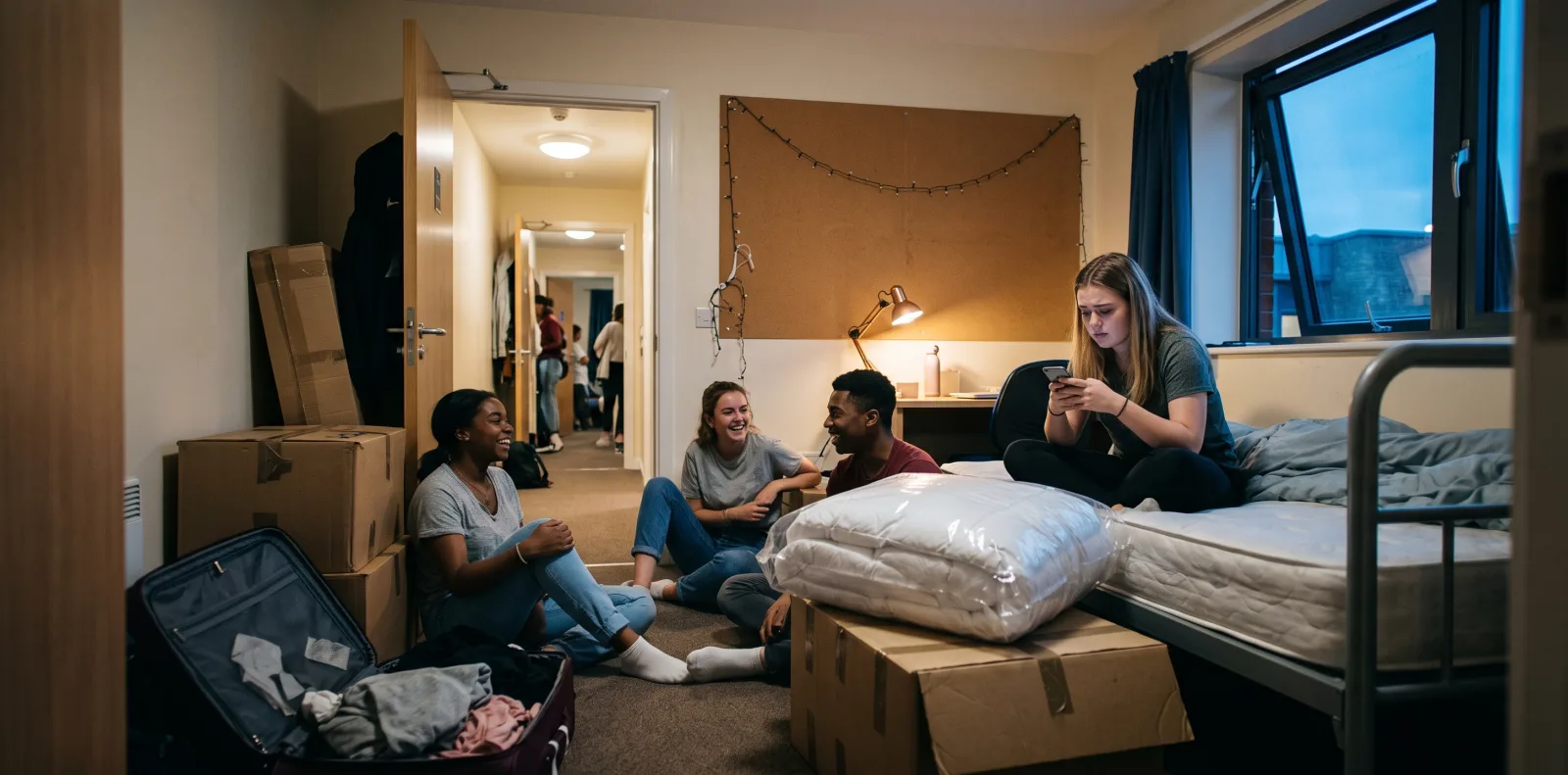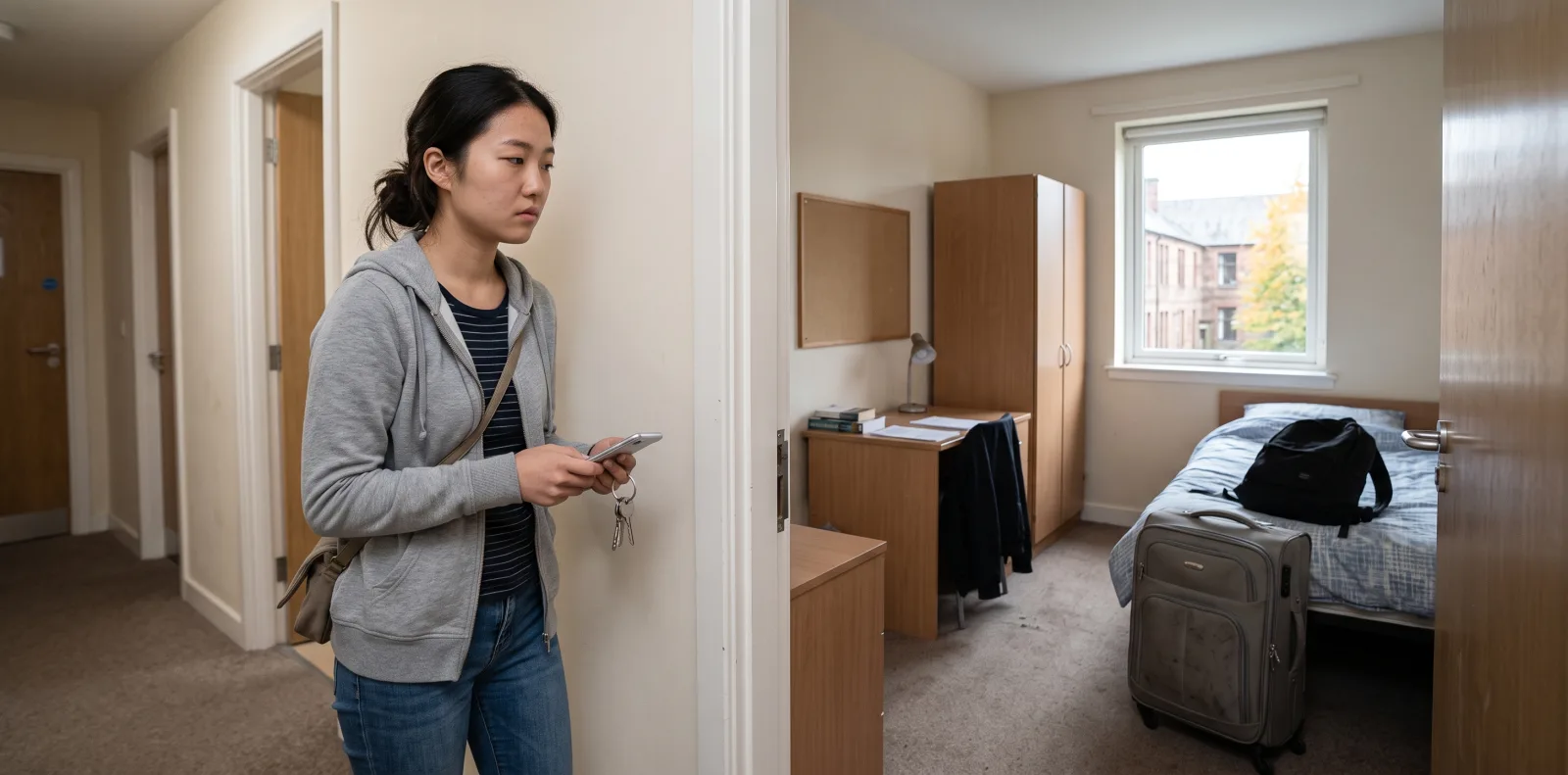

The loneliest place can be a crowded room#
You have a flat full of people. There is a group chat that pings all day. You went to the pub quiz, you sit with the same people in lectures, and your Instagram looks like a good time. And yet, on Sunday evening, you feel a quiet ache that you cannot quite name.
You have friends, so what is wrong with you? Probably nothing. You may simply be experiencing a kind of loneliness that does not show up in a headcount.
This is one of the most common student experiences and one of the least discussed, partly because it feels embarrassing. If you are surrounded by people, admitting you are lonely seems ungrateful or even dishonest. But the research is clear that loneliness is not about how many people are around. It is about whether your relationships give you what you need.
This guide explains what is going on, what UK research tells us, why friendships take longer than you think, and what you can do that is more useful than "just join a society". It is written with warmth and a little humour, because this subject needs both.
Background: what loneliness actually is#
Loneliness is the distressing feeling that your relationships are fewer or less satisfying than you want them to be. That is different from being alone, which is simply a state of being by yourself, and which many people enjoy. Equally, it is different from social isolation, which is an objective measure of how few contacts you have.
This is why you can have 400 followers, a busy flat and a packed diary, and still feel lonely. Loneliness is about the quality and fit of connection, not the quantity.
Two kinds of loneliness#
The sociologist Robert Weiss drew a famous distinction in the 1970s that is still widely used.
Social loneliness is the lack of a wider network: people to do things with, a group to belong to, a place in a community. It is common in the first few weeks, when you have moved away from everyone you know.
Emotional loneliness is the lack of one or two people who truly know you, to whom you can say the honest thing. You can have a wide social circle and still lack this. That is often the source of the "lonely despite friends" feeling.
A third flavour is worth naming. Belonging loneliness is the sense that you do not quite fit the group, course or university culture around you, even if people are kind to you. Students who are the first in their family to attend university, international students, commuters, mature students and those from different social backgrounds often describe this.
What the data says about UK students#
Numbers on loneliness differ because surveys ask different questions, but they point in the same direction: it is widespread.
- Analysis reported by Wonkhe, drawing on official student survey data, found that more than one in four students felt lonely often or always.
- The Student Academic Experience Survey, run by the Higher Education Policy Institute (HEPI) and Advance HE, has repeatedly found substantial proportions of students feeling lonely, and its 2025 edition collected students' comments about how hard it is to make friends as campus life becomes more flexible and some teaching moves online.
- A December 2025 survey of students living in UK halls reported that about one in three said they often feel lonely or isolated, and a further 37 per cent said they feel that way occasionally.
- Research published in 2025 on loneliness in UK university students linked loneliness with psychiatric symptoms, which fits a long line of evidence that loneliness and low mood feed each other.
Those are different samples and different questions, so we should not stack them into one tidy statistic. The consistent message is that if you are lonely, you are in the majority, not the minority.
Search behaviour agrees. Google data for the UK shows searches for "lonely at university" rising from around 40 a month in summer to about 590 in September and 390 in October, as students move into halls and the first weeks of term sink in. The loneliest moment for many people is not the first night. It is week three, when the initial excitement fades and everyone else seems to have settled.
Why you can feel lonely when you have friends#
The friendships are new, and new is shallow#
You have known these people for a few weeks or months. Familiarity, trust and shared history take time to build.
Research by Jeffrey Hall at the University of Kansas, published in 2018, estimated that it takes roughly 50 hours of time together to move from acquaintance to casual friend, around 90 hours to become a friend, and more than 200 hours to become a close friend. Those are averages from a particular sample, not rules, but they make a useful point. If you met people in September, it is normal that you do not yet feel deeply known by Christmas.
Everyone is performing#
Freshers' week trains people to be endlessly confident and cheerful. Everyone is presenting their best self, which makes honest conversation harder. The student next to you may feel exactly as you do and be doing a better impression.
Your old support system is far away#
Friends and family who know you well may be a train ride or a time zone away. Calls and messages help, but they do not replace a person who sits beside you at 9 p.m.
Your identity is in flux#
Moving to university can unsettle your sense of who you are. You are no longer "the funny one" or "the sporty one" in a place where nobody knows that. Loneliness sometimes comes from not yet feeling like yourself.
Social media can sharpen it#
Seeing curated photos of other people's nights out tends to make your own ordinary Tuesday look worse. The evidence on social media and mood is mixed and depends heavily on how it is used, but passively scrolling through other people's highlights is a reliable way to feel left out.
Practicalities get in the way#
Part-time work, commuting and caring responsibilities all reduce the free hours that friendships need. The HEPI and Advance HE survey for 2025 found that 68 per cent of students were working during term time, up from 56 per cent in 2024. Less free time means fewer chances for the repeated, casual contact that builds friendship.
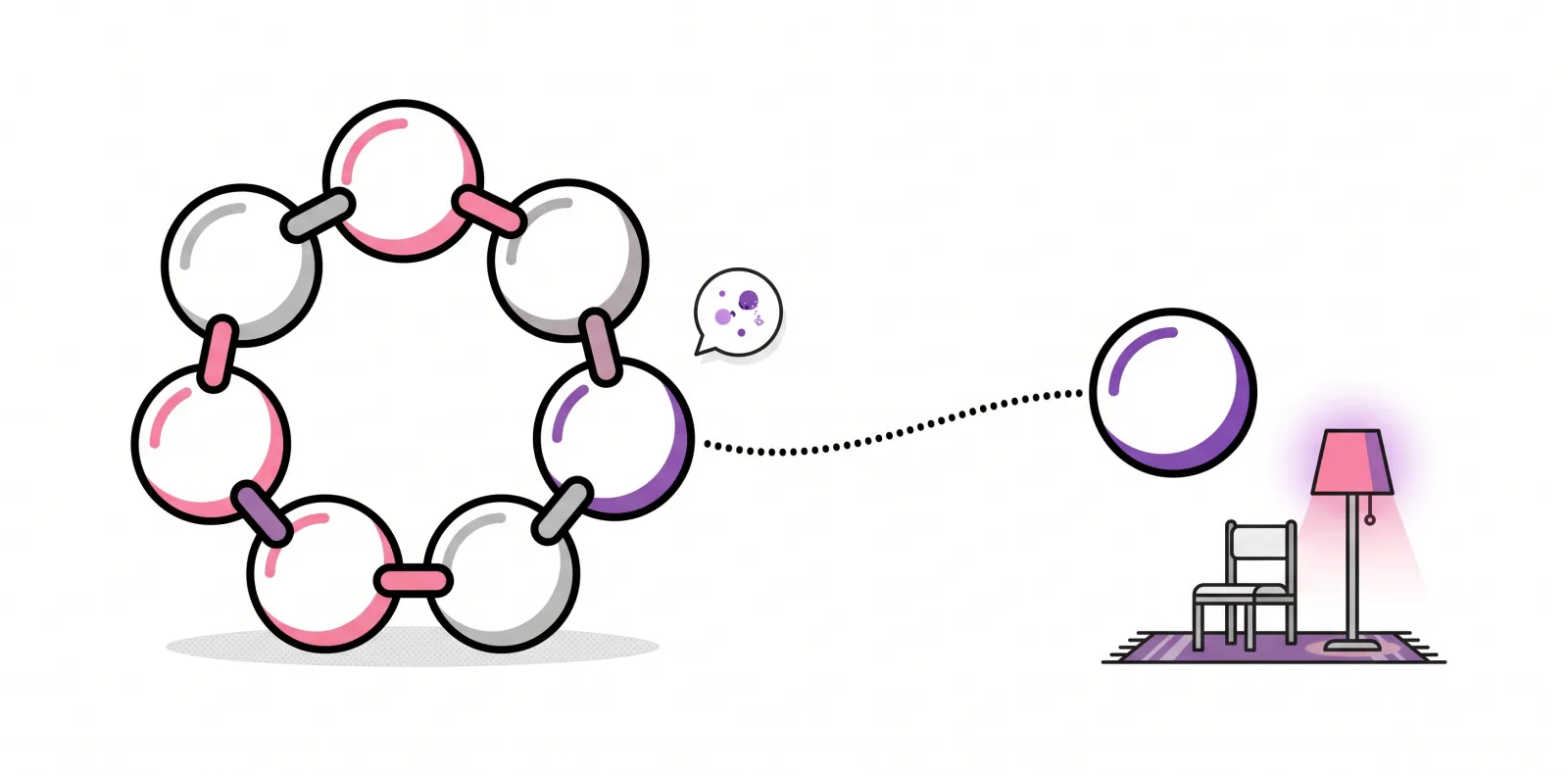
The types of loneliness, and what tends to help#
The table below is a rough guide. Most people experience a mix.
| Type | What it feels like | Common situations | What tends to help |
|---|---|---|---|
| Social loneliness | "I have nobody to do things with" | New starters, commuters, people who moved city | Regular, repeated group activity: a sports club, society, volunteering, a study group |
| Emotional loneliness | "No one really knows me" | Busy social life but shallow conversations | One or two deeper conversations; sharing something real; counselling or peer support |
| Belonging loneliness | "I do not fit here" | First-generation, international, mature or minority students | Communities of shared identity, mentors, staff who understand your background, speaking up to the students' union |
| Situational loneliness | "I feel alone right now" | Illness, break-up, bad grade, holidays | Time, practical care, a check-in from a friend, a plan for the next few days |
| Chronic loneliness | "I have felt this way for a long time" | Persistent over months, often with low mood | Speaking to a GP or wellbeing service; NHS Talking Therapies; sustained gentle social contact |
Six things that actually help#
Here is what the evidence and practical experience suggest. None is a quick fix, and you do not need to do them all.
1. Name it, kindly#
"I'm lonely" is not a character flaw. It is a signal, like hunger, that you need something. Researchers often describe loneliness as the social equivalent of being hungry or thirsty. It nudges you to seek contact. Treat it as information, not an indictment.
2. Go for repetition, not intensity#
Friendship grows from repeated, low-pressure contact. One huge night out does less than a weekly activity where you see the same faces. Pick one or two regular things and keep going, even if the first sessions feel awkward. A running club, a language group, a volunteering shift or a course society works because it brings you back to the same people without needing to plan.
3. Deepen a friendship you already have#
If your issue is emotional loneliness, you probably need one conversation to go slightly deeper, not ten new friends. Try small, honest disclosures: "I found this week harder than I expected." Most people respond with something equally honest. Be the first to take the small risk.
4. Make the invitation, even a modest one#
Many students are waiting to be asked. Suggest a coffee after a seminar, a walk, a film, a shared meal. Expect some declines, and do not read them as rejection, because people are busy and anxious too. Research on social interaction suggests that we underestimate how much others enjoy being approached.
5. Look at your social media habits#
If you notice that scrolling leaves you feeling worse, try shifting some time to messaging a person directly rather than watching a feed. Sending one thoughtful message does more for connection than ten likes.
6. Use the support that exists#
Student Minds, the UK student mental health charity, lists support available at universities and offers peer support groups. Your students' union and wellbeing team may run drop-ins, buddy schemes and welcome events. If you are a commuter, a mature student or an international student, ask whether there is a dedicated group. If loneliness is dragging down your mood, sleep or motivation, tell your GP or self-refer to NHS Talking Therapies in England. Talking therapies are not only for crises, and loneliness is a legitimate reason to ask for help.
When loneliness is a warning sign#
Occasional loneliness is normal. See a professional if it lingers for weeks, comes with persistent low mood, hopelessness, withdrawal from everything or changes in appetite and sleep, or if you have thoughts of self-harm. Research consistently links chronic loneliness with depression and anxiety, and the relationship runs both ways, which is why help for either one can help the other.
If you are in distress right now, call Samaritans free on 116 123, contact NHS 111, or use your university's emergency support line.
A small experiment for the next fortnight#
Try this for two weeks, and treat it as an experiment rather than a test.
- Pick one regular activity and attend it twice a week.
- Send one message each week to someone you would like to know better.
- Have one slightly more honest conversation with a friend.
- Spend 30 minutes less on passive scrolling each day.
- Note, at the end, whether the Sunday-evening ache is any lighter.
You may find nothing changes much. You may find one small thing shifts. Either way you have learned something about what you need.
Frequently asked questions#
Is it normal to feel lonely at university even when I have friends? Yes. Loneliness reflects whether your relationships meet your needs, not how many people are around. New friendships take time, and many students lack someone who truly knows them. Surveys of UK students consistently find loneliness to be widespread.
How long does it take to make real friends at university? Longer than most expect. Research by Jeffrey Hall estimated around 50 hours together to become casual friends and more than 200 hours for close friendship, as averages in one study. If you met people in September, feeling less than close by December is normal.
What if I do not like the people in my halls? You are not obliged to befriend your flatmates. Many students find friends through courses, societies, sports or work instead. Being polite to flatmates while building a circle elsewhere is a perfectly healthy approach.
I am a commuter or mature student. How can I meet people? It takes a little more planning, because you spend less time on campus. Look for societies and groups that meet during the day, mature or commuter student networks, study groups on your course, and volunteering. Ask your students' union what exists.
When does loneliness become a mental health problem? Loneliness is not a diagnosis, but it is linked with depression and anxiety. If it lasts for weeks, affects your sleep, appetite or studies, or you feel hopeless, speak to your GP or university wellbeing team, or self-refer to NHS Talking Therapies in England.
Will telling someone I am lonely make me look weak? Probably the reverse. Honesty tends to deepen connection, because other people are often feeling the same and relieved that someone said it. Start with someone you trust and keep it simple.
Where can I get support quickly? Your university wellbeing or counselling service, the students' union advice team, Student Minds resources and your GP are good starting points. For urgent distress, call Samaritans on 116 123, which is free and open at all hours.