The clocks go back and your motivation goes with them#
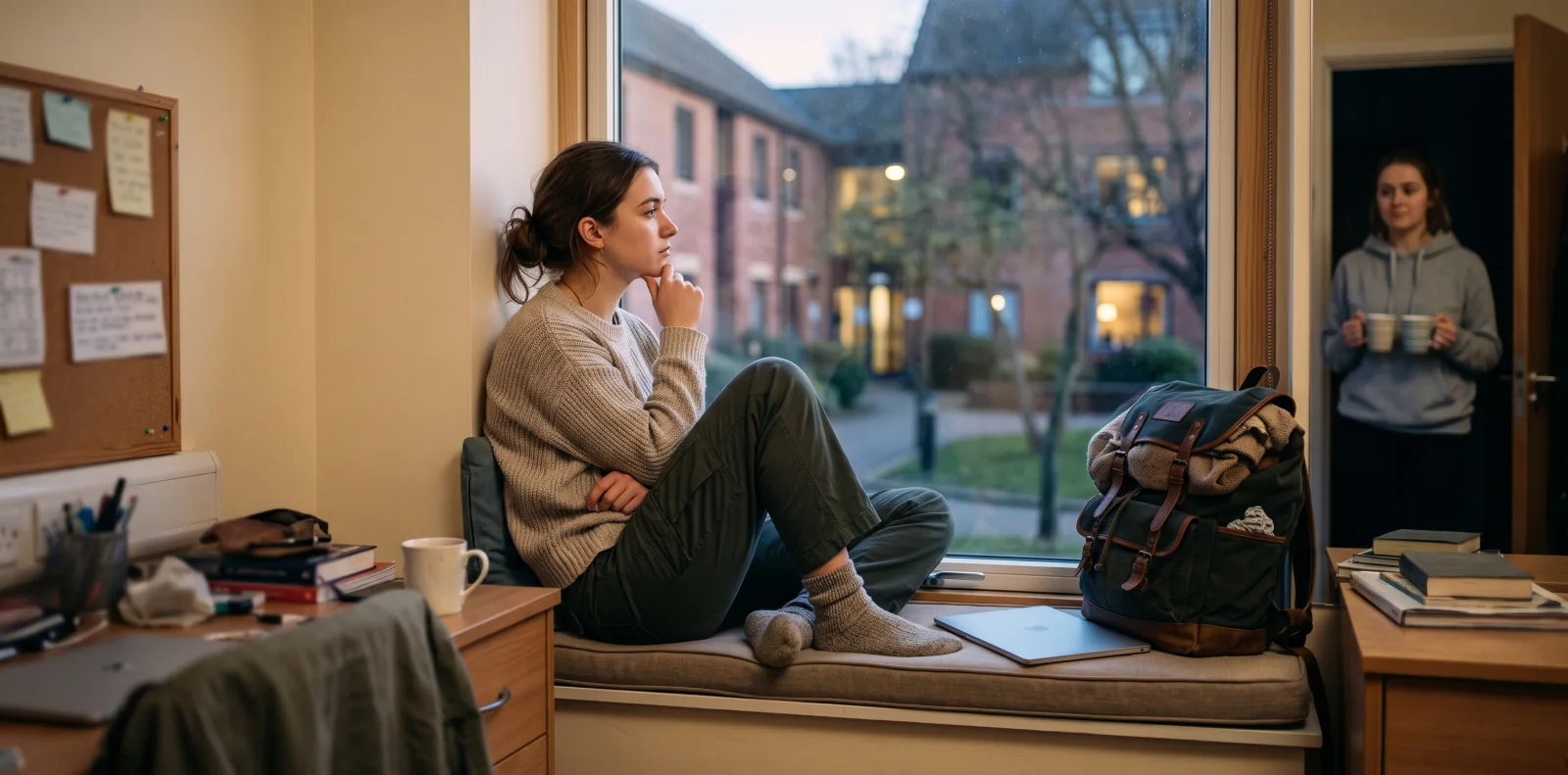
There is a particular afternoon every autumn in a UK university town. You come out of a 2 p.m. seminar, the sky is already the colour of wet cement, and by 4.30 it is dark. You get back to halls, sit on the bed, and feel strangely heavy. You are not ill. Nothing awful has happened. You just feel flat.
If that sounds familiar, you are in very large company. Google search data for the UK, which we pulled for this article, shows searches for "winter blues" climbing from about 1,600 a month in September to 2,400 in October and a peak of 3,600 in November. Then the curve slides back down as the days lengthen. Few topics follow the sun this precisely.
But the phrase "winter blues" covers a lot of ground. For many people it means a mild dip that lifts with a walk and a decent night's sleep. For some, it is a recurring depression that returns every year and needs proper treatment. Both are real. The skill is in telling them apart, and in knowing what helps without spending money you do not have.
This guide covers what is normal, what might be seasonal affective disorder (SAD), and what evidence-based steps you can take from a single room in halls. It also tells you, without drama, when to book a GP appointment.
What is actually going on: light, body clocks and mood#
Start with the biology, because it removes a lot of guilt. Your brain keeps time using a body clock, called the circadian rhythm, that is set mainly by light entering your eyes. Morning light tells your brain to wake up, suppress the sleep hormone melatonin and raise alertness. When mornings are dark and days are short, that signal weakens.
Three things are thought to change in winter. The body clock can drift out of step with your timetable. Levels of serotonin, a chemical messenger involved in mood, may be affected by reduced sunlight. And melatonin can be released at the wrong times, leaving you sleepy in the middle of the day.
The UK sits far enough north for this to matter. In midwinter, daylight in London lasts a little under eight hours, and in Scotland it is shorter still. A student who spends the daylight hours in a lecture theatre or library might see almost none of it.
That is the mechanism. It is still a theory in places, and researchers do not agree on every detail. What they do agree on is that the pattern is real and that people differ in how strongly they feel it.
Winter blues versus SAD: where the line sits#
Winter blues is not a medical diagnosis. It describes a dip in mood, energy and motivation that arrives with the dark months. You still do things, you still laugh with friends, and you can still concentrate on most days. It is irritating but manageable.
Seasonal affective disorder (SAD) is a type of depression with a seasonal pattern. The NHS describes symptoms that begin in autumn or winter and ease in spring. They include a persistently low mood, loss of interest in things you usually enjoy, irritability, feelings of guilt or worthlessness, low energy, sleeping longer than usual and struggling to get up, craving carbohydrates and putting on weight, and difficulty concentrating.
The distinction is mainly about how much, how long and how much it gets in the way. Ask yourself:
- Has this lasted two weeks or more?
- Is it affecting my attendance, my work or my relationships?
- Has it happened in previous winters, and lifted in spring?
- Do I feel hopeless rather than just tired?
If you answer yes to several, it is worth talking to a professional. A clinician makes the diagnosis, not an internet quiz and certainly not this article. Estimates of how many people have SAD vary, but figures commonly quoted by NHS and mental health charity sources suggest it affects a small minority of the UK population, with many more experiencing milder winter dips.
One more thing: if low mood is not seasonal, or if you are having thoughts of harming yourself at any time of year, please do not wait for spring. See your GP, call NHS 111, or ring Samaritans free on 116 123.
Why halls can make it worse#
Student life adds some extra ingredients on top of the weather.
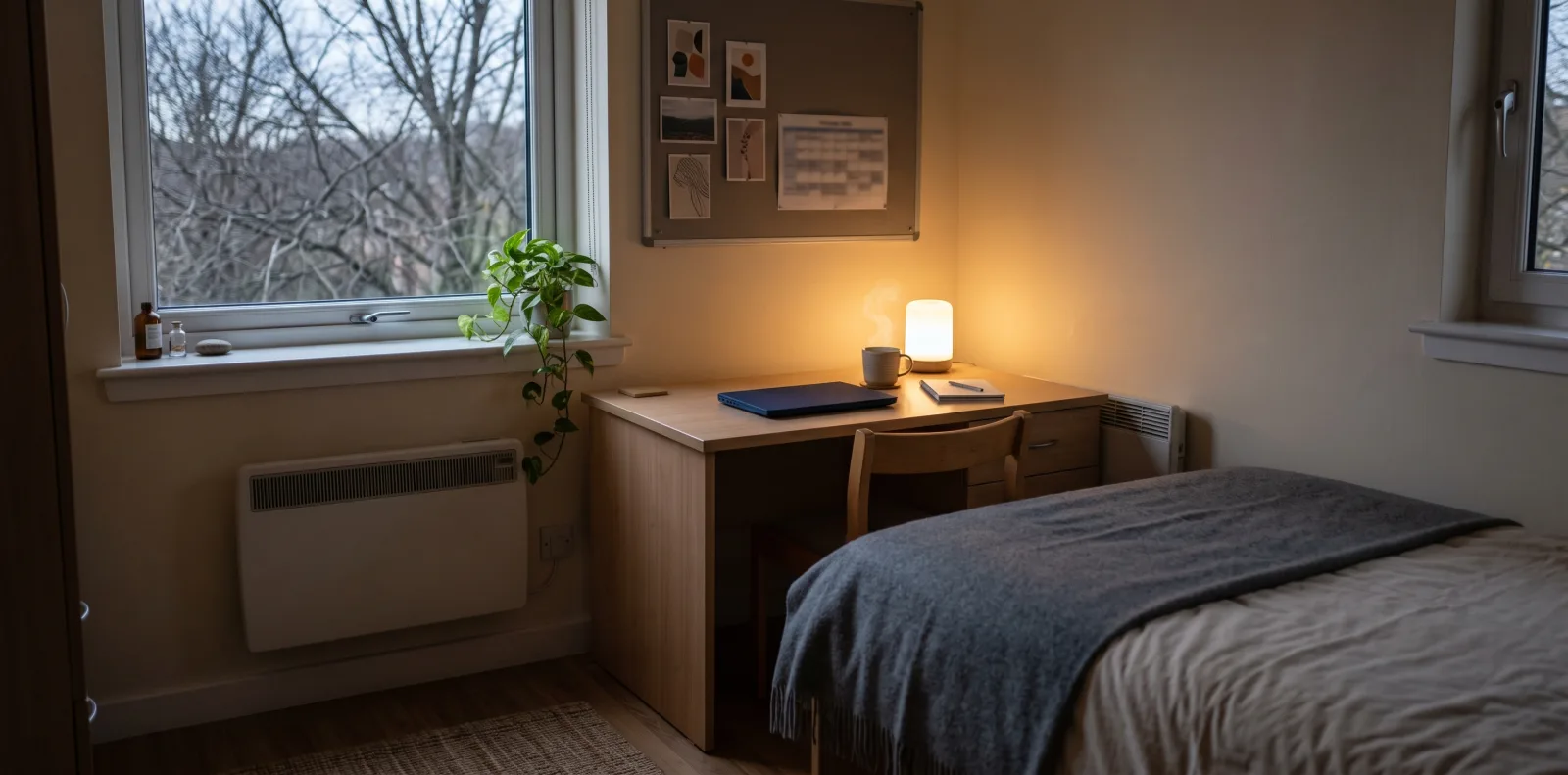
You may be living away from home for the first time. Routine, family meals and familiar faces vanish just as the light does. Money is tighter, so heating is rationed and the cheap option is staying in. Social life depends on people you met a few weeks ago, and those friendships are still fragile. A small room with a small window is a fine place to sleep and a poor place to spend nine dark hours.
The Student Academic Experience Survey for 2025 found that 68 per cent of full-time undergraduates now work during term time, up from 56 per cent the year before. Less time and less money make it harder to do the things that lift mood. That is not a personal failing. It is arithmetic.
Five things with decent evidence behind them#
None of these is a magic fix, and they work best in combination. Think of them as a toolkit rather than a prescription.
1. Get outside early, even when it is grey#
Outdoor light, even on an overcast day, is many times brighter than indoor lighting. A cloudy sky can deliver several thousand lux outdoors, while a typical room is a few hundred. A 20 to 30 minute walk before lunch is one of the cheapest light "doses" available, and it doubles as exercise.
Aim for the morning if you can. Light early in the day is the most useful for resetting your body clock. If you have a 9 a.m. lecture, walk to it rather than taking the bus.
2. Consider a light box, but be realistic#
Light therapy involves sitting in front of a lamp that produces very bright light, usually 10,000 lux, for around 30 to 60 minutes soon after waking. Many studies show a benefit for SAD, and it is widely used. However, the picture is mixed. NICE, the body that guides NHS care in England, recommends treating SAD like other forms of depression and says it is not clear how well light therapy works, and the NHS does not usually provide light boxes.
If you try one, buy a model that states its brightness in lux and is designed for treating SAD, rather than a decorative lamp. Check with a pharmacist or GP if you have an eye condition or take medication that makes you sensitive to light. Prices vary widely, so compare before you buy, and ask whether your students' union or wellbeing service lends them out. Some do.
3. Move your body#
Regular exercise has good evidence as a treatment for depression, with effects that are modest but consistent across many trials. You do not need a gym membership. A brisk walk, a campus fitness class, a kickabout or a swim all count. Doing it outdoors in daylight earns you a double benefit.
4. Protect your sleep and your routine#
Winter makes us want to sleep more and keep strange hours. A fairly regular wake-up time, even at weekends, helps steady the body clock. Light in the morning, dim light in the evening, and a phone put away before bed make a difference for many people. It is dull advice, and it is dull because it works.
5. Look after vitamin D, but do not expect miracles#
From about October to March, sunlight in the UK is too weak for your skin to make vitamin D. UK government advice is that everyone should consider taking a daily 10 microgram supplement through the autumn and winter. This is for bone and muscle health. Whether vitamin D prevents low mood is less clear, and trials have not shown a convincing effect on depression, so treat it as general health care rather than a mood treatment.
The chart: when does the UK search for "winter blues"?#
The chart below uses Google Ads search-volume data for the United Kingdom, covering September 2025 to August 2026. Search interest is not the same as how many people feel low, but it is a decent clue to when people start to notice.
The pattern is sharp. Interest climbs as the clocks change, peaks in November, stays high through the darkest weeks, and collapses by April. If you notice yourself following the same curve, you are not imagining it, and it is worth planning ahead for next year as well as coping with this one.
When to ask for help, and how#
Self-help is a sensible first step for mild symptoms. It is not a substitute for treatment if you are really struggling. Seek professional support if:
- your low mood has lasted more than two weeks,
- you are missing lectures, deadlines or meals,
- you feel hopeless, or you are drinking or using other substances to cope,
- or you have had thoughts of self-harm or suicide.
In England you can self-refer to NHS Talking Therapies for anxiety and depression, with no GP appointment needed in most areas. Cognitive behavioural therapy (CBT), a structured talking treatment that helps you notice and change unhelpful patterns, has a good evidence base for depression, including the seasonal kind. Your GP can also discuss antidepressants, which NICE lists as an option for SAD as for other depression.
Your university has services too. Most have a wellbeing team or counselling service, and many can offer an early appointment if you tell them it is seasonal and recurring. Mention it to your personal tutor as well, since a short extension or a flexible deadline is easier to arrange before a crisis than after.
Finally, try telling one person. Winter blues loves isolation. Saying "I've felt a bit off since the clocks changed" to a flatmate often turns out to be the most useful thing you do all week.
A practical plan for the dark months#
If you want something concrete, here is a plan to try for four weeks:
- Morning: wake at a similar time each day, open the curtains immediately, and get outside for 20 minutes before midday.
- Daytime: sit near a window when you study, and take your breaks outdoors.
- Evening: keep one fixed social anchor each week, such as a society, a sports session or a regular dinner with flatmates.
- Night: dim the lights an hour before bed and charge your phone across the room.
- Weekly check-in: note your mood out of ten each Sunday. If it keeps falling, or stays low for two weeks, make the GP or wellbeing appointment.
It will not feel transformative on day three. Give it time, and be kind to yourself on the days it does not go to plan.
Frequently asked questions#
Are winter blues the same as seasonal affective disorder? No. Winter blues describes a milder seasonal dip that does not stop you functioning. SAD is a recognised form of depression with a seasonal pattern, with more severe symptoms that last for weeks and interfere with daily life. Only a healthcare professional can diagnose it.
How common is SAD among students? Reliable student-specific figures are limited. General population estimates suggest SAD affects a minority of people in the UK, with milder winter low mood far more common. If you are unsure which applies to you, describing your symptoms to a GP is more useful than comparing yourself with a statistic.
Does a SAD lamp actually work? Evidence is mixed. Many trials report benefit and light boxes are widely used, but NICE says it is not clear how effective light therapy is, and the NHS does not usually provide them. If you try one, use a lamp designed for the purpose at the recommended brightness, and keep your expectations realistic.
Should I take vitamin D in winter? UK government advice is to consider a daily 10 microgram supplement from autumn to spring, because sunlight is too weak for your skin to make enough. It supports bones and muscles. It is not proven as a treatment for low mood, so use it as general health care.
Can I get help from my university for seasonal low mood? Yes. Most universities offer counselling or wellbeing support, and you can ask for short-term adjustments such as flexible deadlines through your personal tutor or disability and wellbeing team. Mentioning that your symptoms recur each winter helps staff plan support early.
What if my low mood does not improve in spring? Then it may not be seasonal. Persistent low mood for two weeks or more, at any time of year, is a reason to see a GP or self-refer to NHS Talking Therapies. Treatment works for many people, and an early appointment is easier than a late one.
Who can I speak to right now if I feel unsafe? Call Samaritans free on 116 123, which is open at all hours, contact NHS 111, or call 999 in an emergency. You can also tell a friend, a tutor or a member of halls staff. You do not have to manage this alone.