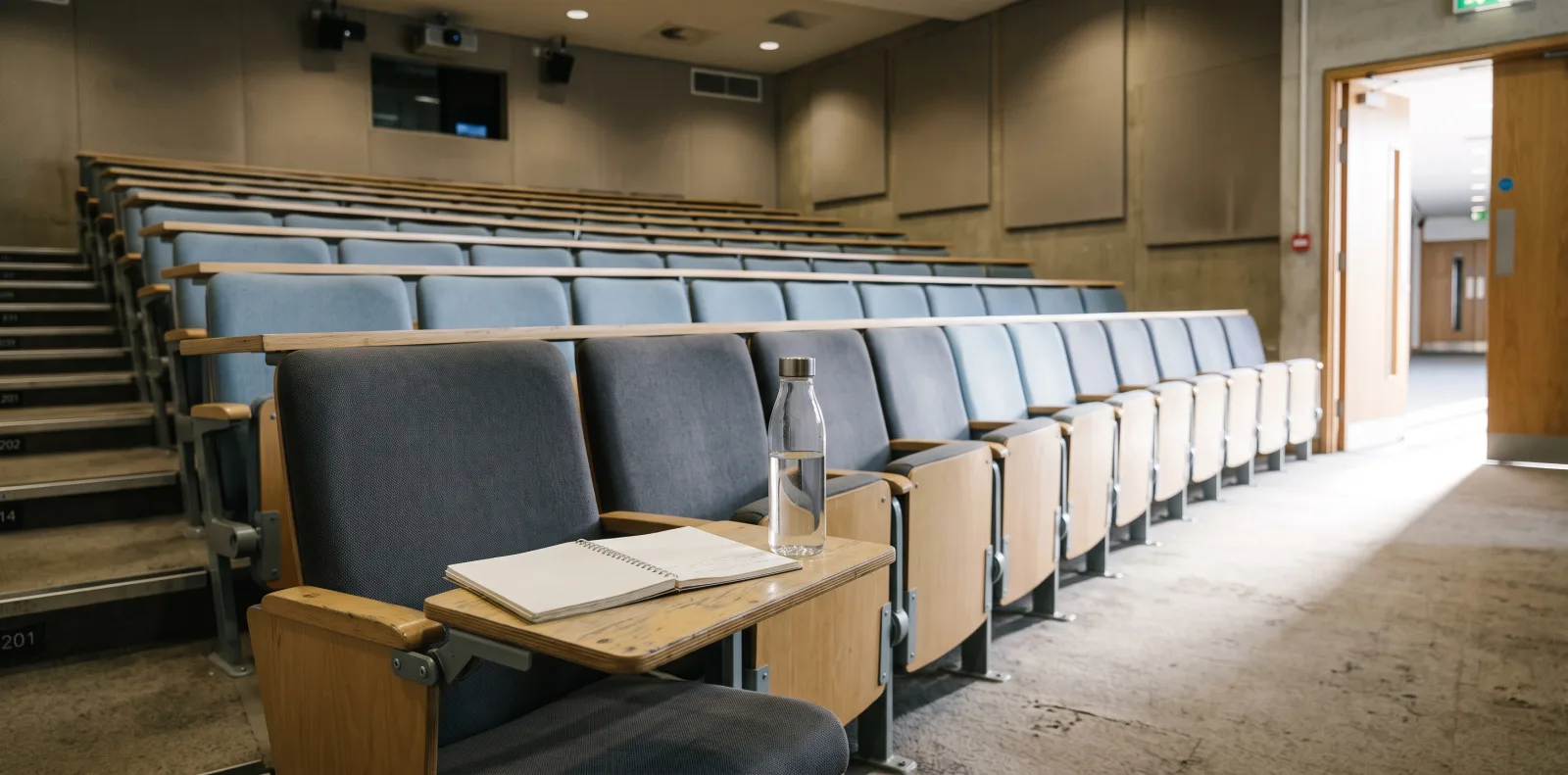
The heart races, the room tilts, and you are certain something is badly wrong#
You are in a lecture, or you are about to present, or you are lying in bed in halls at 1 a.m. Your heart starts thumping. Your chest tightens, your hands tingle, the room seems to slide a little further away. A thought arrives with complete conviction: I am going to faint, or lose control, or die.
You are almost certainly having a panic attack. It is among the most frightening experiences an ordinary, healthy person can have, and it is also among the most misunderstood. This guide is built around one reassuring fact and several practical ones.
The reassuring fact: a panic attack is an intense false alarm. It is unpleasant, but it is not dangerous in itself, and it passes. The practical facts are what to do in a lecture, in halls and mid-presentation, how to help someone else, and when it is worth seeking treatment, because good treatment exists and works for most people.
A note on safety first. If this is your first ever episode, if you have chest pain that is crushing or spreads to your arm or jaw, or if you feel something is physically wrong beyond the usual panic symptoms, get medical help. It is sensible to rule out other causes, and no one will think you are wasting their time. Call 999 in an emergency.
Background: what a panic attack actually is#
A panic attack is a sudden surge of intense fear or discomfort that peaks within minutes, accompanied by physical symptoms. NHS guidance lists a racing heartbeat, sweating, trembling, shortness of breath, chest pain, nausea, dizziness, tingling or numbness, hot or cold flushes, a choking feeling, and a sense of being detached from yourself or the world, plus a feeling of dread or fear of dying.
Why the body does this#
The cause is the body's built-in alarm system, often called the fight-or-flight response. When your brain perceives a threat, it releases adrenaline. Your heart speeds up, your breathing quickens, blood moves to your muscles and your senses sharpen. This is brilliant if a lorry is heading towards you. It is not helpful if the "threat" is a seminar.
In a panic attack, the alarm goes off without a real external danger, or in response to something fairly ordinary. Then a vicious circle starts. You notice the pounding heart, you interpret it as dangerous, and that fear releases more adrenaline. Faster breathing makes it worse, because breathing too quickly lowers carbon dioxide in your blood, which causes dizziness and tingling. That is not a sign of damage. It is the loop at work.
How long it lasts#
Most panic attacks reach their peak within about ten minutes and fade after twenty or thirty. NHS-linked guidance says attacks usually last between five and twenty minutes, with some lingering up to an hour as the aftershocks wear off. The first wave is the worst. The body physically cannot sustain peak adrenaline for long.
Panic attack versus panic disorder#
One attack does not mean you have a disorder. Surveys suggest that a considerable minority of people have at least one in their lifetime. Panic disorder is diagnosed when attacks keep happening, often unexpectedly, and you spend a lot of time worrying about the next one or changing your behaviour to avoid them. That fear of fear is usually what keeps the cycle going, and it is the main target of treatment.
What it looks like in student life#
University is a good breeding ground for stress. New people, new places, deadlines, money worries, poor sleep, caffeine, alcohol and big social changes pile up. Triggers vary, but common settings include:
- crowded or enclosed rooms, such as lecture theatres or lifts,
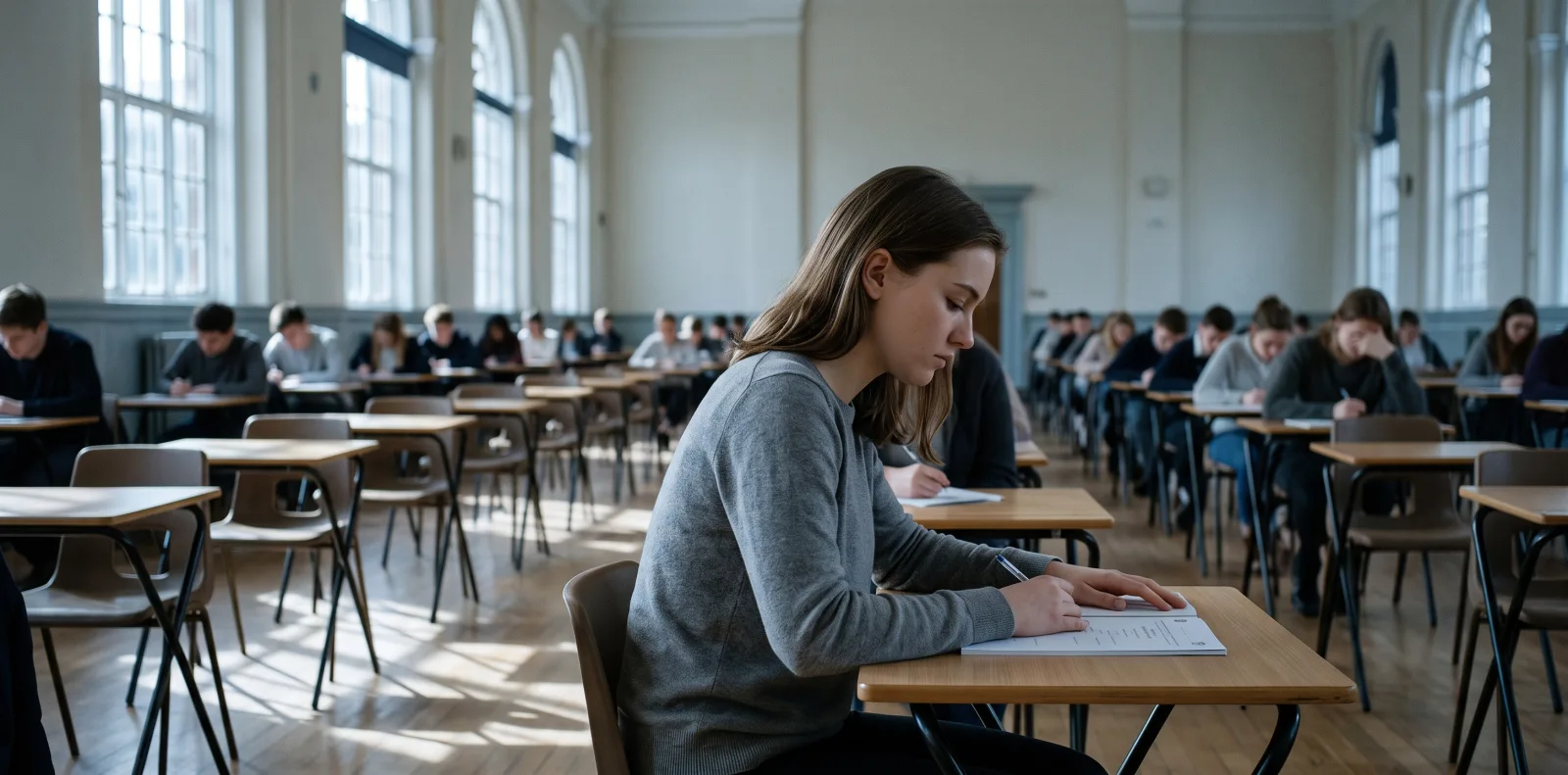
- presentations, seminars and exams,
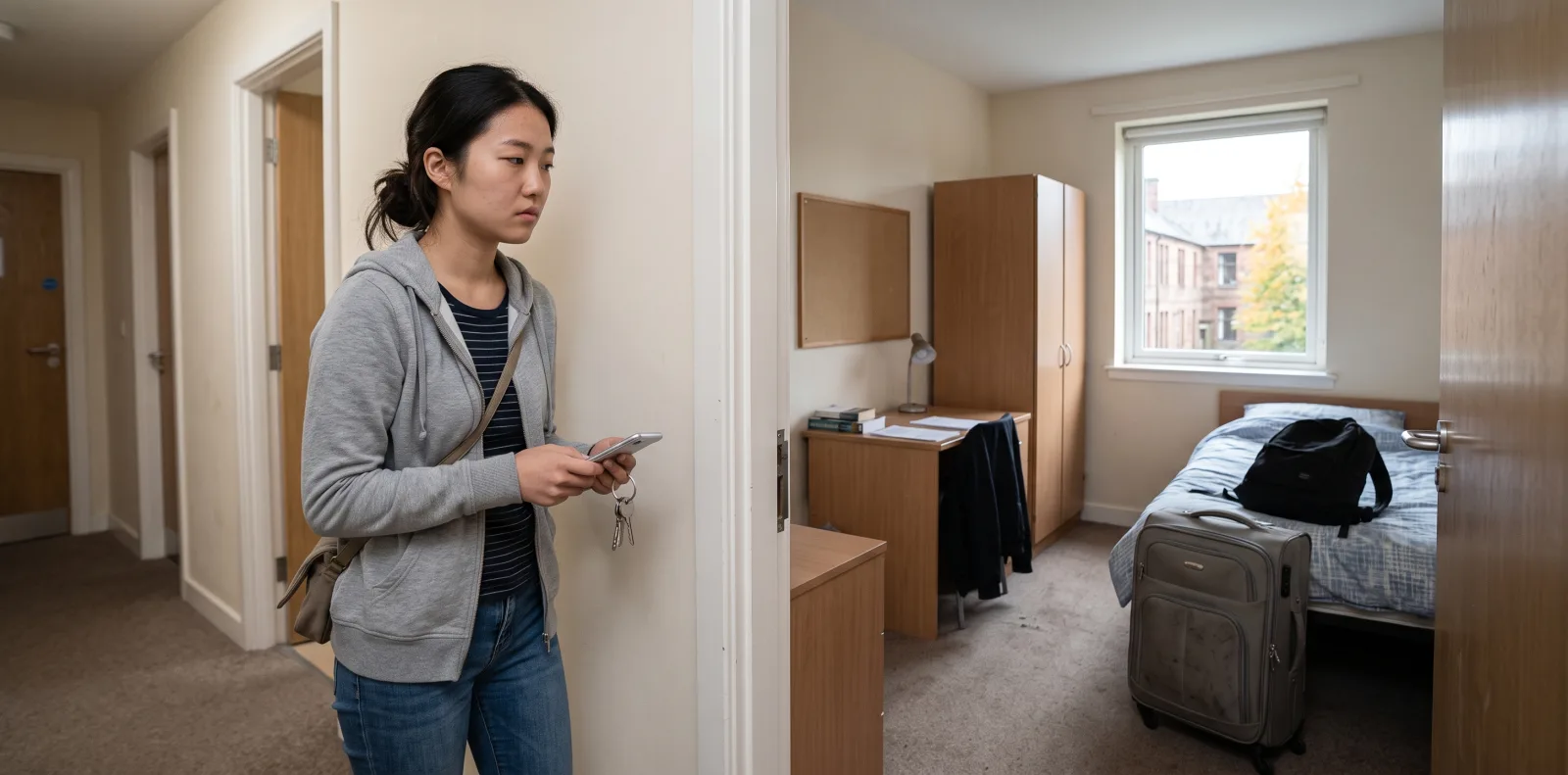
- night-time, when you are alone and tired,
- the day after heavy drinking, when anxiety is often higher,
- or sudden bad news.
Sometimes there is no obvious trigger at all. That does not mean something is wrong with you.
The chart below shows a simplified picture of how a typical attack unfolds. It is an illustration of the general pattern described in NHS and clinical guidance, not measured data from one person, and individual experiences vary.
The point of the picture is its shape. The rise is steep, the peak is short, and the fall is gradual. Knowing that, you can tell yourself something useful in the middle of it: this is the worst part, and it is already ending.
Five things to do while it is happening#
You cannot stop a panic attack by willpower. You can change how you ride it out, and that often shortens it.
1. Name it#
Say to yourself, silently or aloud: "This is a panic attack. It is uncomfortable, not dangerous. It will pass." Labelling it breaks the loop of misreading symptoms as disaster. It sounds too simple to help, and it helps more than you would expect.
2. Slow your breathing, gently#
Do not take big gulps. Breathe in slowly through your nose for about five seconds, then out through your mouth for about five seconds. NHS guidance suggests this pace, and placing a hand on your stomach and letting it rise as you breathe in can help you use your diaphragm rather than your chest. If five seconds is too long, start with four in and six out. A slightly longer out-breath tends to calm the body.
3. Ground yourself in the room#
Grounding pulls attention away from alarming sensations and into the here and now. A well-known method is 5-4-3-2-1: notice five things you can see, four you can touch, three you can hear, two you can smell and one you can taste. Pressing your feet into the floor, holding something cold or counting objects of one colour work too.
4. Do not fight it, and do not flee unnecessarily#
Trying to force the feelings away usually makes them stronger. Let the wave pass. If you need to leave, leaving is fine. But if you can stay, doing so teaches your brain that the situation was survivable, which reduces future fear. That is a gentle principle, not a rule. Your safety and comfort come first.
5. Look after yourself afterwards#
Sip some water, eat something, and give yourself a few minutes. Panic leaves you drained. Do not berate yourself for it.
Three scenarios: lecture, halls and presentation#
In a lecture#
Sit near the aisle or an exit if you can, because knowing you can leave reduces the fear of being trapped. If an attack starts, keep your eyes on a fixed point, such as the corner of the screen. Use the slow breathing and grounding steps above. Quietly place your feet flat and press down. If you need to step out, do it without apology. You do not have to explain, and most people will not notice.
Afterwards, a short, factual note to the lecturer or your personal tutor ("I had a panic attack and had to leave. I will catch up on the slides") is usually received kindly. If it keeps happening, you can ask for adjustments through your university's disability or wellbeing service.
In halls, especially at night#
Panic at night is common, partly because there is nothing to distract you. Sit up, turn on a light and put your feet on the floor. Run cold water over your wrists or splash your face. Text or call a friend, flatmate or the Samaritans (116 123), because simply having another voice helps. Avoid caffeine and alcohol in the evening, as both can make attacks more likely.
Mid-presentation#
If panic is building, pause. Breathe out slowly, take a sip of water, and look at your notes. A pause that feels like ten seconds to you feels like a thoughtful beat to the audience. Say, "Let me take a moment," if you need to. If it overwhelms you, it is acceptable to stop, and you can ask the module leader for an alternative arrangement afterwards. Many courses already have them.
Helping a friend who is panicking#
Stay calm, because your steadiness is contagious. Speak quietly and simply: "I am here. You are safe. This will pass." Ask what helps. Offer to breathe slowly alongside them, move somewhere quieter, and give them space. Avoid telling them to "calm down" or suggesting it is all in their head. When it has passed, check in gently and suggest they speak to a GP if it keeps happening.
When panic needs more than self-help#
Consider seeing a GP or self-referring to NHS Talking Therapies if:
- attacks happen repeatedly or without warning,
- you are avoiding lectures, lifts, trains or social events,
- you are constantly worried about the next attack,
- or your sleep, studies or friendships are suffering.
The best-evidenced treatment is cognitive behavioural therapy (CBT), a structured form of talking therapy. For panic, it teaches you what is happening in your body, helps you test your frightening predictions and gradually reduces avoidance. Studies, including long-term follow-up of CBT in primary care, show lasting improvements in panic symptoms, anxiety and quality of life. Medication, usually certain antidepressants, is another option your GP can discuss.
In England you can self-refer to NHS Talking Therapies in most areas without seeing a GP first. If you are registered with a university health centre, they can also help, and your university's counselling team may offer short-term support. Tell them you are a student, because many offer quicker appointments or can arrange adjustments to assessments.
If anxiety is making exams impossible, ask about reasonable adjustments, such as a separate room. These are normally arranged through a disability or wellbeing service, sometimes needing a letter from a GP.
A small prevention kit#
You cannot always prevent panic, but you can lower the odds.
- Sleep and food: erratic sleep and skipped meals make you jumpy.
- Caffeine: energy drinks and strong coffee mimic panic symptoms in some people.
- Alcohol: it can calm you in the short term and raise anxiety the next day.
- Practise slow breathing daily when calm, not only in a crisis, so it is familiar.
- Move: regular exercise lowers baseline anxiety for many people.
- Talk: the less secret it is, the less scary it gets.
Frequently asked questions#
Can a panic attack kill you or make you faint? A panic attack is not dangerous in itself and does not cause death. Fainting is unusual, because blood pressure typically rises rather than falls during panic. If you have chest pain or other worrying symptoms, particularly on a first occasion, get medical advice to rule out other causes.
How long does a panic attack last? Most peak within about ten minutes and subside within twenty to thirty. Some people feel shaky or drained for up to an hour afterwards. The intensity of the first few minutes is the worst of it.
What is the difference between a panic attack and an anxiety attack? "Anxiety attack" is a common phrase rather than a formal diagnosis. Panic attacks come on suddenly and peak fast. Anxiety tends to build more slowly and last longer. The coping steps overlap, and both respond to treatment.
Should I leave the lecture theatre during a panic attack? You can, and it is fine if you need to. If you feel able to stay and use breathing and grounding, staying can help your brain learn that the situation is survivable. Choose whichever feels safer. Neither is wrong.
Will my university know, and will it count against me? Seeing a GP or NHS Talking Therapies is confidential. If you ask the university for adjustments, you will need to share only what is necessary, and support services are there to help, not to penalise. Panic does not affect your degree classification.
Does breathing into a paper bag help? No. Breathing into a bag is no longer recommended and can be unsafe. Slow, steady breathing in through the nose and out through the mouth is a better approach.
When should I see a doctor? See a GP if attacks recur, if you are avoiding things because of fear, or if it is your first attack with severe or unusual symptoms. Treatment such as CBT is effective, and you can also self-refer to NHS Talking Therapies in most areas.
Sources and further reading#
- NHS, Anxiety, fear and panic and Panic disorder pages (nhs.uk)
- NHS inform (Scotland), How to deal with panic and anxiety
- NICE guidance on generalised anxiety disorder and panic disorder
- Follow-up trial of CBT for panic disorder in primary care, published in a peer-reviewed journal and indexed in PubMed Central