An entire study culture built on things nobody has tested properly#
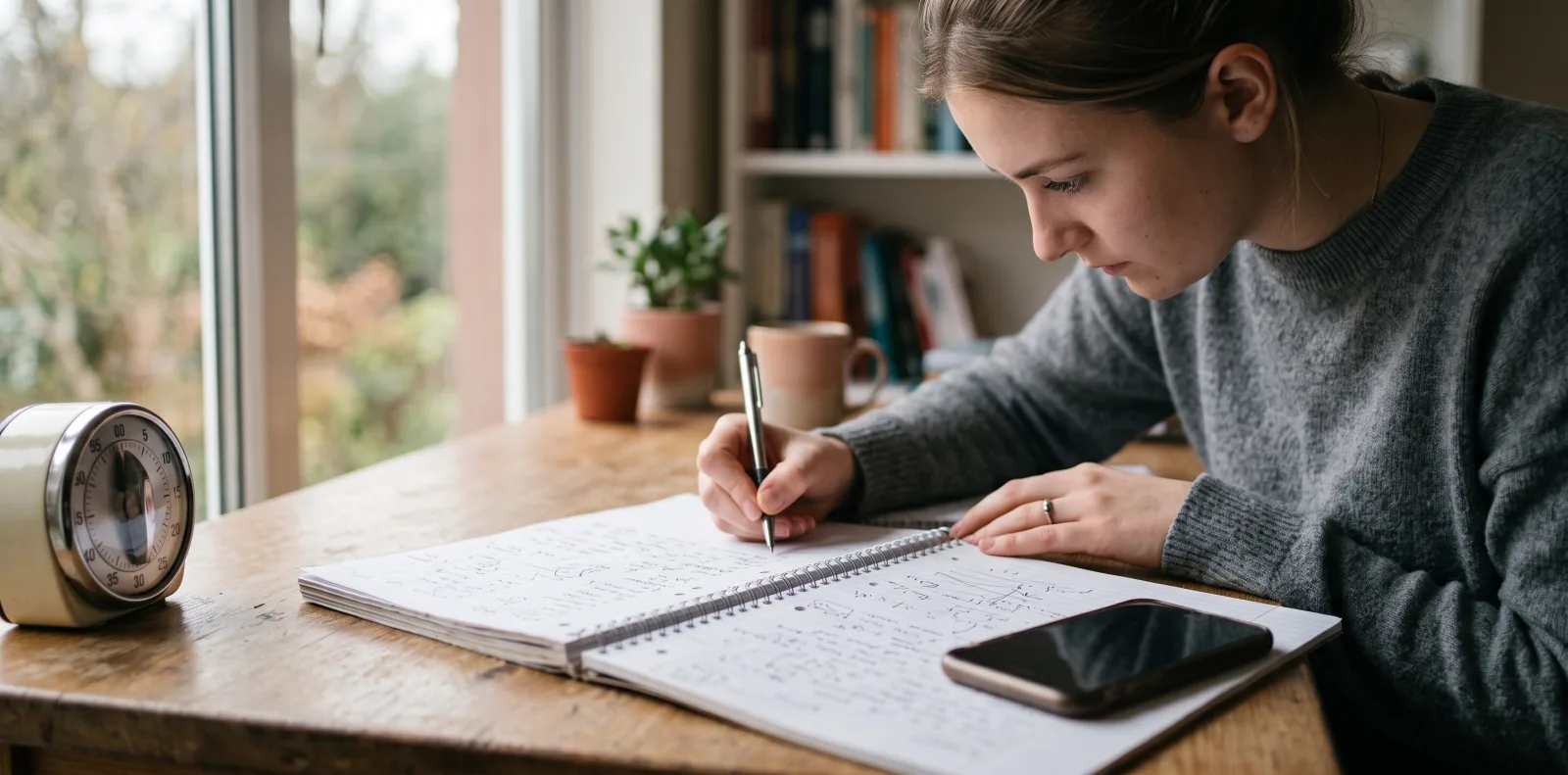
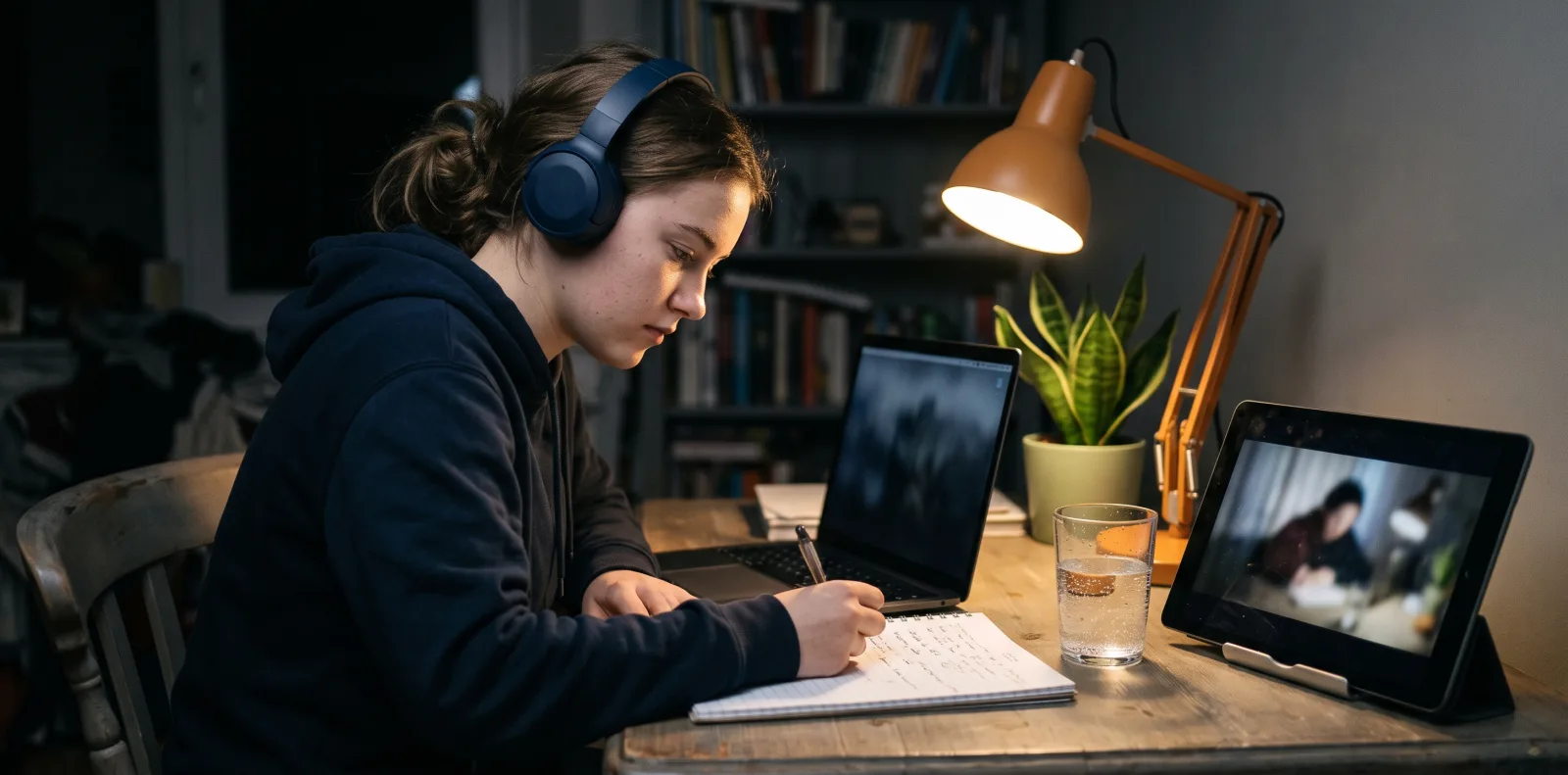
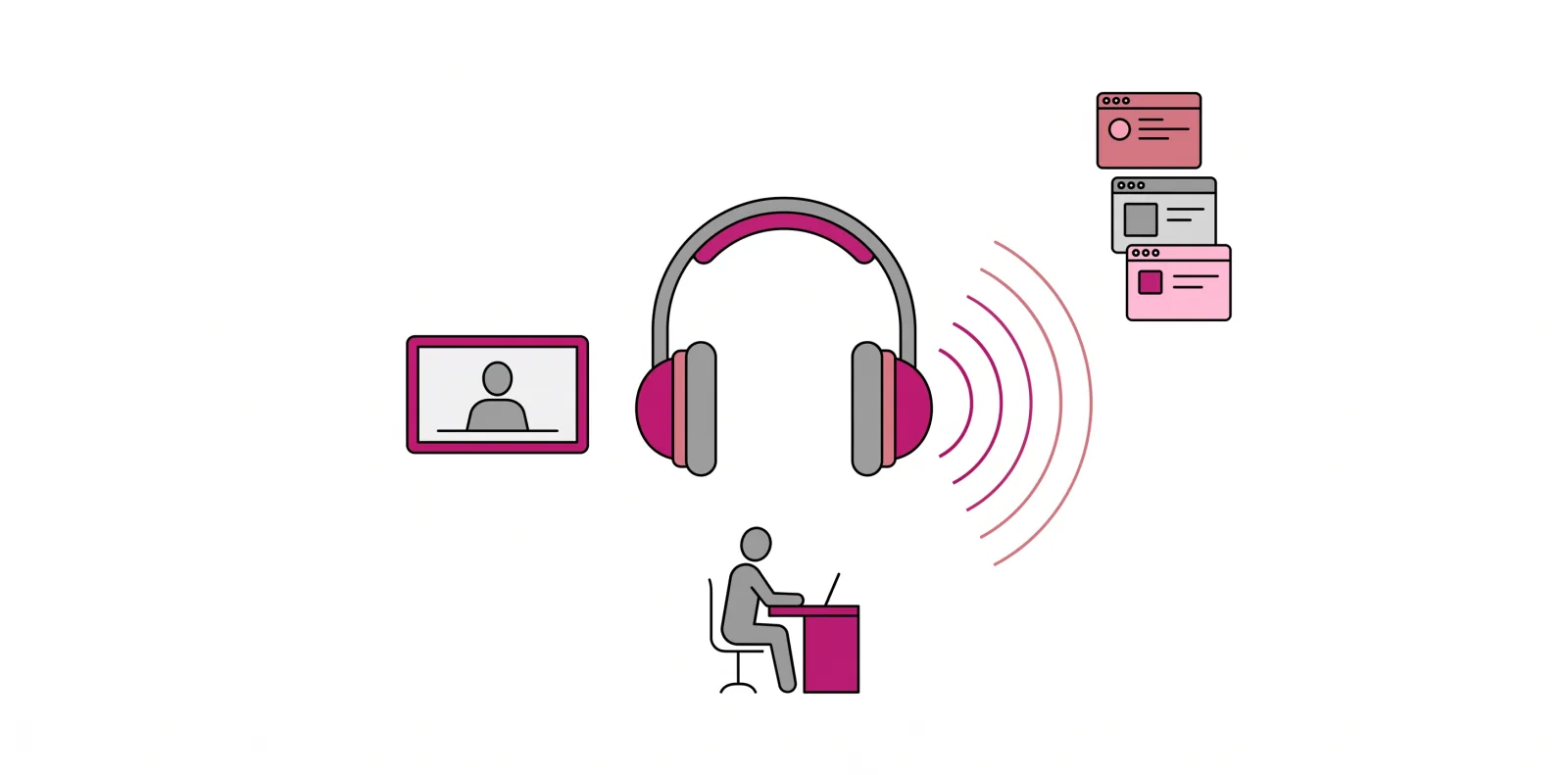
Open YouTube or Twitch at 9pm and you can watch a stranger study in real time, sometimes for eight hours, usually with rain sounds and a visible timer. Millions of people do. Alongside it sits a parallel economy of focus playlists, binaural beats, forest sounds, and app stacks combining a timer, a habit tracker, a website blocker and a note system.
Some of this is supported by evidence. Some is neutral. A meaningful slice is procrastination that has learned to look like preparation.
The distinction is worth drawing carefully, because dismissing the whole culture is both smug and wrong. Studying alone in a quiet room is not automatically superior, and quite a lot of students genuinely work better with something running.
What the research on background music actually found#
This is the part with the clearest evidence, and it is not what most students expect.
A 2018 meta-analysis by Vasilev and colleagues, pooling results across many studies, found a small but credible impairment of background music on reading. Small is the operative word: this is not a catastrophic effect. But it is consistently in the same direction.
The effect concentrates around lyrics. When researchers compared conditions, intelligible speech and lyrical music produced the greatest distraction of all the background sounds tested, more than instrumental music and more than general noise.
Language matters too. More recent work has found that reading comprehension suffers more when song lyrics are in the same language as the text being read, because the words compete directly with the words on the page. A song in a language you do not speak interferes considerably less.
Two findings soften the picture. Students who habitually study with music are less affected than students who do not, which suggests some adaptation. And the impairment is similar whether or not the person enjoys the music, so liking it does not protect you.
The finding that should change behaviour is this one: in these studies participants were generally unaware of the detrimental effect. People report that the music helps while performing worse. That gap is why personal experience is a bad guide here.
The practical upshot is unusually specific. For reading and writing, avoid lyrics in a language you understand. Instrumental music, ambient sound and noise are much safer. For repetitive or mechanical tasks, the evidence for harm is weak and music may well help by keeping you at the desk.
The attention environment you are actually working in#
Any conversation about focus tools has to start from how fragmented attention already is.
Gloria Mark, at the University of California, Irvine, has tracked how long people hold attention on a single screen for around two decades. In the early 2000s the average was about two and a half minutes. By the 2020s it was 47 seconds, with independent studies from 2014 onwards landing between 44 and 50 seconds.
The detail that matters for study tools is that a large share of those switches are self-generated. Nobody interrupted you. You reached for the phone. That is why a tool which removes the option outperforms a tool that merely reminds you of your intentions, and it explains why website blockers with a hard mode work better than the ones you can dismiss.
Study-with-me streams: weak evidence, plausible mechanism#
There is no strong body of research on watching other people study. What there is sits adjacent, in work on body doubling and on the effects of an audience on task performance.
Body doubling, having another person present while you work, is widely used in ADHD support and reported as helpful by large numbers of people, though the formal evidence base remains thin. The plausible mechanisms are social accountability, a reduced sense of isolation, and an externally set start and stop time that you did not have to impose on yourself.
Study-with-me streams reproduce those three things at a distance. The most useful element is probably the least glamorous: somebody else has decided when the session begins and ends, and you just join it. Deciding when to start is the hardest part of studying, and the stream removes the decision.
Two honest cautions. Watching someone study is not studying, and a stream open in a second window is also a video you can watch instead of working. And the aesthetic of these streams, the perfect desk, the eight-hour counter, the neat handwriting, can create exactly the kind of comparison that makes people avoid starting at all.
Used as a timer with a person attached, they are genuinely useful. Used as content, they are television about homework.
Productivity stacks and the cost of maintaining them#
The pattern is familiar. A timer app, a habit tracker, a website blocker, a task manager, a note system, a spaced repetition tool, and a dashboard tying them together.
Each individual tool is defensible. The stack has a cost that nobody accounts for, which is that every tool needs maintaining, and maintaining tools is pleasant, visible and feels like work.
A reasonable test: if you have spent more time configuring the system in the last month than you have spent inside it doing actual work, the system is the procrastination.
The tools with the best claim to earn their place are the ones that remove decisions rather than track them. A hard-mode website blocker removes the option to check. A recurring calendar block removes the decision about when. A single capture inbox removes the decision about where things go.
The ones that most often fail to earn their place are the ones that measure. Habit trackers, streak counters and time loggers produce a satisfying record and rarely change behaviour on their own. A streak is also a liability: one missed day frequently ends the whole practice, because the record is now spoiled and the record was the motivation.
If you want one measurement, count sessions of genuine retrieval practice per week. That number predicts exam performance. Hours logged does not.
A defensible setup#
Instrumental audio or none at all for reading and writing. Anything you like for mechanical tasks.
Phone in a different room. Not face down, not in a drawer, a different room. The distance is the mechanism.
One blocker in hard mode during work blocks, chosen for being difficult to disable.
A study-with-me stream or a co-working call if starting is your bottleneck, closed once you are working.
Two apps at most beyond your note tool. Anything more is a hobby.
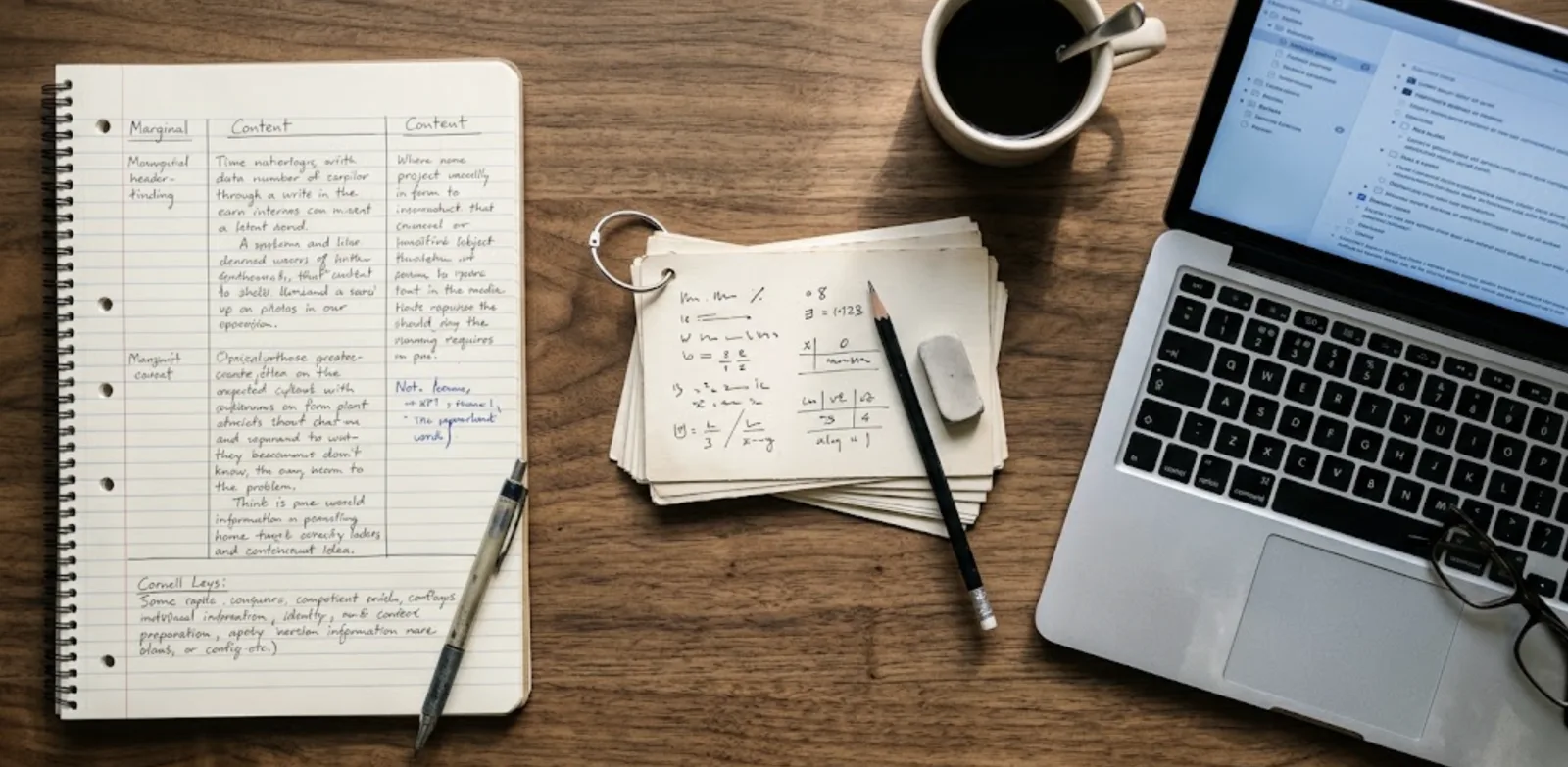
And a weekly count of how many real retrieval sessions you did, written on paper. That is the only metric that reliably correlates with the outcome you actually want.
The comparison problem in study content#
There is a cost to this genre that no study measures and most people experience.
Study content is edited, even when it insists it is not. The desk is tidy, the handwriting is even, the counter says eight hours, and the person appears never to have checked their phone. Your own session involves a mug you should have washed, forty minutes lost to something stupid, and handwriting that deteriorates after page two.
Comparing your unedited interior to someone else's edited exterior is the oldest problem on the internet, and here it comes with a particular sting, because the thing being compared is effort and people already feel morally responsible for that. Watching an eight-hour stream rarely produces an eight-hour day. It more often makes the three hours you did manage feel like a failure.
The defence is to use these as a timer rather than a standard. Join for the session, do your own work, close it when you stop, and do not measure your output against a counter on someone else's screen.
The same applies to productivity content generally. Watching a video about a study method is not the method, and the satisfaction of watching it comes from exactly the same place as the satisfaction of reorganising your notes.
Frequently asked questions#
Does lofi music help you study? Instrumental music is much safer than music with lyrics, and the evidence for outright harm from it is weak. For reading and writing, lyrics in a language you understand measurably impair comprehension, and the effect is larger than people notice.
But I concentrate better with music. Is that not evidence? It is evidence about how it feels. In the research, participants were typically unaware of the impairment while it was happening, so subjective reports and measured performance diverge. That is why this is one of the few study questions where personal experience is unreliable.
Do study-with-me videos actually work? There is no strong direct evidence. The plausible mechanisms are accountability and an externally imposed start time, both of which help many people. The risk is that the stream becomes the activity.
Is white noise or rain sound better than music? Probably, for verbal tasks, because there are no words to compete with the words you are reading. Steady, unvarying sound interferes less than anything with structure or lyrics.
Are binaural beats worth anything? The claims made for them go far beyond the evidence, which is mixed and mostly drawn from small studies. If you find them pleasant, they are unlikely to do harm. Treat any specific claim about brainwave entrainment and concentration with scepticism.
How many productivity apps should I use? Fewer than you currently do. Prefer tools that remove a decision over tools that record one, and be suspicious of any system that needs weekly maintenance to stay useful.
Does any of this matter more than just doing retrieval practice? No, and that is the honest summary. Every tool here is about getting yourself to the desk and keeping you there. What you do once seated decides the result, and practice testing and spaced practice beat every audio setup and app stack ever built.