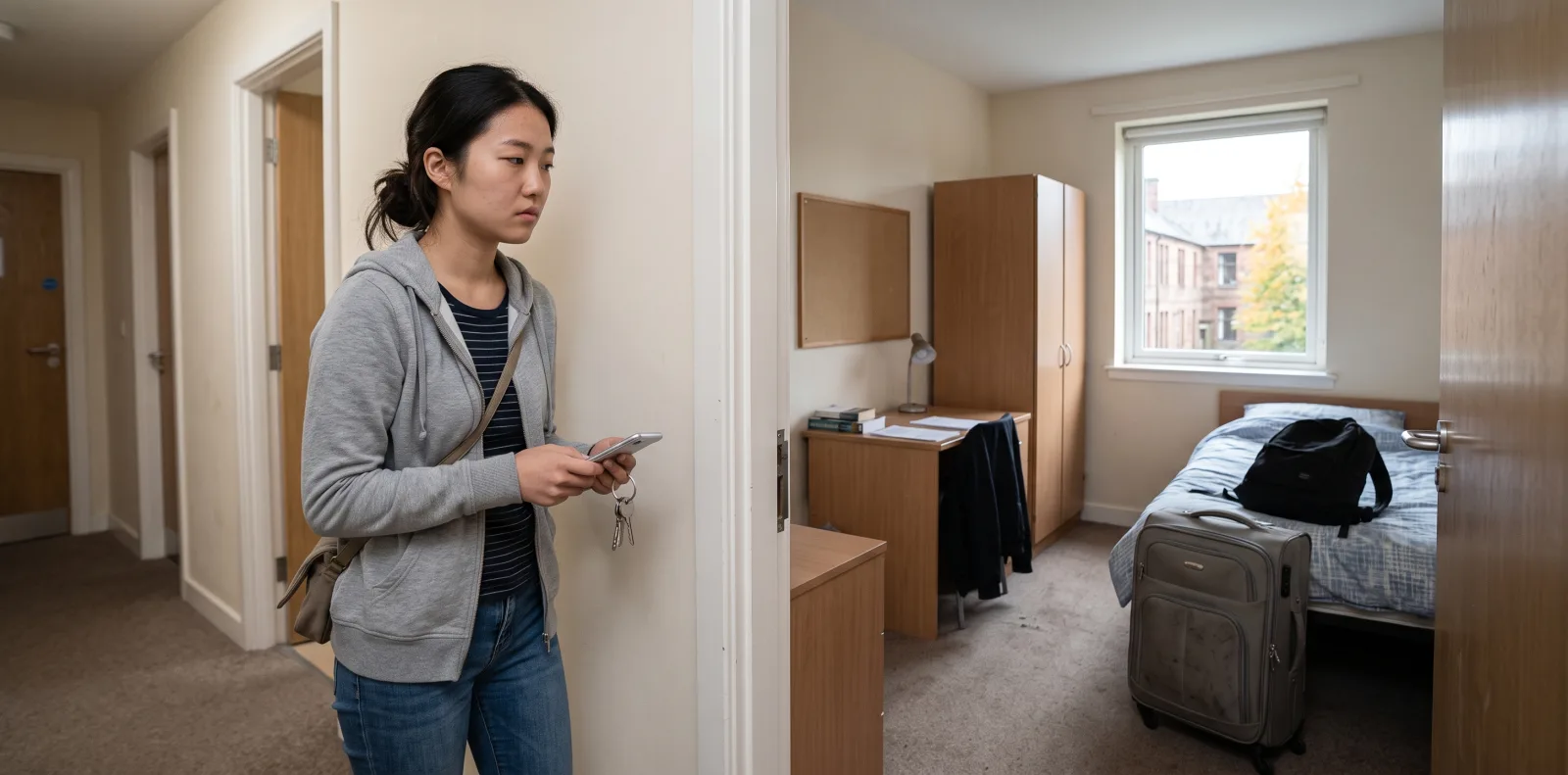

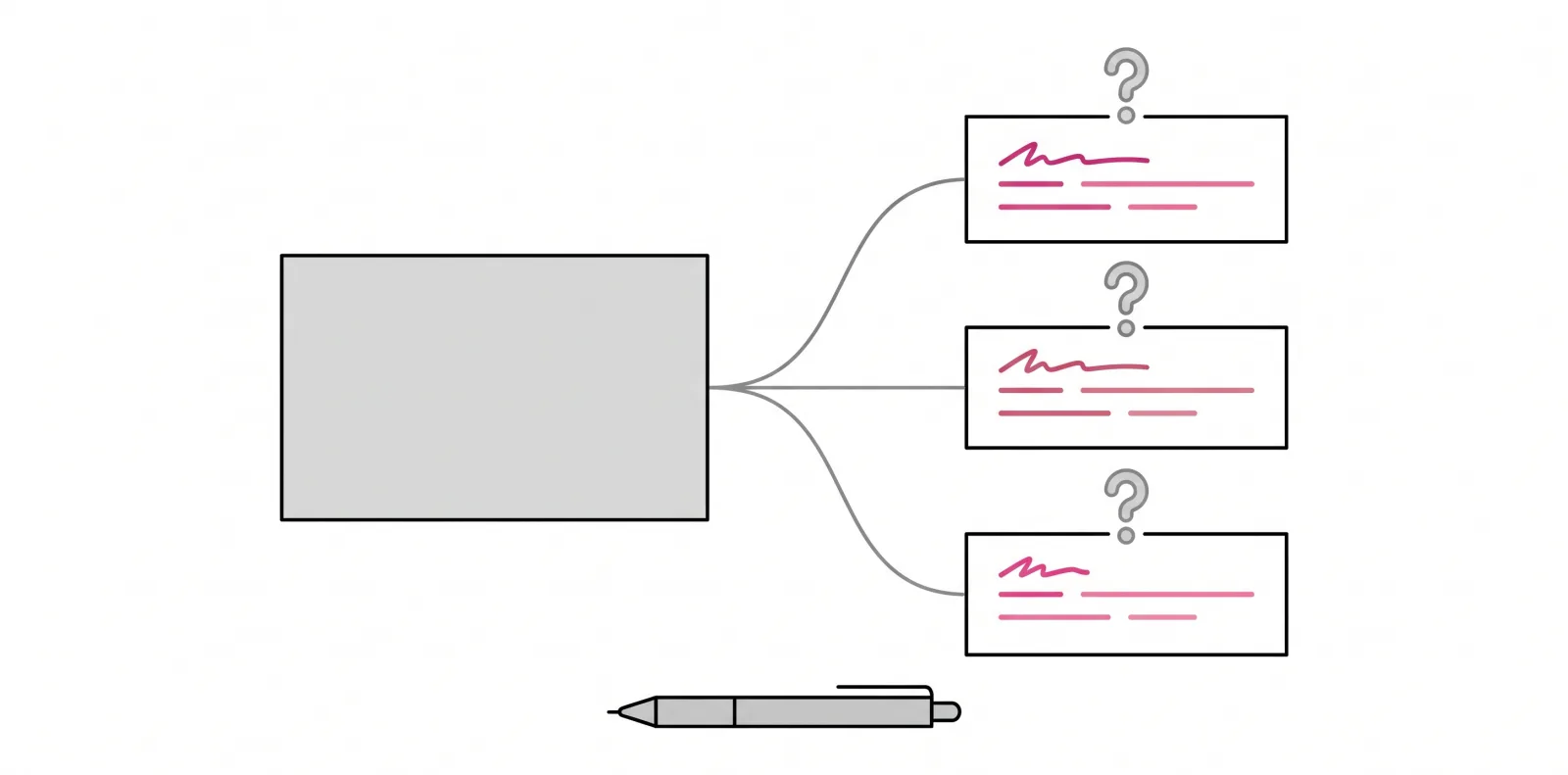
One essay became three boxes, and most people are still writing the old thing#
For roughly thirty years, the UCAS personal statement was a single blank rectangle. You wrote 4,000 characters of whatever you liked, hoped it flowed, and sent the same text to five universities at once.
That rectangle is gone. Since applications opened in September 2025 for 2026 entry, the statement has been three separate questions with three separate answer boxes. We are now in the second cycle of the format, which means the people marking your application have read a full year of these already. They know what a rushed answer looks like.
The character limit did not change. The job did. And the most common mistake this year is writing the old essay and then chopping it into three pieces.
What UCAS actually changed, and why#
UCAS is the Universities and Colleges Admissions Service, the central body that handles undergraduate applications to almost every UK university. One form goes to up to five courses. The personal statement is the only part of that form written entirely by you.
The old version rewarded confident writers who had been coached to understand that an essay needs a hook and a structure. UCAS framed the reform as levelling that field: give everyone the same prompts and nobody has to guess what admissions tutors want.
Here is the format in full.
| Question | What it actually asks | What tutors look for | Rough character share |
|---|---|---|---|
| 1. Why do you want to study this course or subject? | Where the interest came from and why this specific subject, not a neighbouring one | Evidence that you understand what the degree involves at university level | About 1,000 to 1,200 |
| 2. How have your qualifications and studies helped you to prepare for this course or subject? | What your A-levels, Highers, BTEC or Access course taught you that transfers | Specific skills tied to specific work, not a list of grades | About 1,200 to 1,500 |
| 3. What else have you done to prepare outside of education, and why are these experiences useful? | Reading, work, volunteering, caring responsibilities, projects, jobs | Reflection, not inventory. What you took from it | About 1,300 to 1,600 |
Three rules govern the boxes. The total across all three answers is 4,000 characters including spaces, which comes to roughly 600 to 650 words. Each answer needs a minimum of 350 characters, so no box can be left nearly empty. Beyond that minimum, the split is yours.
The word "characters" trips people up every year. Spaces count. Full stops count. A paragraph break counts. If you draft in Word and rely on the word count, you will be surprised.
Question one: skip the childhood story#
Admissions tutors have read the one about the microscope at age six. They have read the one about the grandparent's illness. These openings are not disqualifying, but they burn 300 characters establishing that you are a person with a past, which was never in doubt.
What earns attention is evidence that you know what the subject looks like beyond A-level. A psychology applicant who writes that they find the mind fascinating has said nothing. One who writes that they came across the replication crisis while reading about Milgram, went looking for what happened when researchers tried to reproduce famous results, and found the question of what counts as evidence more interesting than the findings themselves, has demonstrated something you cannot fake.
The test to apply: could this sentence appear in a statement for a different subject? If yes, cut it. "I enjoy problem solving and working in a team" belongs to every course in the catalogue.
One more thing. The same text goes to all five of your choices, so applicants who spread themselves across economics, business and geography end up writing something general enough to persuade nobody. Pick a coherent five.
Question two: turn grades into evidence#
This is the box most people underuse, because they think the university already has their predicted grades and there is nothing left to say.
The grades are on the form. The question is not asking for them. It is asking what the studying did to you.
A weak version: "Studying A-level Biology, Chemistry and Maths has given me a strong scientific foundation and excellent analytical skills."
A version that works: "My Biology coursework on enzyme kinetics involved four weeks of a reaction rate that refused to behave. The eventual answer was a buffer I had made up wrong on day one. I had to rerun the whole series, which taught me more about controlling variables than the practical itself did, and it is why I now write down reagent concentrations before I touch anything."
The second one is longer, and it is worth the characters. It names a piece of work, a problem, and a change in behaviour. That is what "prepared for this course" means to someone reading 400 applications.
If you are a mature applicant on an Access to Higher Education Diploma, or coming through a BTEC, this question is your friend. Vocational and access qualifications involve far more independent project work than A-levels do, and admissions tutors know it. Say what your unit involved, not what the qualification is called.
Question three: reflection, not a list#
The third box is the one that used to be called "extracurriculars", and it is where most of the padding lives.
Universities are not counting your activities. Duke of Edinburgh, Grade 5 piano and a fortnight of work experience are not currency. What you say about them is.
Three things reliably work here.
Reading beyond the syllabus, if you engage with it rather than name it. Listing three books is a shopping list. Explaining that one of them made you change your mind about something is an argument.
Paid work, which applicants massively undersell. Working Saturdays in a supermarket teaches you to handle a queue of irritated people while a till error escalates. For a nursing, medicine, education or law applicant, that is directly relevant. Say so.
Responsibilities you did not choose, including caring for a family member, working to contribute to household income, or looking after younger siblings. These are legitimate answers to this question, and the reform was partly designed to make room for them. You are not obliged to disclose anything. If it shaped how you work, it belongs.
What does not belong: anything unverifiable and grand. Tutors have a good ear for the student who allegedly founded a charity in Year 11.
How to split 4,000 characters, and when to break the guide#
The character shares in the table above are a starting point, not a rule. UCAS is explicit that you can weight the boxes however you like once you clear 350 characters in each.
The weighting should follow your evidence. An applicant with a genuinely unusual route into the subject should spend more on question one. An applicant with two years of relevant part-time work should load question three. A mature applicant returning after a decade often has most to say in questions two and three and comparatively little in one, and that is fine.
What does not work is the even three-way split at roughly 1,333 characters each, which is what you get if you stop thinking. It tends to produce three answers that are each slightly too short to say anything.
Draft long and cut. Most strong statements start at about 6,000 characters and lose a third. Cutting is where the specific detail survives and the filler dies, which is the opposite of what happens when you write to length from the start.
The bit nobody mentions: similarity checking#
Every statement goes through UCAS's similarity detection service, which compares your text against a library of previously submitted statements and published samples. Matches above a threshold are flagged to the universities you applied to, and they decide what to do about it.
This has been running for years, and it catches the obvious cases: statements lifted from example sites, recycled from an older sibling, or bought. The consequences range from a conversation to a withdrawn application.
Generative AI made this messier rather than simpler. A chatbot statement will not necessarily trip the similarity check, because the text is new. It will read like every other chatbot statement in the pile, which is a different and more reliable tell: fluent, structureless, no specific detail, every claim pitched at the same level of abstraction.
The practical defence is the same as the practical advice. Write the thing only you could write. A sentence about your buffer error on day one of a coursework practical is not generatable, because nobody else knows it happened.
Frequently asked questions#
Is the total still 4,000 characters? Yes. The limit is 4,000 characters including spaces across all three answers combined, which is roughly 600 to 650 words. Only the structure changed.
What happens if I write under 350 characters in one box? You cannot submit. The 350-character minimum applies to each of the three answers, so the form will not let you progress with a near-empty box.
Do I have to split the characters equally? No. Once each answer clears 350 characters, you can distribute the remainder however suits your material. Uneven splits are normal and expected.
Can I write different statements for different universities? Not through UCAS. One set of three answers goes to all your choices, which is why applying to five closely related courses produces a stronger statement than spreading across unrelated subjects.
Does the personal statement still matter, given contextual offers and predicted grades? It matters most where courses are oversubscribed, where interviews are used, and at the margins during Clearing and confirmation. For some courses it is decisive. For others it is a tiebreak. Nobody publishes a weighting, which is a reason to take it seriously rather than gamble.
Should I mention a disability, health condition or disrupted education? Only if you want to. It can help explain a dip in grades, and universities use it to arrange support rather than to filter. There is a separate section of the UCAS form for individual needs, and your referee can also cover context.
Are published example statements safe to read? Reading them to understand structure is fine. Borrowing phrasing is not, because published examples are in the similarity library and will flag. Read two, close the tab, then write from your own notes.
When do I need to have it finished? The equal consideration deadline falls in late January for most courses, with an earlier October deadline for medicine, dentistry, veterinary science and for Oxford and Cambridge. Schools usually set an internal deadline several weeks before either, because your referee has to write around it.