
The empty boxes where your job history should go#
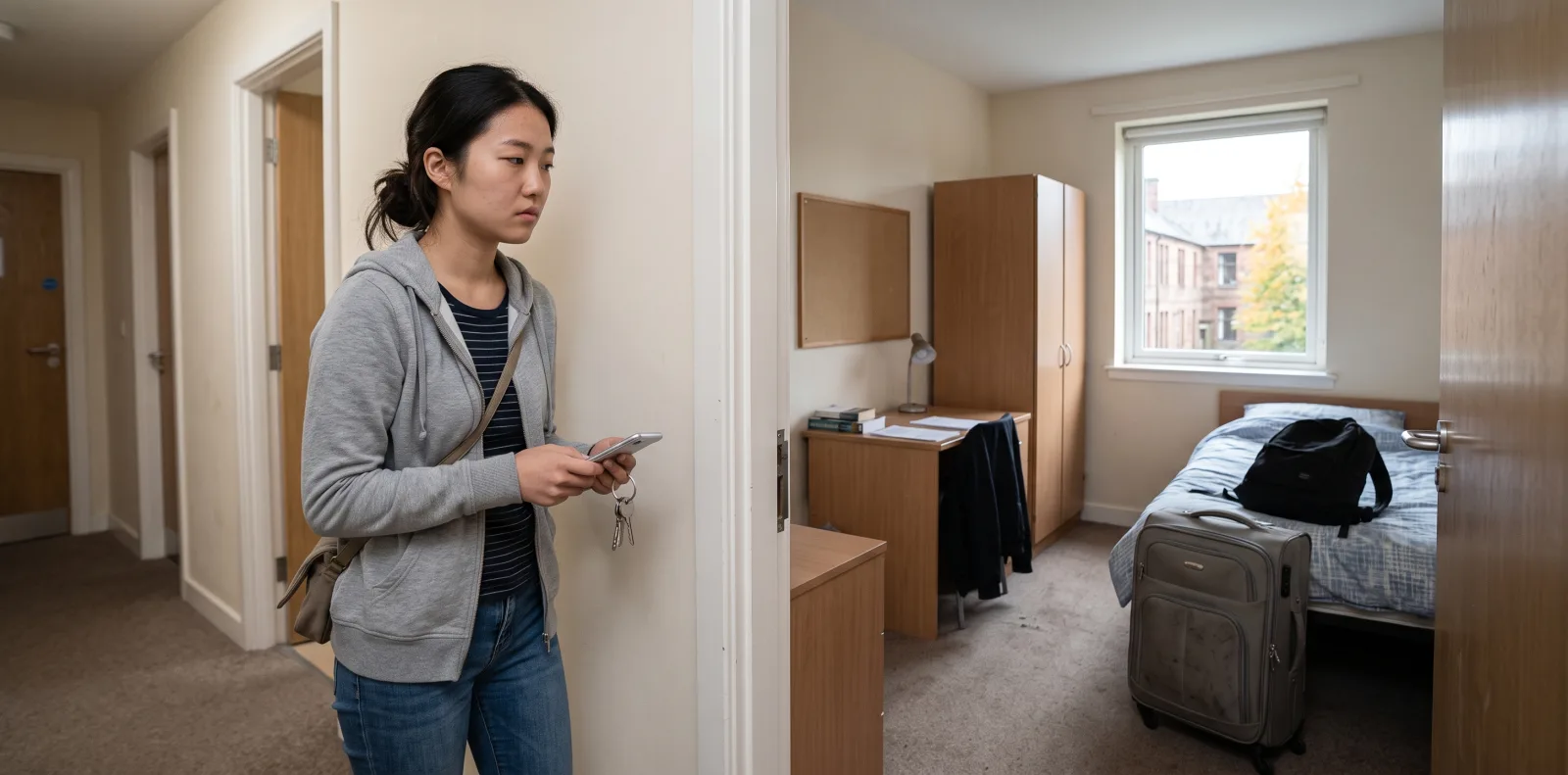
You open LinkedIn because a careers adviser told you to, and land on a profile that's mostly grey placeholder text. Add your current position. Add your education. Add a photo. You have the education bit covered. Everything else is a box waiting for a job you don't have yet, and the cursor just sits there.
This is the default state of almost every first-year and most second-years, and it's exactly when students decide LinkedIn is "for people with actual careers" and close the tab until placement year forces the issue. That costs more than it looks like, since a searchable profile is one of the few parts of a job hunt you can build early, for free, between lectures.
What most advice skips is that recruiters searching for entry-level talent aren't expecting a job history. They're expecting a student. What they, and LinkedIn's own systems, actually reward is narrower than "an impressive career already."
What a recruiter, and LinkedIn's own search, actually look at#
Two different readers look at your profile, and they want different things.
The first is LinkedIn's search and matching system. Recruiters overwhelmingly find candidates by searching keywords, not browsing at random, so a profile that never mentions the words a recruiter would type ("marketing," "data analysis," "Python") is effectively invisible, no matter how good it looks to a human reader. LinkedIn calls a profile with its key sections filled in (photo, headline, location, education, a summary, skills) an "All-Star" profile, and its own guidance has long pointed to that level of completeness as roughly the threshold at which a profile starts surfacing in recruiter searches. Incomplete profiles usually aren't penalised so much as simply not seen.
The second reader is human, skimming for a few seconds before deciding whether to read on. Here, a widely cited piece of LinkedIn's own published data is useful: LinkedIn has said profiles with a photo get far more attention than those without, quoting figures around 21 times more profile views and 36 times more messages. The exact multiplier has varied across LinkedIn's own materials over the years, but the direction hasn't, and it's the cheapest fix on this list.
Keep some scepticism, too. A finished profile has never been shown to outweigh interview performance or actual experience in a hiring decision. The Institute of Student Employers, which tracks how UK graduate employers recruit, consistently finds that structured interviews, assessment centres and application forms carry the real weight, with social profiles used mainly for early discovery. LinkedIn gets you found. It doesn't get you the job.
Turning your degree into content without inventing anything#
You don't need a job title to have content, just evidence more specific than a single line under "Education." A dissertation, a group project, a statistics module you did well in, a society you help run: each is a real activity with a skill attached, and LinkedIn has dedicated fields for it in Projects, Activities and Societies, and Licences & Certifications. Building a spreadsheet to track a research group's data is data management, whatever you called it at the time.
Keep it honest, though: describe what you did, not a title you didn't hold. "Coordinated logistics for a 40-person society trip" is accurate. "Events Manager," when nobody hired or paid you for it, unravels in an interview within thirty seconds.
The Featured section is another underused option. A PDF extract from a dissertation, a link to a GitHub repository from a coding module, or a recording of a presentation you gave all sit well there, and they give a visitor something concrete to click through rather than a paragraph describing it. Volunteering counts the same way. Running a stall at a student newspaper's open day, tutoring a first-year in a subject you found difficult yourself, or organising a bake sale for a charity each involve a genuine skill, whether that's public speaking, patience under pressure, or basic budgeting, and LinkedIn's Volunteering field exists specifically so this doesn't have to be squeezed awkwardly into the Experience section.
Writing an About section when the job history box is empty#
The About section is built for a first-person voice, and student profiles either go silent here or go stiff, aping corporate language. Three sentences do most of the work: what you're studying and roughly where that's heading, one or two concrete things you've done, and what role or sector you're curious about. Recruiters often scan for keywords tied to a sector, so a plain About section containing them beats a vague one dressed in confident filler.
A part-time retail, hospitality or care job belongs here too, and counts more than students usually credit. Handling a complaint or covering a shift at short notice demonstrates communication and working under pressure, skills graduate schemes list explicitly. Leaving those jobs off because they "aren't related to my degree" throws away some of your only verifiable experience.
Why your headline works harder than your job title ever will#
LinkedIn defaults your headline to your job title, which for a student usually means nothing more than the university name. Fixing this is the single highest-leverage change on the profile, since the headline appears next to your name everywhere on the platform, whether or not anyone opens your full profile.
A workable LinkedIn headline for students does two jobs in roughly 220 characters: states what you're studying and when you finish, and names one or two areas you're genuinely interested in. "Final-year Economics student, University of Leeds | Interested in data analysis and public policy | Open to internships" isn't exciting copywriting, and doesn't need to be. It's searchable and honest. Compare that with "Aspiring changemaker | Passionate about making a difference," which has no keywords, no timeline, and nothing a search algorithm or a human can act on.
Building a network from zero without messaging strangers#
The lowest-friction first connections are people you already have a reason to know: coursemates, seminar tutors, society committee members, alumni who spoke at an event you attended. A short note referencing how you know them ("We were in the same seminar group for Comparative Politics this term") gets accepted far more often than a blank request, and turns networking into a habit rather than a panic three weeks before graduation.
Following companies and people in a field you're curious about, rather than connecting with them uninvited, is the sensible next step, so that when you eventually do message someone there, you're not messaging a total stranger.
LinkedIn's own Alumni tool, found on your university's LinkedIn page, is worth a look here. It lets you filter former students by what they studied and where they ended up working, which turns "I don't know anyone in this industry" into a short, specific list of people who were once in your position. Send connection requests in small batches rather than all at once. Ten or fifteen a week, each with a one-line note, is more sustainable and looks less automated than fifty sent in an evening, and LinkedIn's own weekly invitation limits make the second approach impractical anyway.
Posting without the cringe, before you have war stories#
Avoiding posting entirely until you have something impressive to say is understandable, and slightly self-defeating, since posting occasionally is one of the plainer signals that a profile is active rather than abandoned. You don't need a hot take on your industry's future. A short post about a module project you found genuinely interesting, or a talk you attended and one thing you learned, reads as normal professional behaviour, provided it's specific rather than generic.
Skip the vague inspirational post with no content in it ("grateful for this journey," attached to a photo). Aim instead for something closer to a diary entry with the boring bits cut: what you did, what surprised you, what you'd tell someone trying the same thing. That format also doubles as decent interview prep, since it forces you to articulate what you actually learned, which is exactly what interviewers ask.
Questions students ask before they hit publish#
Do I really need a profile photo?#
Yes, and it should be a plain, reasonably lit photo of just you, not a cropped group shot. LinkedIn's own data on the scale of the difference (see above) has stayed consistent in direction even as exact figures have varied across its published sources.
Is it dishonest to describe a society role in workplace language?#
No, provided it matches what you actually did. Describing genuine responsibilities, budgeting, coordinating people, resolving a dispute, in terms a recruiter recognises is translation, not exaggeration. Inventing a title or scale of responsibility you didn't have is where it tips into dishonesty.
How many connections do I actually need?#
There's no threshold that unlocks anything. Sixty relevant connections you genuinely know through your course or societies beat six hundred added indiscriminately, since a smaller real network is more likely to see and respond to what you post.
Will recruiters actually look at a first-year's profile?#
Sometimes, particularly for first-year insight schemes some large employers now run, but the bigger value is that your profile is ready and searchable by the time you apply seriously, rather than rushed together the week before a deadline.
What if I have nothing to put in the Experience section?#
Leave it thin rather than inventing content, and put the weight on Education, Projects, and Activities and Societies instead, all built for exactly this situation. A short, accurate profile beats a padded, vague one.
Should I connect with lecturers and personal tutors?#
Generally yes, once you've had a proper conversation with them, not straight after a single seminar. A short note helps: "Thank you for your feedback on my essay this term, it really helped me rethink the structure." Most academics are used to these requests, and many expect them by final year, since a reference or introduction sometimes follows years later. A blank request sent right after the first lecture of term is the version that lands oddly.
Does having a "good" LinkedIn actually get you hired?#
On its own, no. It gets you found in searches and gives a marginally better first impression. The interview, the application form and your actual evidence still decide the outcome, which is reason enough to spend an afternoon on this, not a term.