
The deadline you already half-missed without knowing it#
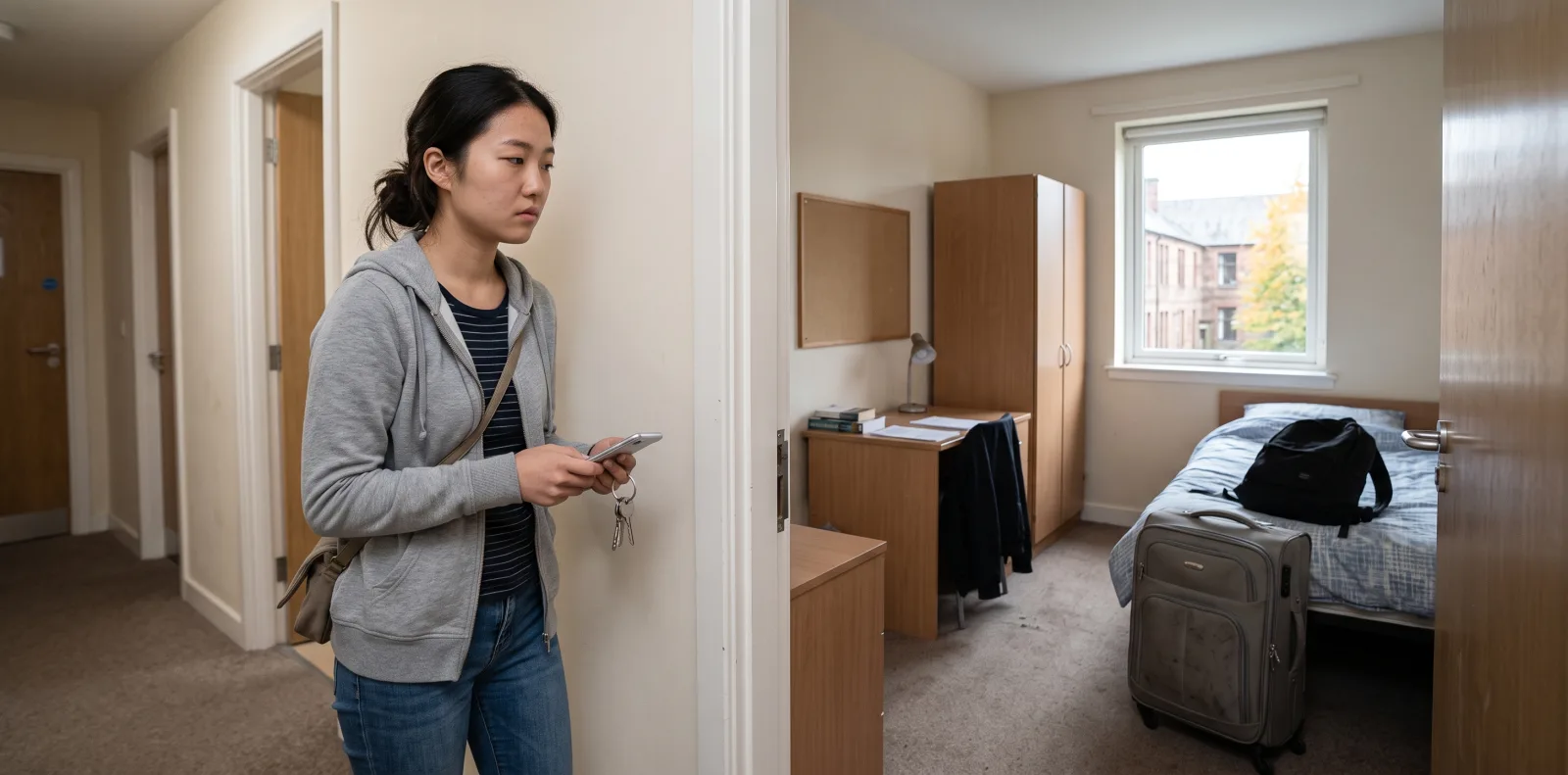
Second week of Freshers', and someone in your flat mentions they've already submitted three graduate scheme applications. You haven't started yours. You open a laptop, search "graduate schemes UK", and find a list of employers whose deadlines are three weeks away, or in a few cases, already closed.
That panic makes sense. UK search interest in "graduate schemes" nearly doubles between August and September, then holds through October before dropping off into the New Year, according to Google Ads keyword data pulled for this piece in September 2026. The spike lands exactly where most students think they still have months to spare.
The calendar behind it is unforgiving, but it isn't a mystery. It follows a pattern that repeats most years, and once you can see the shape of it, "have I already missed this" becomes a much smaller question.
What a graduate scheme actually is, versus a normal graduate job#
The two terms get used interchangeably, which is part of the confusion.
A graduate scheme (sometimes "graduate programme") is a structured route into a large employer, usually one to three years long, built around rotations through different teams, formal training, a cohort who all start on the same date, and often a professional qualification funded alongside the job. Think of the well-known intakes at a bank, an engineering firm, a retailer, or the Civil Service Fast Stream.
A graduate job, by contrast, is simply a role open to new graduates. No rotation, no cohort, no fixed shared start date. Most UK graduates end up in graduate jobs rather than formal schemes, because schemes are a small, visible slice of a much larger and messier labour market. The Higher Education Statistics Agency's Graduate Outcomes survey has found that the large majority of UK graduates in work fifteen months after finishing their degree were not on a named, structured scheme at all.
Two more terms worth knowing. A rolling deadline means an employer reviews applications as they arrive and closes the vacancy once it's filled, whatever the date printed on the advert. A fixed deadline means the advert stays open until a set date regardless of how many people apply before then. An assessment centre is a half-day or full-day event, usually the final stage, mixing group exercises, a case study, and one or more interviews with several candidates at once.
The recruitment calendar: when applications actually open and close#
Most large UK graduate employers open their main scheme applications in late August or September, timed to catch the new academic year and university careers fairs. High Fliers Research, whose annual "The Graduate Market in the UK" report has tracked the UK's leading 100 graduate employers since the late 1990s, has repeatedly found that this cohort fills much of its vacancies before Christmas, with a smaller second wave running through January and February for whatever's left open.
That pattern isn't universal. Public sector schemes, including the Civil Service Fast Stream, plus some retail, engineering and technology employers, run later, often opening in autumn and staying open into spring. A few sectors, notably some accountancy and law firms hiring for schemes that start a year or more out, open applications the better part of two years ahead of the actual start date.
The upshot: there's no single "graduate scheme season". There's an autumn rush that grabs most of the attention and the most competitive employers, then a longer tail through winter and into spring for anyone who missed the first wave or is aiming at a sector that recruits on its own schedule.
Rolling deadlines versus fixed deadlines: why "apply early" isn't a cliché#
Careers advisers say "apply early" so often it stops meaning anything. Here's the mechanism behind the advice.
Many large graduate employers, particularly in retail, engineering, consulting and parts of the public sector, run rolling deadlines. The advert might say "closes 30 June", but if enough strong candidates have already been assessed and offered places by March, the vacancy quietly disappears from the site months early. The published date is a ceiling, not a promise.
Fixed deadlines are more common among the biggest, most process-heavy recruiters, particularly investment banks and the large professional services firms, where every application submitted before the cut-off is guaranteed a read. Even then, later applicants compete for a shrinking pool of assessment centre slots, since those get booked within the deadline window on a first-come basis.
The Institute of Student Employers, a membership body representing UK graduate recruiters, tells its members and job seekers that early applications tend to get reviewed with more capacity and less fatigue than the ones landing in the final week. That's not written into law, and a handful of employers explicitly promise to treat every application within the deadline equally. But treating every stated deadline as genuinely final, rather than a rolling one in disguise, is a common and avoidable mistake.

Where the vacancies actually sit, and what the numbers say about competition#
Worth being honest about scale first. High Fliers Research's annual survey of the UK's top 100 graduate employers has, in recent years, recorded flat or falling graduate vacancy numbers among that group, with starting salaries stuck broadly around the £30,000 to £34,000 mark for several years running. That's a narrow slice of the market, though an influential one, since it covers many of the best-known scheme brands.
Competition has also risen. The Institute of Student Employers' annual Student Recruitment Survey reported a sharp jump in applications received per graduate vacancy in 2024 compared with the year before, a shift several recruiters linked partly to how easy generative AI tools have made it to churn out polished applications quickly. That doesn't mean every scheme is equally oversubscribed. Applications per vacancy vary hugely by sector and by how recognisable the employer is; a flagship bank or consultancy scheme draws a very different volume than a regional engineering firm's programme.
None of these figures capture the full graduate job market, only the schemes that show up in these particular surveys. Office for National Statistics data on youth unemployment is useful context here too, since the wider labour market for young people has been tighter in recent years than headline "graduate jobs are booming" narratives sometimes suggest.
Inside the assessment centre window: what happens after you click submit#
Once an application goes in, most graduate schemes run through a broadly similar sequence. Typically: an online form plus CV, sometimes a short set of reasoning tests, occasionally a recorded video interview, and finally an assessment centre bringing several candidates together for a group exercise, a case study, and interviews with staff.
The sequence can take anywhere from a few weeks to a few months, which is part of why the calendar drags out so long. An employer that opened applications in September might not run assessment centres until November, and might not confirm offers until January or later, especially with a large pool of applicants to work through.
That matters for planning. Weighing up several schemes with staggered assessment centre dates can mean juggling offers and interviews across months rather than hearing back all at once. That's normal, not a sign anything has gone wrong.
Where to actually track live deadlines, because no fixed list stays accurate#
This is deliberately not the article that hands you a table of fifty named employers and their exact 2027 deadlines. Those lists go stale within weeks: employers move dates, extend rolling deadlines, or close schemes early without much notice, and a static article can't keep up.
Treat these as your live sources instead, all free to use. Prospects.ac.uk, run by Jisc, maintains a searchable, continuously updated graduate jobs and schemes database with deadlines attached to each listing. TargetJobs and Bright Network run similar live databases, popular enough among UK students to be worth a free account. Your own university careers service almost certainly runs a job board with schemes that have specifically recruited from your institution before, plus one-to-one advice most students never bother booking. And for a scheme you already have your eye on, the employer's own careers page is the only source guaranteed to be current, since third-party sites can lag by days or weeks.
Common questions about applying to graduate schemes#
What's the real difference between a graduate scheme and a graduate job?#
A scheme is structured: fixed rotations, a training plan, a cohort starting together, often a funded qualification built in. A graduate job is just a role a graduate can apply for, without any of that. Most working graduates are in the latter.
When should I actually start applying?#
For flagship schemes at well-known employers, late August through October is the safest window, since that's when applications and assessment centre slots are least oversubscribed. Sectors that recruit later, such as some public sector or engineering programmes, give you more room, but "later" usually still means before Christmas rather than after it.
Do all graduate schemes require a 2:1 degree classification?#
Many historically did, and some still list it as a preference, but the picture has shifted. A growing number of large employers, including several in the High Fliers Top 100 cohort, have publicly dropped strict degree classification requirements in favour of other selection criteria. Check each employer's stated entry requirements rather than assuming you're excluded.
What happens if I miss the autumn deadlines entirely?#
You haven't missed the whole cycle, just the busiest part of it. Rolling deadlines and later-opening sectors mean genuine opportunities continue into spring, though the total number of open vacancies does shrink as the year goes on.
Can I apply to more than one graduate scheme at the same time?#
Yes, and most students do. There's no formal limit or penalty for applying to several in parallel, provided you can give each application the tailored attention it needs rather than sending an identical, generic form to every employer.
How competitive is this really, on average?#
More competitive than it was a few years ago, based on the Institute of Student Employers' recent survey data on applications per vacancy, though the exact odds vary enormously by employer and sector. Treat any single averaged statistic with caution and put your energy into researching the specific schemes you're targeting.
Does a rejected application this year rule me out for next year?#
Generally not. Most employers don't keep a permanent blacklist, and circumstances, application quality and competition levels shift from year to year. Some do ask you to wait six to twelve months before reapplying to the same scheme, which is worth checking in their FAQs.