The 90 seconds before the paper turns over#
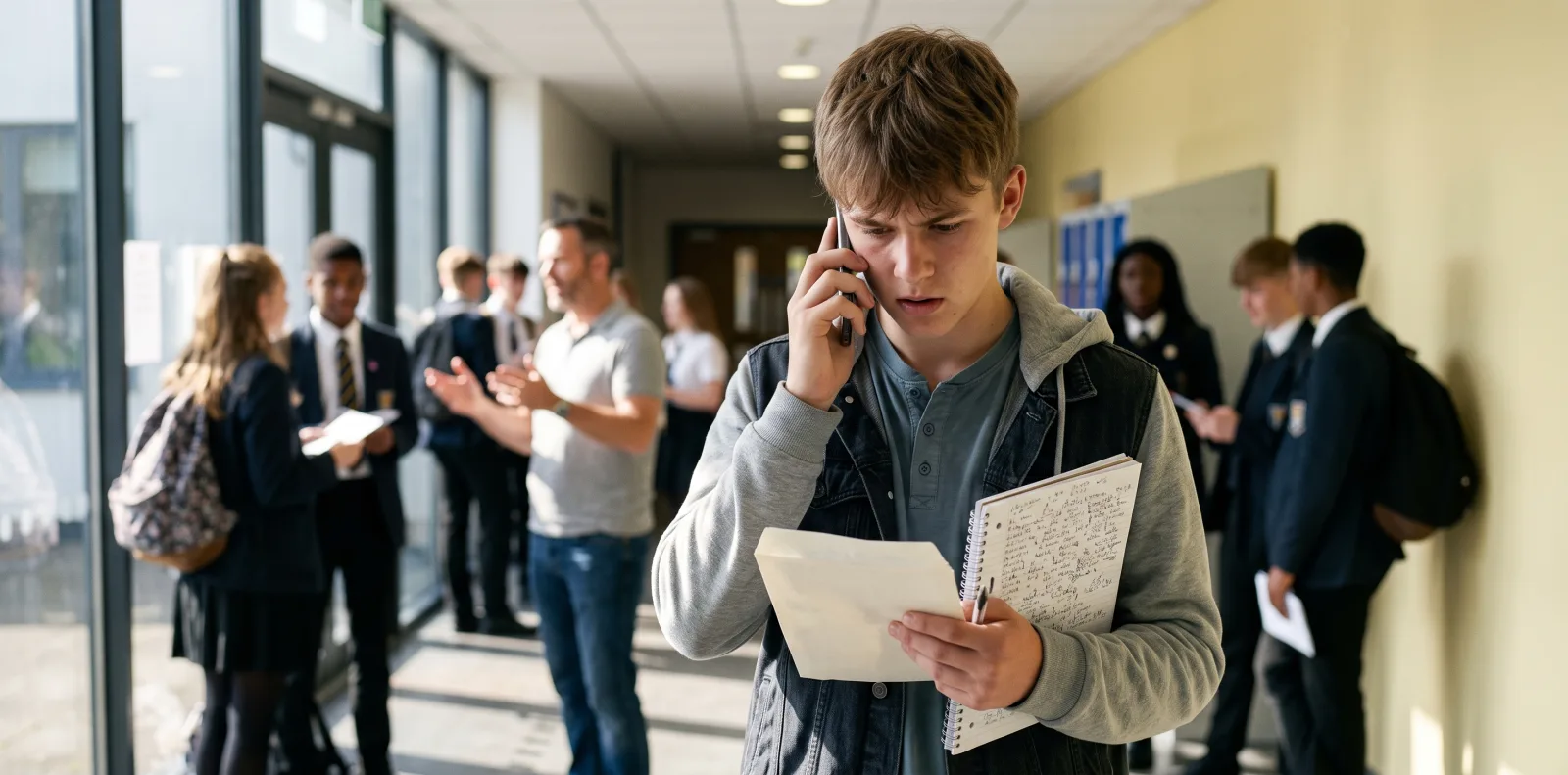
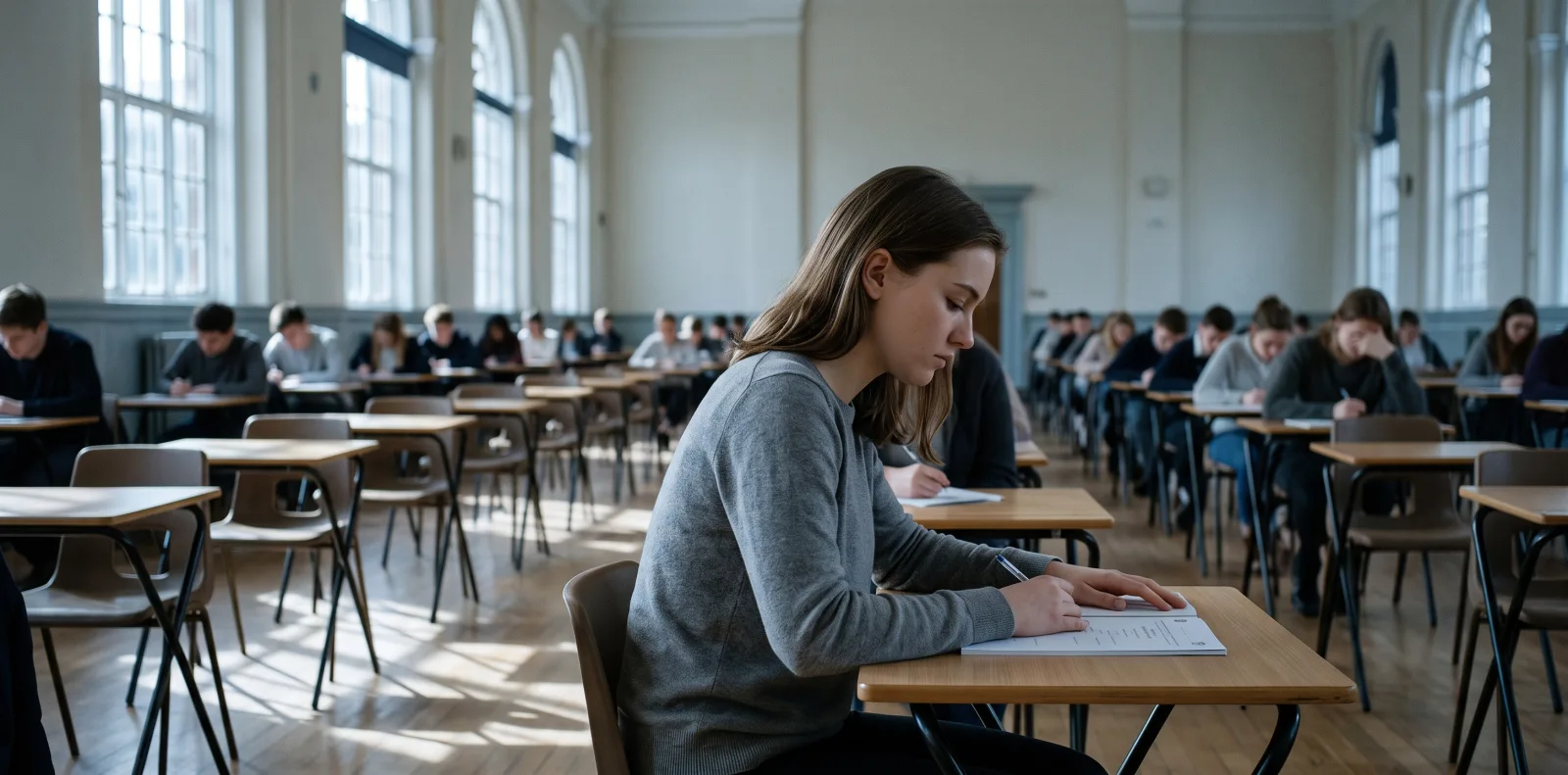
You know the moment. The invigilator says you may begin. Everyone around you flips the paper over with what looks like unbothered competence. Your heart is doing something unhelpful, your hands have gone cold, and question one reads like a language you dropped in Year 7.
Most advice for this moment is cheerleading. Believe in yourself. You've got this. Kind, and useless to a working memory system that has just been hijacked.
A 2026 survey of 1,000 UK students found that 85% had experienced exam anxiety, one in four called it "nearly unbearable", and 71% had never asked anyone for help. That last figure is the interesting one.
What exam anxiety actually is, and why your brain does this#
Exam stress is the everyday word for it. Researchers split exam anxiety into parts, and the distinction matters. The first is emotionality, the physical exam anxiety symptoms: racing heart, damp palms, churning stomach, breath high in the chest. The second is worry, the running commentary. I'm going to fail. Everyone else is writing. A third, cognitive interference, covers intrusive off-task thoughts that arrive exactly when you are trying to retrieve an answer.
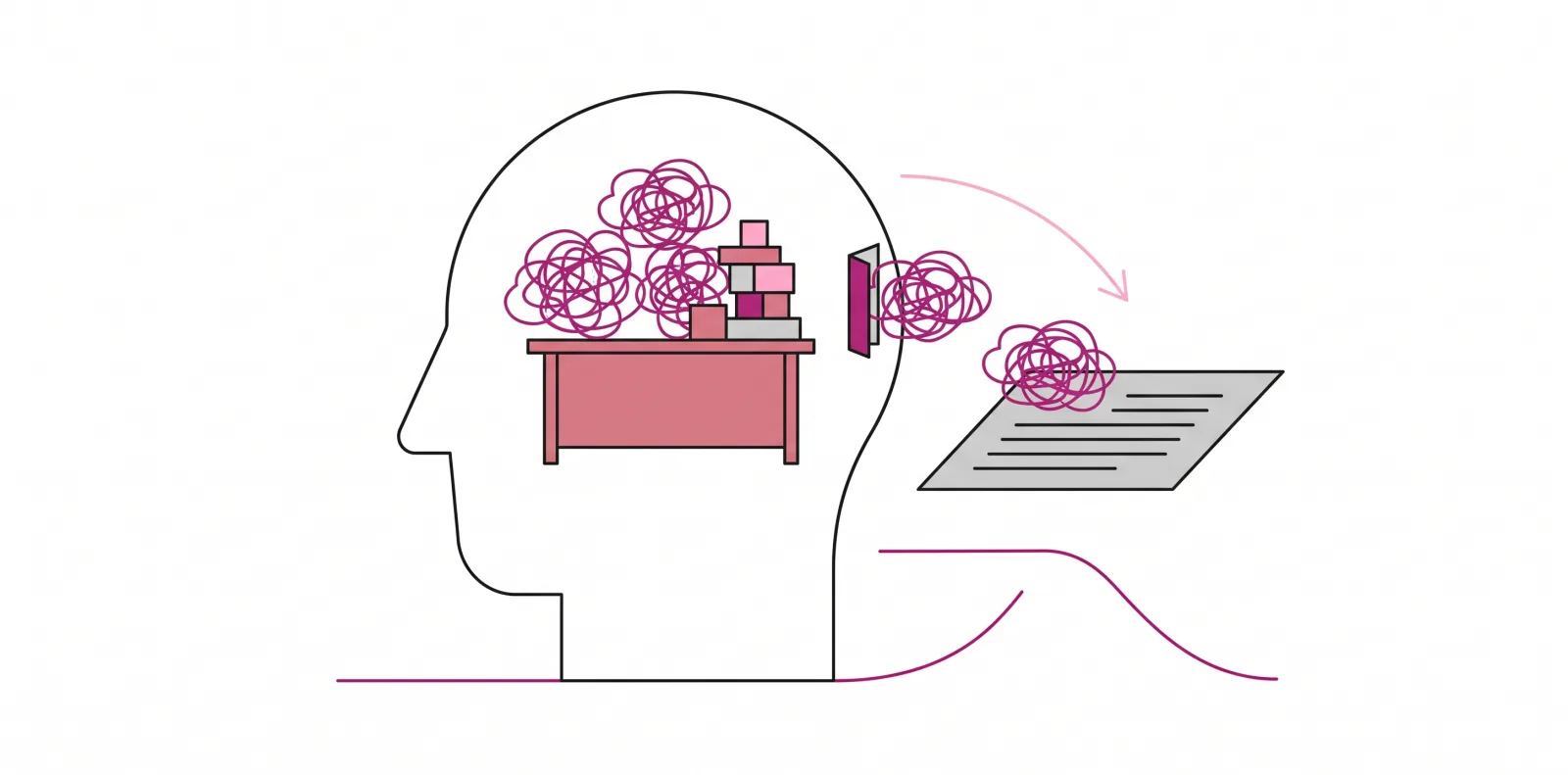
Working memory is your mental workspace, where you hold information while doing something with it. It is what keeps the first half of an essay argument in mind while you build the second. It is small, and everything competes for room.
Attentional control theory, the dominant framework here, proposes that anxiety drains that workspace. It weakens your ability to hold attention on the task and block out distractions, whether the distraction is a coughing stranger or your own catastrophising. You sit the exam on a machine with background applications running.
Which explains the most infuriating experience in education: revising thoroughly, walking in prepared, going blank. You did not forget the material. Retrieval was busy.
Before anyone sells you a miracle, note the size of the problem. A 2018 review of 238 studies by von der Embse and colleagues found test anxiety related negatively to exam scores and grades, but put that relationship in the small to moderate range, not the catastrophic one. A study of adolescents found anxiety predicted worse performance in those with low working memory capacity and better performance in those with high capacity. Anxiety costs resources, and the bill lands hardest when resources are already tight.
One result complicates things usefully. Among 730 university students, cognitive interference and low confidence predicted poorer performance, while worry and physical arousal added nothing on their own. Your thumping heart is probably not what costs you marks. The intrusive thoughts are.
Fix the revision before you fix the feelings#
Of all the revision tips you will be handed this term, the one that lowers anxiety most is a change in how you revise.
Re-reading and highlighting feel productive because they feel fluent. You recognise the material, mistake recognition for knowledge, and walk in with confidence built on sand. Retrieval practice, closing the book and forcing information out of your head instead of back into it, feels worse and works far better.
It also lowers anxiety, the part students rarely hear. A 2023 meta-analysis of 24 studies and 3,374 participants found practice quizzes cut test anxiety by a medium effect (Hedges' g = −0.52), easier quizzes helping more than brutal ones. A survey of 1,408 pupils found 72% said classroom retrieval practice made them less nervous about real exams.
Anxiety feeds on uncertainty about your own competence, and every self-test swaps a guess for evidence. By the twentieth past paper the exam hall is not a threat. It is Tuesday.
Keep your own testing low-stakes. High-pressure quizzes wipe out the benefit that low-pressure ones produce, so marking yourself out of ten and despairing is a rehearsal for panic. And watch for the trap: the more test-anxious a student is, the less likely they are to self-test, which leaves them less prepared, which raises the anxiety. If self-testing feels awful, that is the loop talking.
Reframe the racing heart instead of fighting it#
Telling anxious students to calm down works less well than telling them their adrenaline is useful. Arousal reappraisal teaches that a pounding heart and quickened breathing are the body pushing oxygen and glucose towards the brain, which is what you want in an exam. It does not remove the symptoms, it relabels them.
The evidence is unusually good for something so cheap. Community college students given reappraisal instructions before a maths exam reported less anxiety and outscored controls told to ignore their stress. A field experiment by Jeremy Jamieson's group, with 339 students, found lower cortisol on exam days, higher scores on the next two exams, and more students staying on the course. In another, one paragraph in a tutor's email the night before improved first-year scores the next day and grades for the whole module.
A 2024 meta-analysis of 44 effect sizes put the average benefit at d = 0.23, which is small, and the authors called these interventions promising rather than silver bullets. Ninety seconds for a small gain is good value, not a cure.
Empty your head onto paper first#
If intrusive thoughts eat your marks, get them out of your head before the exam starts. In a 2011 Science paper, Gerardo Ramirez and Sian Beilock had students spend ten minutes beforehand writing freely about their worries. Scores improved relative to controls, and the benefit was largest for students habitually anxious about exams. Worries occupy working memory, writing them down offloads them, and the freed capacity goes back into the paper.
This is not journaling for wellness. It is closing background applications. Ten minutes, no structure, nobody reads it, bin it.
The unglamorous stuff: sleep, caffeine and breath#
Sleep, and the surprise about the night before#
A study tracking 88 undergraduates with sleep monitors across a semester found duration, quality and consistency together accounted for about a quarter of the variance in their grades. The surprise: sleep the single night before a test showed no relationship with the score. Sleep across the preceding month and week did.
Which makes the all-nighter debate the wrong debate. One bad night will not sink you. A bad month will.
Caffeine, the default coping mechanism#
In a survey of 925 university students, nearly half reported using caffeine or energy drinks for coping with exam stress. The European Food Safety Authority puts single doses up to 200 mg and daily totals up to 400 mg in the unproblematic range for healthy adults, two to four cups of coffee.
The catch is that caffeine produces a racing heart, jitters and shallow breathing, indistinguishable from exam nerves. You then read the caffeine as fear. It also disrupts sleep at doses as low as 100 mg in sensitive people, undermining the thing that matters most.
Breathing, specified properly#
The long exhale does the work. A randomised controlled study found five minutes daily of cyclic sighing, a double inhale through the nose followed by a long slow exhale through the mouth, improved mood and lowered arousal more than the same amount of mindfulness meditation. A meta-analysis of heart rate variability biofeedback, meaning slow breathing with a feedback signal attached, found large drops in self-reported stress across 24 studies.
Two honest notes. Mindfulness for test anxiety shows a moderate to large pooled effect, but with huge variation between studies and signs of publication bias, so treat confident claims sceptically. And anyone asking how to relax before an exam should know breathing is a practised skill, not a desk improvisation.
Which technique, and when#
| Technique | What you do | When | Evidence |
|---|---|---|---|
| Retrieval practice | Close the book, write what you know, check | Daily, for weeks | Strong. 24 studies, g = −0.52 |
| Sleep consistency | Same bedtime and wake time | All month, not the last night | Strong. About 25% of performance variance |
| Arousal reappraisal | Treat adrenaline as fuel, not a verdict | Night before, and in your seat | Modest. Pooled d = 0.23 |
| Expressive writing | Ten unstructured minutes on what you dread | Right before the exam | Good. Biggest gains for anxious students |
| Slow breathing | Double inhale, long exhale out | Practised daily, used at the desk | Good for arousal, weaker for marks |
| Caffeine control | Cap the dose, stop by early afternoon | All revision period | Indirect, via sleep |
| Re-reading notes | Nothing useful | Never | Beaten by retrieval practice |
Questions students actually ask#
Is some exam anxiety useful?#
Some arousal is. On its own it does not predict worse performance once you account for intrusive thoughts and low confidence. The alertness is fine. The commentary is not.
Why does my mind go blank even though I revised?#
Retrieval and worry compete for the same limited working memory. Nothing has been erased, access is congested, which is why writing worries down and slowing your breath can restore it within a minute or two.
Does deep breathing work, or is it placebo?#
It reliably changes physiology, including heart rate variability, and lowers self-reported anxiety in controlled studies. Whether it converts into marks is much less established, so treat it as symptom management rather than a performance strategy.
Should I pull an all-nighter if I'm behind?#
The night before matters less than the preceding weeks, which is not a licence to stay up. You would be revising at your worst and sitting the paper with degraded attention. Sleep, then run a retrieval session at breakfast.
What about beta blockers like propranolol?#
Propranolol is prescription-only in the UK and blunts physical symptoms rather than worry. Students do get hold of it informally, which is unwise given the interactions with asthma and heart conditions. If you are considering it, see a GP.
Is exam anxiety the same as an anxiety disorder?#
No. Exam anxiety is situation-specific. It becomes a clinical concern when it spreads beyond exams, persists when nothing is being assessed, or stops you functioning. Prevalence estimates for moderate to high test anxiety run from roughly 13% to over 70% depending on the measure, which shows how loose the definitions are.
When should I ask for help?#
If you are avoiding exams altogether, having panic attacks, or your sleep and eating have been disrupted for weeks, contact your university wellbeing service and your GP. UK universities run extenuating circumstances and exam access arrangements for exactly this. Given that 71% never seek support, the bar for asking should be far lower than people set it.
What to do this afternoon#
How to deal with exam anxiety comes down to protecting a small, crowded workspace. Test yourself instead of re-reading. Sleep on a schedule for weeks rather than heroically for one night. Write the worries down before you start. Read the racing heart as equipment, not evidence. None of it is inspiring. All of it is testable.