
The proposal that came back with "not researchable" written across it#
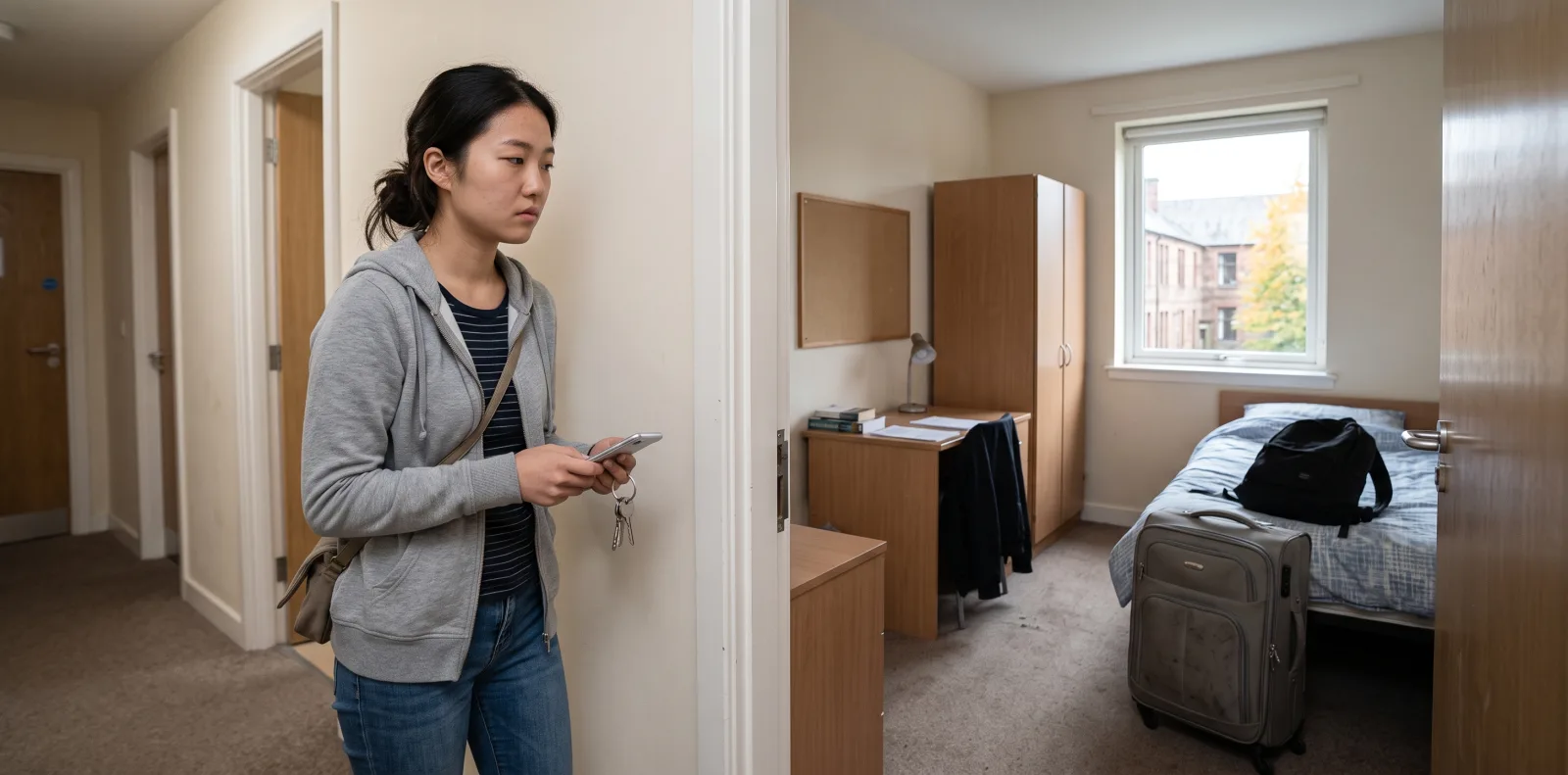
A friend of mine spent three weeks on a proposal titled "the impact of social media on mental health in young people." She was proud of it: introduction, rough plan, a few citations. Her supervisor handed it back with one line in red pen: this isn't researchable as written.
She wasn't lazy, and she wasn't unintelligent. She'd made the mistake almost everyone makes at this stage, treating the proposal as a statement of interest rather than a plan someone else has to be able to say yes to. A topic is not a question. A question is not a method. Enthusiasm doesn't tell a supervisor whether the project can actually be done in the time a student has.
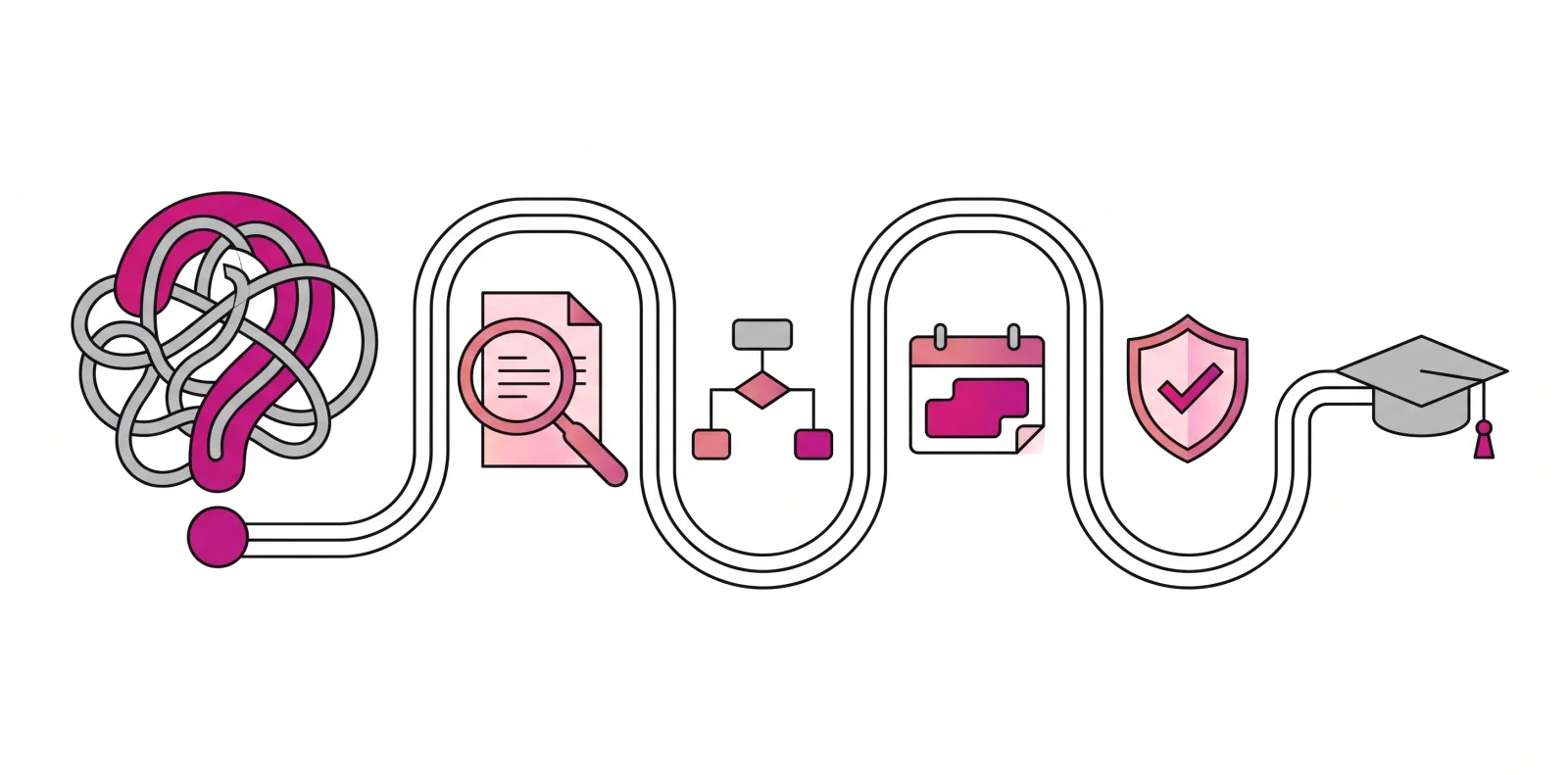
This piece is about closing that gap, so your dissertation proposal survives the specific checks a supervisor runs before putting their name to it.
What a supervisor is actually checking for#
A dissertation proposal is a short document, usually 1,500 to 3,000 words depending on the institution, setting out what you intend to research, how, and why it's achievable. It isn't a mini dissertation. It's a pitch that has to pass a specific kind of scrutiny.
Supervisors read for two things above all else: whether the question is researchable, and whether the project is feasible. A researchable question can actually be investigated with evidence, in the time available, using methods a student can realistically apply. "Is social media bad for mental health" fails that test because it's several questions stacked together, and each contested term, bad, mental health, social media, needs its own definition before data collection can even start.
Feasibility is the quieter word doing most damage in rejected proposals. Research methods writers such as Alan Bryman, whose Social Research Methods is standard reading on UK courses, and Saunders, Lewis and Thornhill in Research Methods for Business Students, both note that a good research question needs to be clear, researchable and significant, but also achievable within the time and resources a student actually has. That last part is the one people skip. A brilliant question needing a year of fieldwork and a research team isn't a good undergraduate or master's proposal. It's a grant application for someone else.
From vague interest to a question you can actually answer#
Most proposals start life as a general area, not a question: "I'm interested in remote working," or "something about AI in education." Fine as a starting point, weak as a submission.
Narrowing works by adding constraints, not more topic. Pick a population, a time frame and a specific angle rather than the whole phenomenon. "How do sixth-form students in one UK region describe the relationship between Instagram use and sleep quality" is narrower than the social media example above, and it's something you could genuinely investigate with a survey or interviews within an academic year.
A useful test, borrowed loosely from Saunders, Lewis and Thornhill's guidance on research questions, is whether yours could be answered with a single word or a vague generalisation. If so, it's a topic dressed up as a question. A researchable one tends to start with how, why, or under what conditions, because those words force a mechanism or comparison rather than a verdict. It also helps to check whether the question has already been answered, since a skim of recent literature is what stops a supervisor writing "already extensively studied" in the margin.
Aims and objectives that don't collapse under their own ambition#
Once the question is tight, the aims and objectives section is where students often reintroduce the scope problem they just solved. One overarching aim is plenty. Underneath it, three to five objectives, each a concrete, checkable step rather than the aim restated in different words.
A weak objective reads like "to explore attitudes towards X." One a supervisor can assess reads like "to identify, through semi-structured interviews with ten final-year students, the three most commonly cited barriers to using X." The second version says what you'll produce and roughly how. Write each objective, then imagine your supervisor asking how they'd know if you'd achieved it. If you can't answer in a sentence, it's still too vague.
A methodology you can defend, not just describe#
The methodology section is where proposals are usually won or lost, because it proves you understand the difference between wanting to study something and knowing how. You don't need a finished research design yet, but you need the logic connecting your question to your chosen approach.
Start with the paradigm question, even if you never use that word: are you measuring something (quantitative), understanding lived experience (qualitative), or both? Bryman's distinction between these traditions is still the reference point most UK courses teach from, and the choice should follow the question rather than personal preference. A "how many" question usually points towards surveys or existing datasets. A "how" or "why" question about participants' perspective usually points towards interviews or case studies.
Then get specific: who or what you'll study, roughly how many, how you'll recruit them, what tool gathers the data, and what you'll do with what you collect. Citing an established secondary source, an existing Office for National Statistics dataset or a validated survey instrument, reassures a supervisor more than a method invented from scratch, since it removes a layer of untested risk. Name the limitations honestly, too. A small sample or a single institution isn't a flaw to hide, it's evidence you understand what your method can and can't tell you.
The timeline that survives contact with reality#
Ask a supervisor what they see most in a weak proposal's timeline and the answer is usually the same: it assumes writing up takes two weeks and nothing goes wrong. Ethics approval takes longer than expected. Recruitment is slower than expected. Transcribing ten hours of interviews takes far longer than expected. A realistic timeline builds in slack for all three.
Block the year into phases: finishing the literature review, submitting for ethics approval and waiting, data collection, analysis, and writing up, with a buffer of two to three weeks before the final deadline that isn't allocated to anything specific. That buffer is the single most common thing missing from proposals that later need an extension. If your project depends on access to a school, a company, or a specific group, say so, and say what your fallback is if that access falls through.
Spotting the ethics problems before your supervisor does#
Ethics approval quietly derails more dissertations than any methodological flaw, mostly because students treat it as paperwork for later rather than a design constraint to plan around now. UK universities generally require ethics review for research involving human participants, following frameworks broadly consistent with guidance from bodies such as the UK Research Integrity Office and, in education and social science, the British Educational Research Association's ethical guidelines.
Proposals that sail through address the obvious flashpoints in advance: how you'll get informed consent, how you'll protect anonymity and store data securely, and whether your sample includes anyone needing extra safeguarding, children, patients, or people who might feel pressured to take part, your own students, say, if you also work as a teaching assistant. Flag this yourself rather than leaving your supervisor to spot it. Timing matters too: ethics committees at most UK institutions meet on a schedule, not on demand, so a proposal that doesn't allow a four-to-six-week review window is already carrying a timeline problem before data collection starts.
Strong proposal, weak proposal: what the difference actually looks like#
| Section | Weak version | Strong version |
|---|---|---|
| Research question | "The effects of remote work on productivity" | "How do line managers in UK SME finance teams describe changes in team communication since shifting to hybrid working?" |
| Aims | One aim restated three ways as "objectives" | One clear aim, three to five checkable objectives with named methods |
| Methodology | "I will use qualitative methods to explore the topic" | Named approach, sample size and recruitment route, named analysis method, stated limitations |
| Timeline | "Data collection: term two. Writing: term three." | Phased schedule with ethics review window, buffer weeks, stated fallback for access problems |
| Ethics | Not mentioned, or "no ethical issues expected" | Specific risks named, with concrete mitigation steps |
Common questions about dissertation proposals#
How long should a dissertation proposal be?#
Usually 1,500 to 3,000 words, but check your department's handbook, since some set a hard limit and mark down anything over it.
Can I change my research question after the proposal is approved?#
Usually yes, within reason. Supervisors expect some drift as you engage with the literature and pilot your methods. Problems arise when the question changes so much that your approved methodology or ethics approval no longer matches the new project.
What if my supervisor and I disagree about the topic?#
Treat it as a feasibility conversation, not a personal one. Supervisors usually push back on scope or method rather than the topic itself, because they can see resourcing problems you can't yet. Ask what would make the proposal approvable rather than defending the original version.
Do I need a full literature review in the proposal?#
No. You need enough engagement with existing research to show your question is real and not already answered, usually a short background section rather than the exhaustive chapter that appears in the final dissertation.
What's the most common reason proposals get rejected?#
A mismatch between ambition and feasibility: a question needing far more time, access, or resources than a student realistically has for the length of the project. Scope, not topic choice, is usually the real issue.
How early should I start thinking about ethics approval?#
At the same time you finalise your methodology. Most UK ethics committees review on a fixed schedule rather than on demand, so building that window into your timeline from the start avoids a delay that has nothing to do with the research itself.
The one-sentence version#
A dissertation proposal isn't judged on how interesting your topic is. It's judged on whether a stranger, reading only the page in front of them, can see a clear line from your question to your method to your timeline to your ethics plan, with nothing left for them to guess.