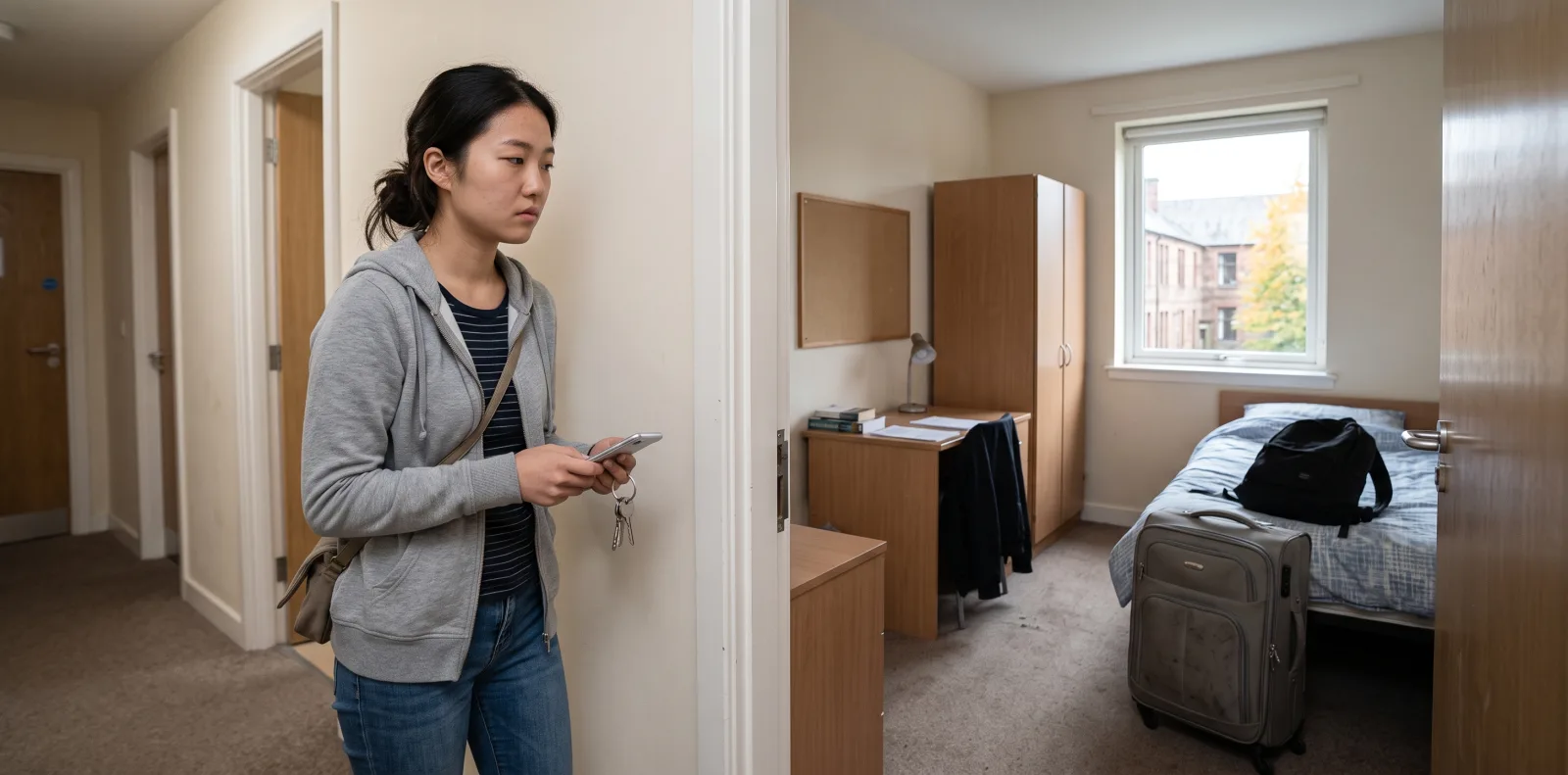

Three weeks feels like plenty of time, until you check the calendar again#
You get the assignment brief on a Monday. Three weeks, the tutor says, plenty of time. You nod, close the tab, and go make tea. Two weeks later you have opened the document four times, typed a title, and closed it again. The deadline that once sat comfortably over the horizon is suddenly Thursday.
This is not a personal failing unique to you. Piers Steel's 2007 meta-analytic review in Psychological Bulletin, which drew together decades of research on the topic, found that somewhere between 80 and 95 percent of college students procrastinate on academic work at some point, and roughly half describe the habit as consistent enough to cause real problems. Letting a three-week deadline stop feeling like three weeks is closer to the student default than the exception.
Why "try harder" doesn't work: this is not a scheduling problem#
Ask most people why they procrastinate and they blame a broken calendar. Bad planning, weak willpower, needs a better app. Researchers who study this for a living see it differently.
Tim Pychyl and Fuschia Sirois, two of the most cited names in the field, argue that procrastination is primarily about managing emotion, not managing time. Their 2013 review in Personality and Social Psychology Review frames it as prioritising the mood of right now over the longer-term cost of avoidance. Opening an essay you find boring, confusing or quietly frightening produces a jolt of discomfort. Closing the laptop removes it instantly. The relief is real, even though it is borrowed against a bigger cost three weeks later.
That trade only makes sense because of how the brain treats time. Steel, working with Cornelius König, built on temporal discounting: the weight we give a reward or a cost shrinks the further away it sits. A deadline three weeks out is discounted so heavily it barely registers as a threat. The same deadline the night before feels urgent, though nothing about the task has changed. Their 2006 temporal motivation theory formalises this: motivation falls as delay increases and climbs sharply as a deadline closes in, exactly the pattern most students recognise and dislike in themselves.
Guilt doesn't fix it, and neither does one explanation#
If procrastination were a rational planning failure, better scheduling would solve it. It usually doesn't, because the behaviour is a coping strategy for an unpleasant feeling, and coping strategies are stubborn.
Sirois has also studied what happens after the avoidance, and the finding is uncomfortable. Guilt does not reliably stop the cycle. In a 2010 study led by Michael Wohl with Pychyl and Katherine Bennett, students who forgave themselves for procrastinating before a first exam were less likely to procrastinate before their next one. Self-flagellation kept the pattern going; letting yourself off the hook broke it, likely because guilt piles more bad feeling onto a task you're already avoiding for emotional reasons.
This isn't the whole picture for everyone. Steel's meta-analysis found low conscientiousness and high impulsiveness were, on average, stronger predictors of procrastination than anxiety. Some students delay because a task is dull, not threatening. The emotion-regulation account explains a great deal, but it's one lens among several.
Turn three weeks into deadlines you can actually feel#
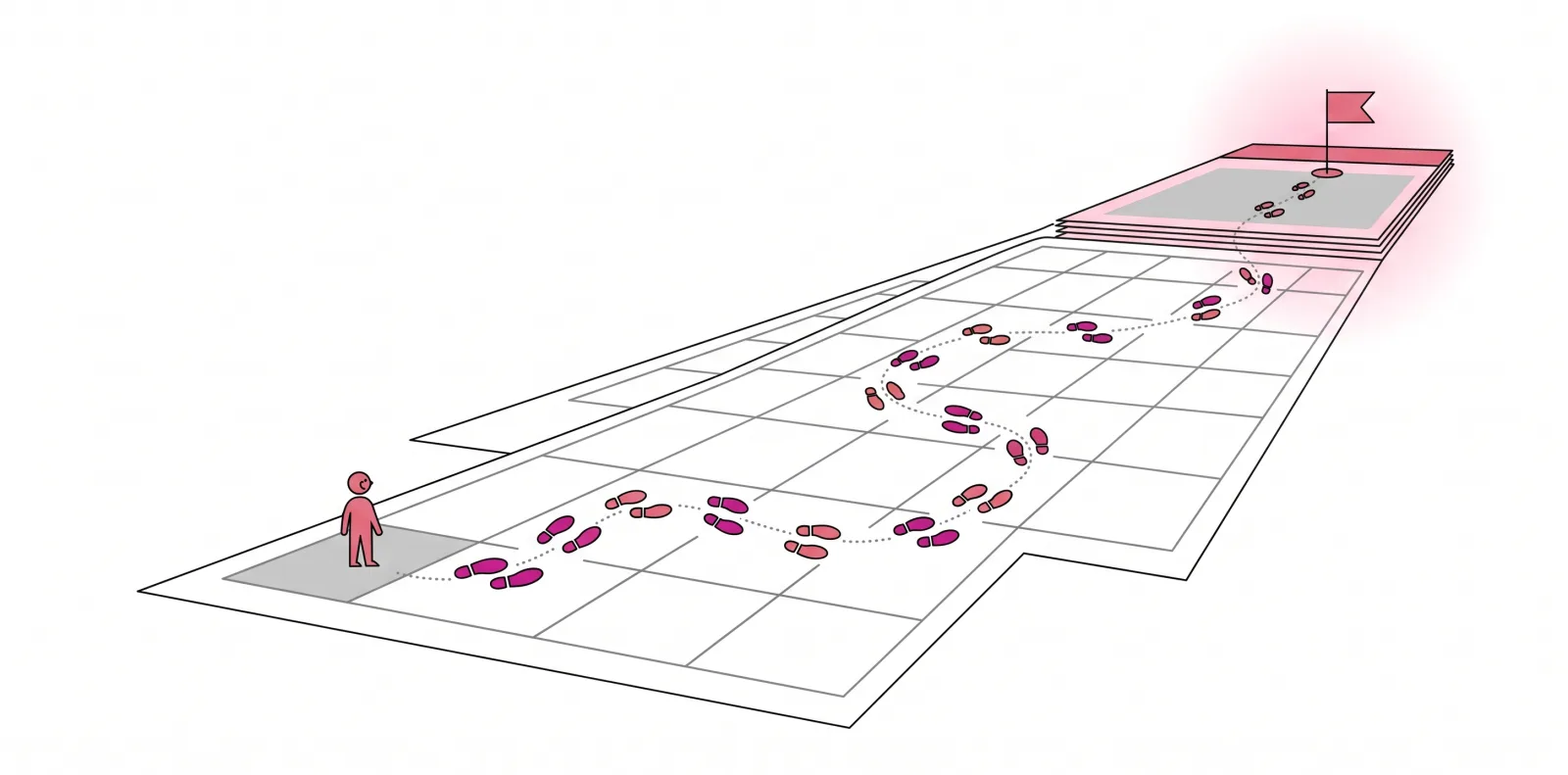
Temporal discounting means one deadline three weeks out will not generate urgency until it's too close to help. The fix is structure that manufactures urgency earlier, not more motivation.
In a 2002 study in Psychological Science, Dan Ariely and Klaus Wertenbroch gave students a term-long assignment with three papers due. One group set their own three deadlines, spaced however they liked, including all on the final day. Another group had evenly spaced deadlines assigned by the researchers. The assigned group performed better and submitted on time more often, even though the free group could, in theory, have chosen the same schedule.
The practical version: don't rely on the single endpoint. Set your own checkpoints, a rough plan by day five, a full draft by day fourteen, and attach real consequences by sending them to a tutor or coursemate. A deadline you can privately move is barely a deadline. One with another person expecting it behaves like the real thing weeks early.
Make each checkpoint a finished thing rather than a block of time. "Read three sources and write one thesis sentence" by day five is easy to check; "spend an hour on it" is not, because the hour can pass while nothing about your readiness has changed. Decide what "done" looks like for each checkpoint before day five arrives, not once you get there, so there's no room to quietly water it down under pressure.
If-then planning: the trick with genuine evidence behind it#
Most procrastination advice is common sense dressed up as a hack. Implementation intentions are the exception. Peter Gollwitzer's research programme has tested them extensively and the effect holds up.
An implementation intention is a specific if-then plan: "If it's 6pm on Tuesday, then I'll open my laptop at the kitchen table and write for twenty-five minutes." It works by attaching the behaviour to a concrete cue, so starting stops depending on how motivated you feel. Gollwitzer's 1999 paper in American Psychologist laid out the theory, and a 2006 meta-analysis with Paschal Sheeran, covering 94 studies, found a medium to large effect on whether people followed through on their goals.
"I'll try to start earlier" is a wish, not a plan. Naming the exact day, time, location and first physical action is what turns a distant goal into something your calendar can recognise.
When the avoidance is really about fear of doing it badly#
For some students, three weeks of silence has nothing to do with boredom and everything to do with dread. Starting means finding out whether the work, and by extension you, is good enough. Not starting keeps that question open a little longer.
Research on perfectionism and procrastination is genuinely mixed, worth saying plainly rather than smoothing over. The clearer pattern involves what Gordon Flett and Paul Hewitt call socially prescribed perfectionism: the belief that other people expect flawless work from you. That form correlates with procrastination more consistently than simply holding high personal standards, suggesting the anxiety is often about judgement rather than quality.
If this sounds familiar, the self-forgiveness research above matters more than any productivity tip. Treating a bad first attempt as expected rather than shameful lowers the emotional cost of starting. So does deliberately writing a rough, ugly first draft with no intention of it being final: a draft can't fail an exam it was never meant to pass.
Environment tweaks that hold up, and ones that mostly don't#
Steel's meta-analysis identified task aversiveness and distractibility as sturdier predictors of procrastination alongside impulsiveness, which points toward changing the environment rather than the person.
The best-supported move is reducing friction between you and the work. Put your phone in another room rather than face down on the desk. A 2017 study by Adrian Ward and colleagues in the Journal of the Association for Consumer Research found that people had less available attention for a demanding task when their own phone sat face-down nearby than when it was left in another room, even though it stayed silent and untouched throughout. The pull on attention seems to come from the phone's presence, not from notifications. Work somewhere that isn't your bed, since a location becomes associated with whatever you do there most often. Body doubling, working alongside someone else on their own task, has thinner formal evidence but a plausible mechanism: another person present adds a small social cost to giving up.
Be more sceptical of gamification alone, streaks, points, badges. These help some people sometimes, but the evidence base is far thinner than for implementation intentions or externally anchored deadlines, and the novelty fades within weeks. Structure involving another human, a shared draft, a tutor expecting an update, has proven more durable than structure that only involves an app.
Questions students actually ask#
Is procrastination just another word for being lazy?#
No. Laziness implies not wanting to do anything. Most procrastinators want to do the work and feel worse, not better, for delaying it. The behaviour sits closer to avoidance under discomfort than to disinterest.
Does the "just start for five minutes" trick actually work?#
Often enough to be worth trying, mainly because starting is usually the most aversive part. It isn't a substitute for the structural fixes above, more a way to get moving on a given afternoon.
I feel terrible after procrastinating. Isn't that guilt useful for next time?#
The Wohl, Pychyl and Bennett research found the opposite: guilt predicted more procrastination before the next deadline, not less. Noting what happened without punishing yourself for it works better.
Could my procrastination be a sign of ADHD rather than ordinary avoidance?#
It can be. ADHD is linked to greater difficulty with task initiation and time perception, which can look identical to ordinary procrastination from outside. If delaying has been a lifelong, pervasive pattern rather than tied to specific dreaded assignments, raise it with a GP or your university's disability service.
Do teacher-set interim deadlines actually help, or do they just add stress?#
In Ariely and Wertenbroch's study, externally set, evenly spaced deadlines improved performance compared with self-chosen ones, without a rise in reported stress. Being real and unmovable seems to matter more than who set them.
What if I don't even know what "starting" looks like for this task?#
Vague, ill-defined tasks are more aversive than clear ones, so spend ten minutes turning the task into a specific first action, "read the first two sources and note one argument each," rather than the general and slightly frightening "do the essay." An if-then plan is only as good as the action named inside it.
Does procrastination have costs beyond a lower mark?#
Possibly, and not only academic ones. Sirois has published research, including a 2015 study in the Journal of Behavioral Medicine, linking chronic procrastination to higher long-term stress and, in that work, to increased risk factors associated with hypertension. The proposed mechanism is straightforward: procrastination doesn't remove a stressor, it postpones it, so the stress response runs longer overall rather than resolving in one short burst. That's not a reason to panic over a single late assignment. It's a reason to take the pattern seriously if it shows up across most of what you do, rather than treating it as one module's problem.