The clause everyone panics about, and the one nobody reads#
Somewhere in most student tenancy agreements sits a line saying guests can't stay overnight without the landlord's written permission. Every year, house shares read that clause, assume it has teeth, and quietly panic about a partner staying over during exam term.
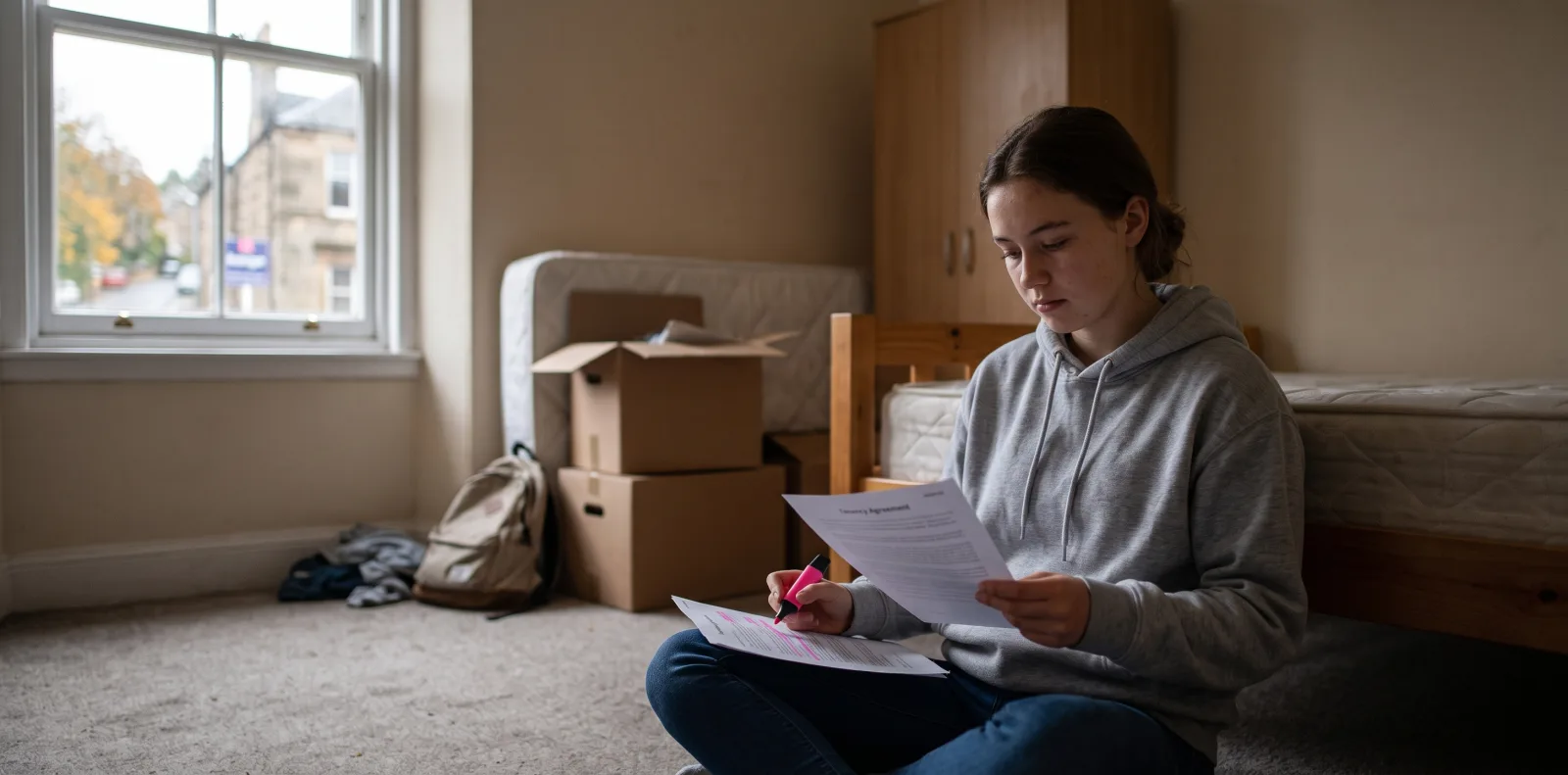
A few paragraphs later sits a much duller sentence doing almost nothing to earn its reputation: something about tenants being "jointly and severally liable" for the rent. Nobody highlights that one. It's the clause most likely to land a student with someone else's unpaid rent.
That gap between how scary a clause sounds and how much legal weight it carries is the real problem with tenancy agreements. Landlords can write almost anything into a contract; whether it holds up once it meets housing law is a separate question, and the answer changes depending on which nation of the UK you're renting in.
What a tenancy agreement actually is, and what quietly overrides it#
Most students renting privately in England are on an assured shorthold tenancy, or AST, the default tenancy created by the Housing Act 1988, carrying statutory rights whether or not the paperwork mentions them. Scotland moved away from this model in December 2017, when most new tenancies became Private Residential Tenancies under the Private Housing (Tenancies) (Scotland) Act 2016, open-ended rather than fixed-term. Wales replaced ASTs with "occupation contracts" under the Renting Homes (Wales) Act 2016, in force since December 2022. Northern Ireland still runs on the Private Tenancies (Northern Ireland) Order 2006, later amended to add deposit protection. The same clause can be enforceable in one nation and worthless in another.
More important than the tenancy type: a signed contract isn't the final word on what a landlord can do. Underneath it sits statute law, and where the two conflict, the statute usually wins. A landlord's repairing duties under the Landlord and Tenant Act 1985 can't be signed away, whatever the contract says. Separately, the Consumer Rights Act 2015 treats a tenancy agreement as a consumer contract. Any term creating "a significant imbalance" against the tenant, contrary to good faith, isn't binding, even signed, a principle the Competition and Markets Authority now polices from work the Office of Fair Trading began in 2001. A clause existing in writing and a clause being enforceable are two different things.
Deposit protection: the one landlord mistake that actually pays out#
This is the rule most worth knowing, because breaching it has real financial consequences. Since April 2007, any deposit taken for an assured shorthold tenancy in England and Wales must go into one of three government-approved schemes (the Deposit Protection Service, MyDeposits or the Tenancy Deposit Scheme) within 30 days, with "prescribed information" sent to the tenant, under the Housing Act 2004, tightened by the Localism Act 2011. Scotland runs an equivalent system under the Tenancy Deposit Schemes (Scotland) Regulations 2011.
Skip this step and the landlord doesn't get a slap on the wrist. Citizens Advice and Shelter both confirm a tenant can go to court for compensation of one to three times the deposit, on top of getting it back. An unprotected deposit also blocks a Section 21 "no-fault" eviction notice in England until it's protected or returned. It's one of the few areas where students hold genuine leverage, worth checking within days of moving in, not months later.
Guest bans, noise rules and subletting: mostly softer than they read#
A clause banning overnight guests without permission, or capping how many can stay over, is common in shared-house contracts and generally not unlawful in itself: a landlord managing a house in multiple occupation has a legitimate interest in who's living there, particularly around fire safety and licensing limits. But "not unlawful to include" differs from "enforceable by eviction on day one." Landlords must still follow the proper legal process to end a tenancy, and one missed permission is unlikely to justify that alone. Shelter's guidance on unfair terms notes a blanket ban with no discretion at all is more likely to be challenged as unfair than one asking for reasonable notice.
Subletting clauses sit on firmer ground. A term preventing a tenant from subletting the whole property, or taking in a lodger without consent, is standard and enforceable, since the landlord has a real interest in who occupies their property. Noise clauses land in between: persistent noise can feed into eviction proceedings, but one complaint rarely ends a tenancy, and a council's own statutory noise powers under the Environmental Protection Act 1990 usually apply first.
"No DSS" clauses and other blanket bans that fell foul of the law#
A clause or advert refusing tenants on housing benefit or Universal Credit, shorthand as "No DSS" after the old Department of Social Security, might look like an ordinary preference. Since 2020 it hasn't been treated that way in court: a widely reported County Court ruling that year found blanket bans on benefit claimants amount to unlawful indirect discrimination under the Equality Act 2010, since women and disabled people are statistically more likely to rely on housing benefit. Shelter and the National Housing Federation both published guidance afterwards confirming that landlords and agents advertising "No DSS" are on shaky legal ground.
This rarely bites on typical undergraduate house shares, since most students aren't renting on housing benefit. It matters more for mature students, student parents, or anyone with a housing element to their Universal Credit claim.

Repairs: the responsibilities a contract cannot sign away#
This is where the gap between "written down" and "enforceable" is widest, and where students lose the most money believing an unenforceable clause. Section 11 of the Landlord and Tenant Act 1985 places a legal duty on the landlord, for most tenancies under seven years, to keep the structure and exterior in repair and keep water, gas, electricity, heating and sanitation working, regardless of what the agreement says. A clause stating the tenant is responsible for "all repairs" does not override Section 11 for the categories it covers, according to Shelter's disrepair guidance, and is void to that extent even if signed.
There's a real limit worth being honest about. Section 11 covers structure, exterior and core installations, not wear and tear or damage caused by the tenant's own neglect, and students need to notify the landlord of a defect in writing before the obligation is triggered. Since the Deregulation Act 2015 in England, a landlord also can't serve a retaliatory Section 21 notice within six months of a legitimate, council-confirmed disrepair complaint.
Which common clauses actually survive contact with the law#
| Clause | Status | Why |
|---|---|---|
| Deposit not protected in a scheme | Not enforceable / penalised | Housing Act 2004 requires protection within 30 days; breach risks 1 to 3x compensation |
| "Tenant responsible for all repairs" | Largely unenforceable | Landlord and Tenant Act 1985, s.11, can't be excluded for structure, exterior and core installations |
| "No overnight guests without permission" | Depends | Not unlawful to include, but rarely grounds for eviction alone; blanket refusal risks an unfair-term challenge |
| "No subletting without consent" | Enforceable | Landlord has a legitimate interest in who occupies the property |
| "No DSS" / refusing benefit claimants | Not enforceable | 2020 County Court ruling found blanket bans indirectly discriminate under the Equality Act 2010 |
| Extra fees beyond permitted deposit and rent | Not enforceable | Tenant Fees Act 2019 (England) and equivalents in Wales and Scotland ban most letting fees |
| Rent increase mid-term with no review clause | Usually unenforceable | Needs a contractual rent review term or the statutory Section 13 process |
| Joint and several liability for the full rent | Enforceable | Standard feature of a joint tenancy; any named tenant can be pursued for the whole amount |
Joint and several liability: the boring clause that costs the most#
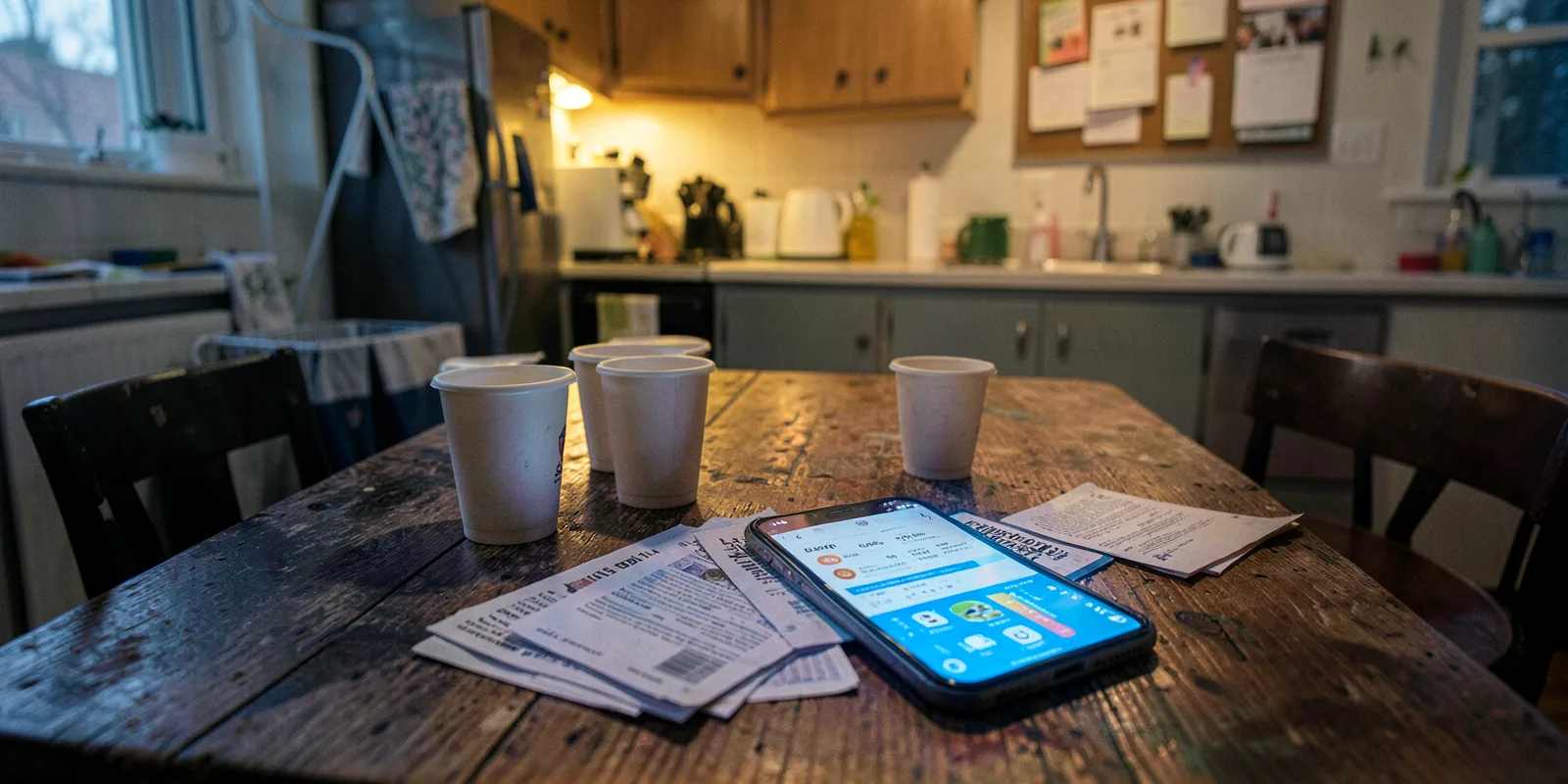
If a house share signs one joint tenancy rather than individual contracts, every named tenant is usually "jointly and severally liable" for the rent. The landlord can pursue any one tenant for the full amount owed, not just their share, if a housemate stops paying or disappears mid-year. Citizens Advice is blunt about this: it's one of the most financially dangerous features of shared student housing, and entirely standard, unlike several clauses students worry about more.
NUS housing guidance recommends checking whether a contract is joint or individual before signing, and agreeing in writing, separately from the tenancy, how costs get split if someone leaves. That side agreement won't override the joint tenancy legally, but it gives a paper trail if things go wrong.
Frequently asked questions about tenancy clauses#
Can a landlord legally ban all overnight guests?#
They can write the clause, and it isn't automatically unlawful, but Shelter's guidance suggests an absolute, discretion-free ban is vulnerable to challenge as unfair. One breach is unlikely to justify eviction alone.
What happens if my landlord never protected my deposit?#
Contact your students' union advice service or Citizens Advice promptly. You can apply to court for compensation of one to three times the deposit, and an unprotected deposit can also block a Section 21 notice in England until it's fixed.
If my housemate stops paying, am I liable for their share?#
Under a standard joint tenancy, yes, potentially for the whole rent, not just your portion. It's the single most important thing to understand before signing a group contract.
Does housing law work the same across the UK?#
No. England, Wales, Scotland and Northern Ireland each run different tenancy systems, and a clause treated one way in an English AST can behave differently under a Welsh occupation contract or a Scottish Private Residential Tenancy.
Where can I get advice specific to my contract?#
Your students' union advice service, Citizens Advice, and Shelter (Shelter Scotland and Shelter Cymru for those nations) all offer free guidance on the actual wording of your agreement. This article covers general principles, not advice for your situation.
Read the boring clauses as carefully as the alarming ones#
The clauses that sound most threatening in a student tenancy agreement are often the ones with the least legal force, while the driest, most procedural line, the one about joint and several liability, is usually the one that can genuinely cost money. Before signing anything, check whether the tenancy is joint or individual, whether deposit protection details arrive within 30 days, and whether repair obligations have been quietly reassigned to you in the small print. None of that needs a law degree, just reading past the clause that sounds scary to find the one that actually is.