The Wednesday of week four, when the flat goes quiet#
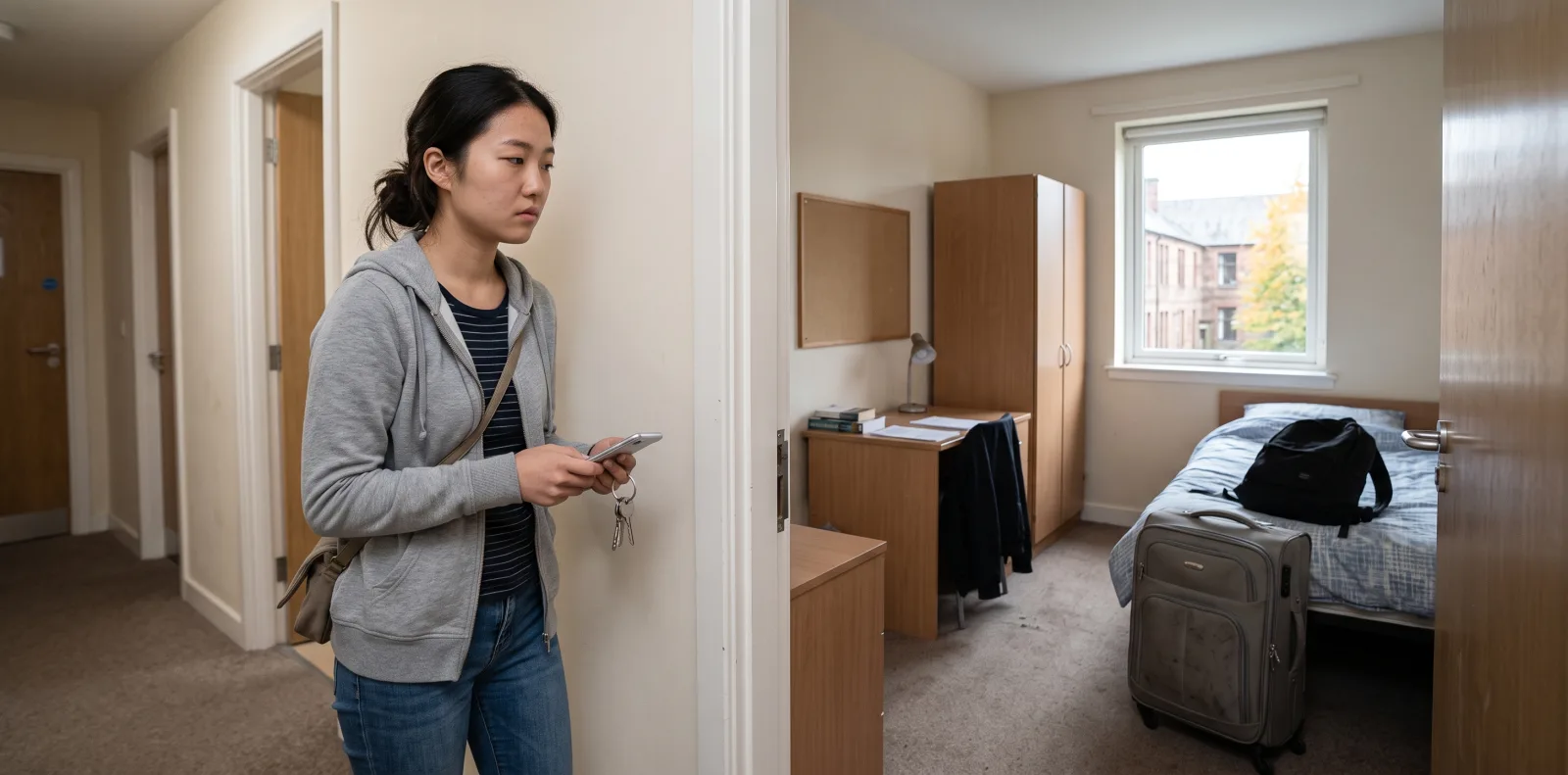
Freshers' week is a blur of quiz nights, bad club music and enough small talk to last a lifetime. You survive it, mostly by accident, and start to think you've cracked this whole leaving-home thing. Then, around the fourth week of term, the timetable settles into something recognisable, the novelty wears thin, and you catch yourself staring at a text from your mum asking how you are, unsure how to answer honestly.
This pattern is common enough that university wellbeing services plan for it. Homesickness rarely peaks on day one, when everything is too new and busy to process. It tends to arrive once the adrenaline of arrival fades and ordinary term-time life, lectures, laundry, cooking for one, begins to look permanent rather than a temporary adventure. UK student support organisations, including Student Minds, describe exactly this delayed pattern, and one of the earliest and most cited pieces of research on the subject, a 1987 longitudinal study by psychologists Shirley Fisher and Bruce Hood published in the British Journal of Psychology, tracked new students through their first term and found homesickness rising in the weeks after arrival rather than immediately on it.
What homesickness actually is, psychologically speaking#
Homesickness sounds like an old-fashioned word, but psychologists treat it as a specific, measurable state rather than vague nostalgia. Researchers generally describe it as a form of separation distress: sadness, anxiety and preoccupying thoughts about home that appear when someone moves away from a familiar environment and the people, routines and cues attached to it. It is not a character flaw, and not unique to anxious or clingy people. Fisher and Hood found homesick students showed more anxiety, low mood and what they called cognitive failure, everyday lapses like losing your keys or struggling to concentrate, than peers who reported little homesickness. If you feel foggier than usual around week four, that's a documented pattern, not a sign you're falling behind.
The delay has a fairly intuitive explanation once you separate two psychological states: excitement and belonging. Freshers' week runs on novelty and adrenaline, new faces, new freedoms, structured social events most nights. Novelty is stimulating, and stimulation can mask distress for a while. Belonging is slower to build, and comes from repeated, unremarkable contact with the same people and places: the coursemate you sit next to twice a week, the shop assistant who starts recognising you, the walk to lectures that stops requiring a map. Until that quieter belonging has had time to form, usually weeks rather than days, the emotional gap left by home has nothing yet to fill it. Some researchers draw loose comparisons with older models of cultural adjustment, such as sociologist Sverre Lysgaard's 1955 "U-curve", an initial high followed by a dip and gradual recovery, though built for people relocating abroad, it applies here only loosely.
Why freshers' week quietly delays the dip#
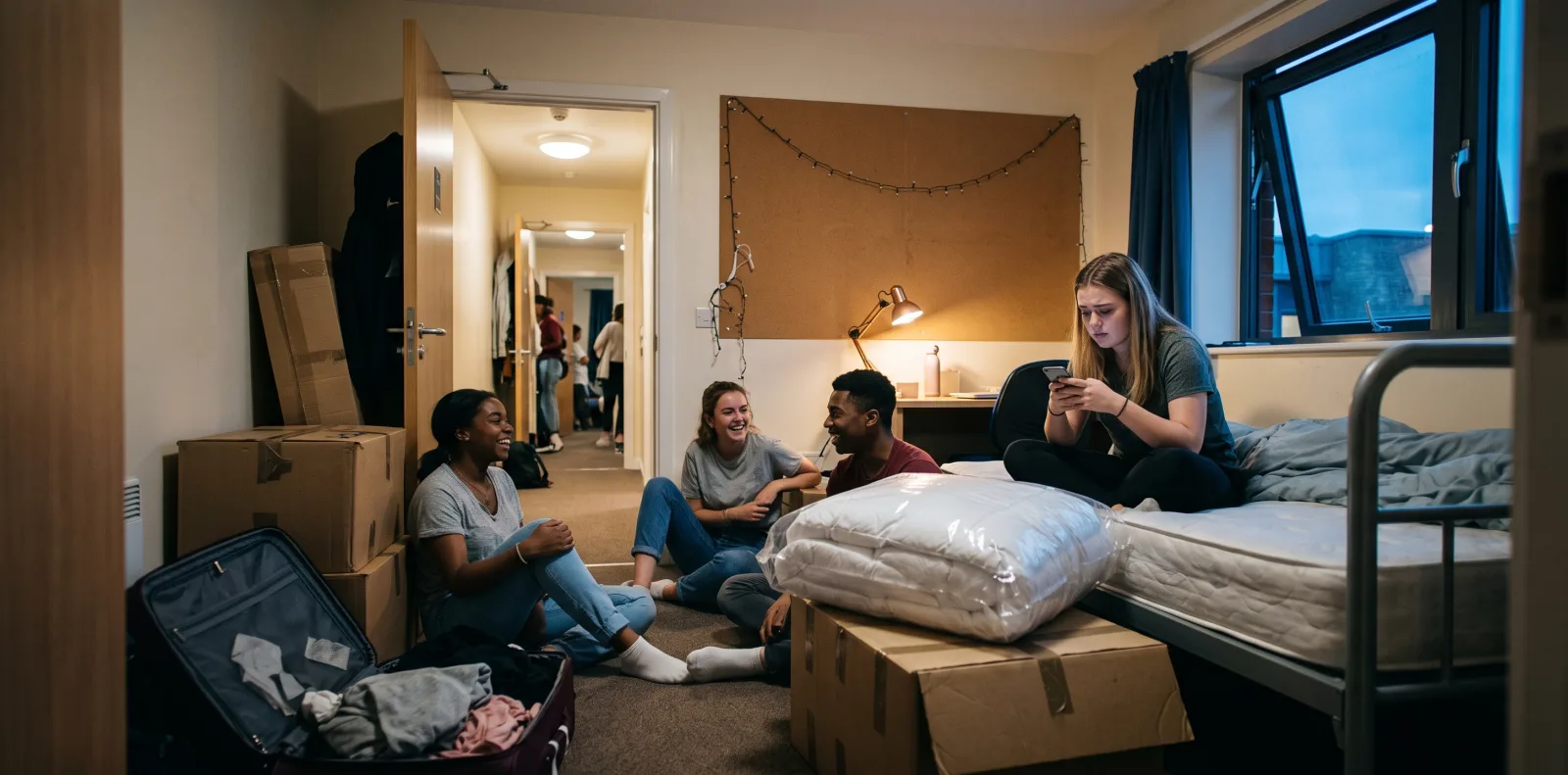
It's worth being specific about why the first week feels deceptively fine. Freshers' events are engineered to keep you busy from morning to night, leaving little space for reflective, home-missing thoughts to surface. You're also surrounded by others who are equally unsettled, creating a levelling effect: nobody looks homesick because everybody is putting on the same brave face. Once the organised events thin out, usually by the second or third week, and you're left with a real timetable and long unstructured evenings, the emotional bill for that earlier distraction can arrive all at once. This isn't a design flaw; freshers' week buys valuable time to make initial contacts. The trouble comes only if you mistake that early calm for the finished job of settling in.
What the evidence actually suggests helps#
There's a consistent theme across research into student adjustment: how you cope with the feeling matters more than how strongly you feel it. A widely cited 2012 review by Christopher Thurber and Edward Walton in the Journal of American College Health, drawing together decades of homesickness research, found students using approach coping, actively building routines, seeking out people and activities, adjusted faster than those relying on avoidance coping: withdrawing to their room, over-planning trips home, or refusing to engage until the feeling passed.
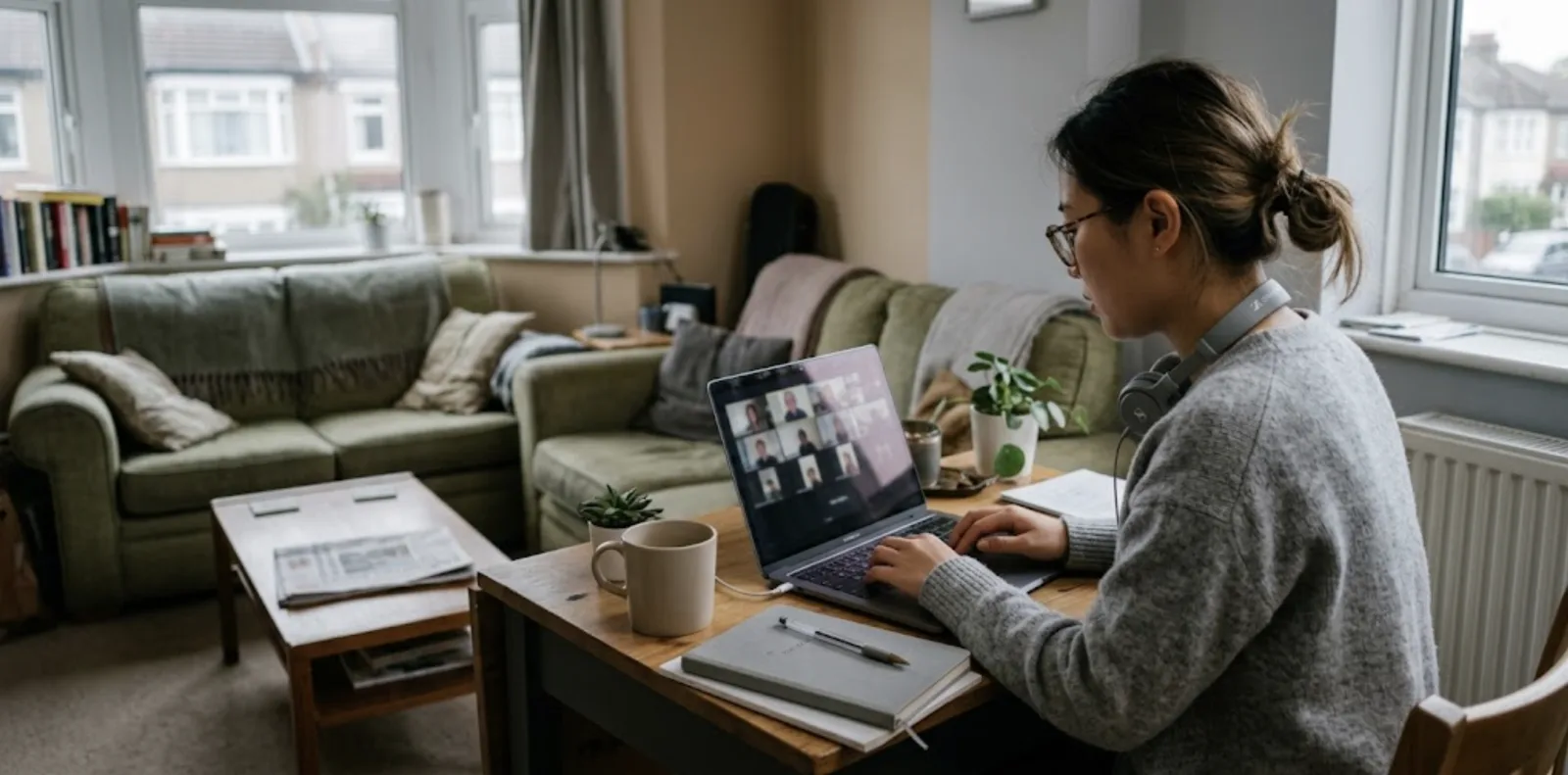
Contact with home is more complicated than "call more, feel better." A 2019 study by Maaike Nauta and colleagues, published in the International Journal of Psychology, tracked ninety-two first-year students using a smartphone app over two weeks and found homesickness spiked around video calls with parents and time spent in their own room, rather than during campus social activity. This doesn't mean calling home is harmful; it suggests the dip around a call is often about contrast, feeling connected for twenty minutes then hanging up into an unfamiliar room, rather than the call itself being the problem. The same study found international students reported markedly higher homesickness than domestic students, a reminder that distance and culture shape the experience.
What doesn't reliably help is suppression: pretending you're fine, avoiding the topic, or assuming admitting to homesickness marks you out as not coping. Thurber and Walton's review specifically flagged that students who denied or minimised homesick feelings often showed poorer adjustment later, not better.
Staying close to home without standing still#
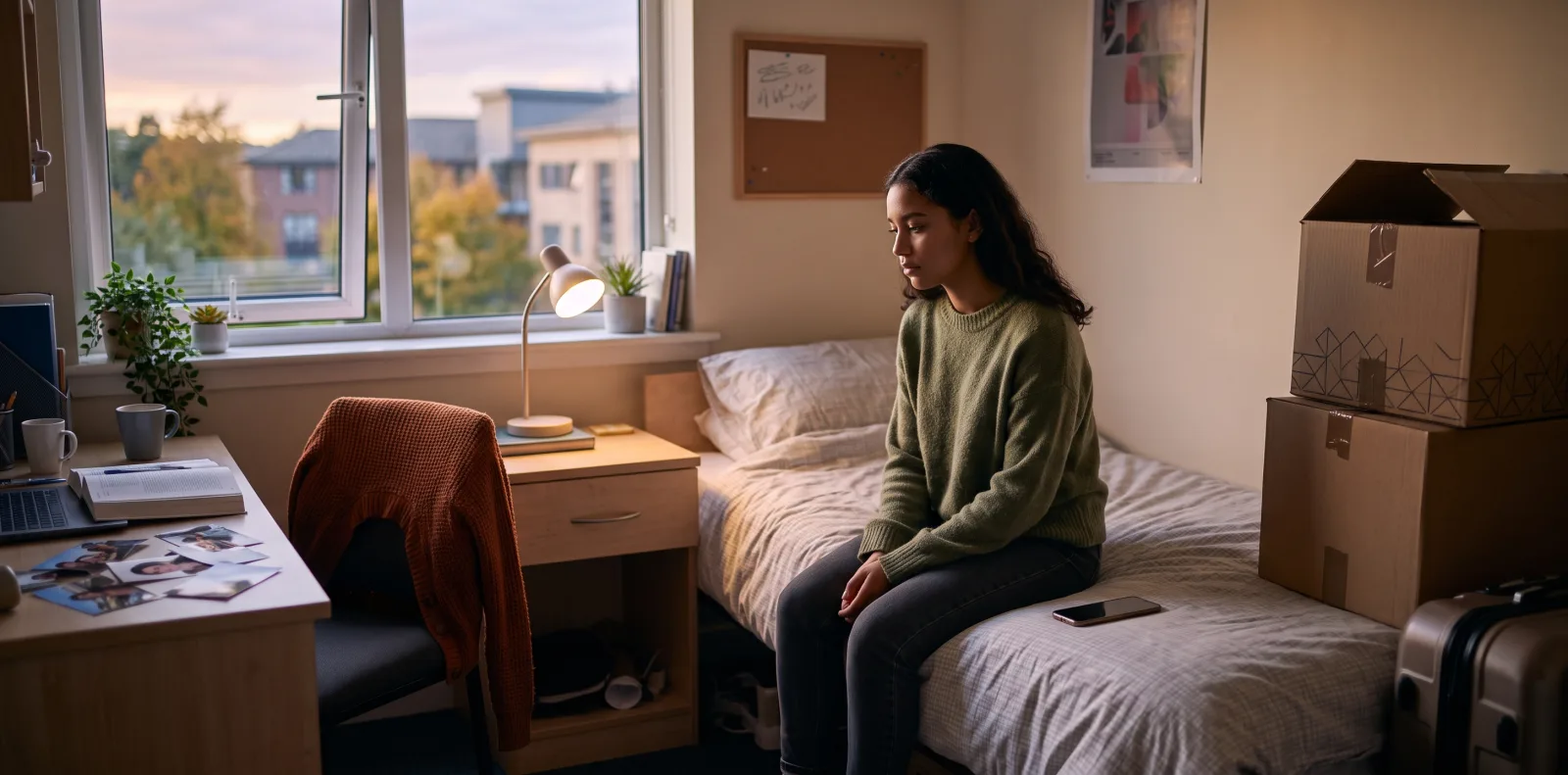
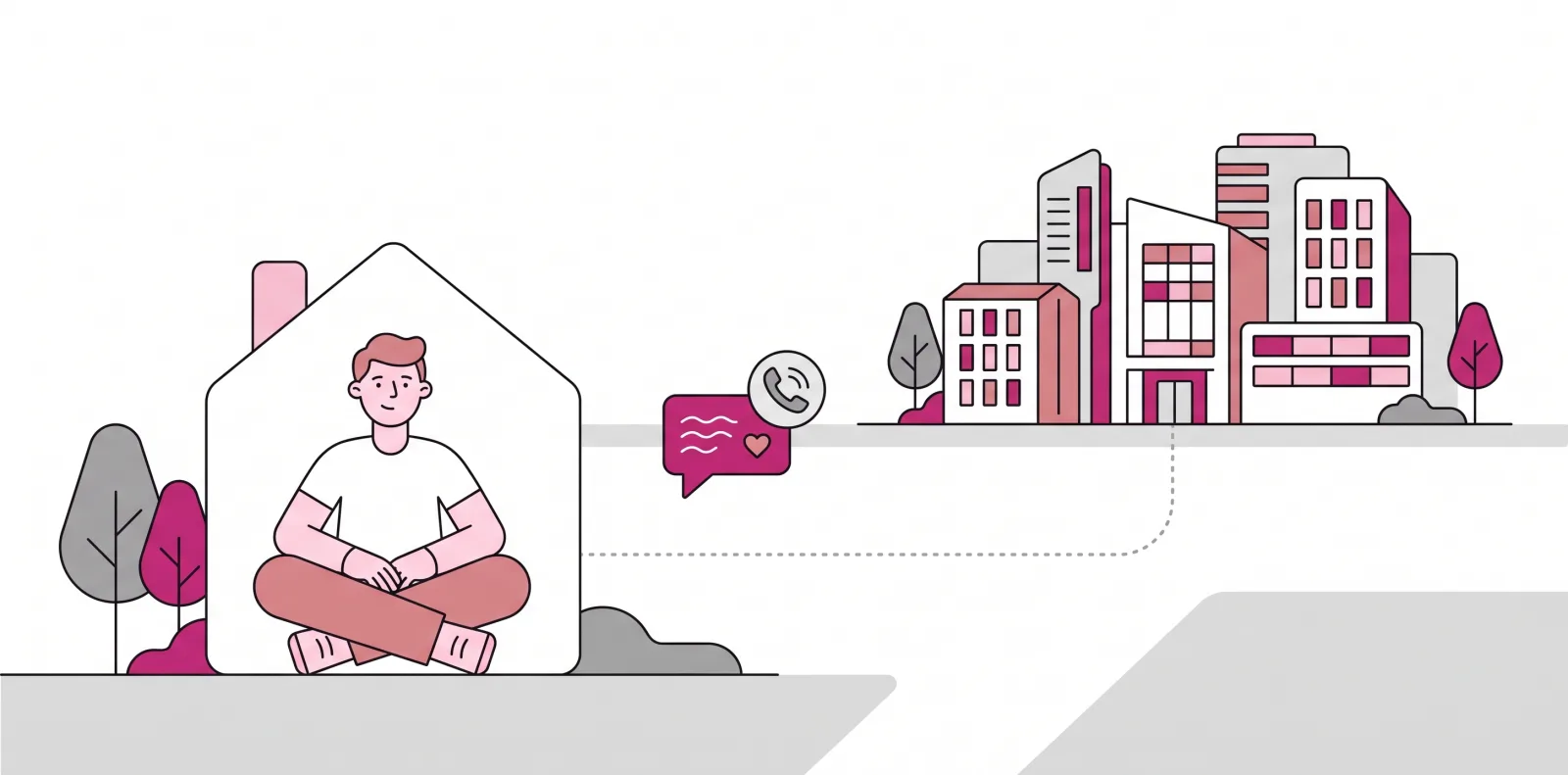
Cutting contact with home isn't the answer, and nobody credible suggests it. The more useful skill is treating home contact as a scheduled comfort rather than an open tap you turn on the moment you feel low. A short, regular call, say twice a week at a set time, tends to sit better than sporadic long calls triggered by a bad moment, because the latter can turn every low mood into an SOS call and reinforce the idea that only home can fix it. It also helps to notice the pattern the Nauta study flagged: if video calls leave you flatter afterwards, try a text or voice note instead, and protect the twenty minutes after a call with something mildly active, a walk, a flatmate chat, rather than sitting with the silence that follows.
Building small routines that anchor you locally#
Because belonging is built through repetition rather than one big gesture, the most effective local anchors tend to be boring by design: the same library seat, one recurring society meeting rather than five one-off events, cooking on the same evening each week with the same flatmate, the same route to a lecture until it stops requiring thought. These small, repeated contacts eventually generate the unremarkable familiarity that freshers' week can't manufacture in five days. University wellbeing guidance, including advice from Student Minds and services such as the University of Plymouth's student wellbeing pages, consistently points to structure and modest, repeatable contact as more protective than any single big event.
Recognising when it's more than ordinary homesickness#
Most homesickness eases on its own within the first term as routines and friendships solidify, and plenty of students look back on week four as a rough patch, not a turning point. But there is a meaningful difference between homesickness and something needing more active support. Signs worth taking seriously include low mood or anxiety persisting for weeks without easing, disrupted sleep or appetite, withdrawing from all social contact rather than just some of it, or homesickness accompanied by panic symptoms, thoughts of self-harm, or an inability to attend lectures. Fisher and Hood's original research found homesick students scored higher on anxiety and depression than their peers, which is why UK universities treat this as a wellbeing issue rather than something to quietly push through. Every UK university has a wellbeing or counselling service, and organisations such as Student Minds and Nightline exist for this earlier stage, before things reach crisis point. Speaking to a personal tutor, GP or wellbeing adviser is not an overreaction; it's the same sensible move as seeing a doctor about a persistent cough rather than waiting for it to clear on its own.
Common questions about homesickness at university#
Is it normal to feel homesick even after a good freshers' week?#
Yes. A good freshers' week reflects how distracting the first few days were, not how settled you actually are. Belonging takes longer to build than a week of scheduled socialising, so a dip once term properly starts is common rather than a sign anything went wrong.
Why does homesickness often get worse after calling home?#
Research using in-the-moment mobile surveys found homesickness spiking around calls with parents, likely from the contrast between feeling closely connected for a few minutes and then returning to a less familiar environment once the call ends. Scheduling calls, and doing something mildly active afterwards, tends to soften that dip.
How long does homesickness usually last?#
There's no fixed timeline, and estimates vary by how studies measure it, but most research and UK wellbeing guidance describe homesickness easing gradually across the first term as routines and friendships solidify, rather than resolving in a single week.
Are international students more likely to experience it?#
Evidence suggests so. The 2019 Nauta study comparing domestic and international first-year students found international students reported markedly higher homesickness, plausibly linked to greater distance from home, added cultural adjustment, and fewer chances to visit home casually.
Does keeping busy actually help, or is it just a distraction?#
It appears to help for reasons beyond distraction. Thurber and Walton's review found students who actively built new routines and relationships, rather than avoiding the new environment, showed better longer-term adjustment, suggesting the benefit comes from genuinely building belonging rather than filling time.
Should I bring things from home to help?#
Small familiar objects, photos, a specific mug, are commonly recommended and cause no harm, but work best as a supplement to building new local routines, not a substitute for it. Treat them as comfort, not a coping strategy on their own.
When does homesickness stop being normal and become something to get help for?#
If low mood, anxiety or disrupted sleep and appetite persist for several weeks without easing, if you're avoiding all social contact rather than just some of it, or if you notice panic symptoms or thoughts of self-harm, that goes beyond typical homesickness. UK wellbeing and counselling services, along with GPs and organisations like Student Minds, exist to help at this stage, and reaching out earlier tends to mean quicker recovery than waiting it out alone.
Will homesickness come back later in the year, even after it fades?#
It can, particularly around triggers like the first visit home, the run-up to Christmas, or exam stress layering onto an already tiring term. A return of homesick feelings then isn't a sign of failed adjustment; it's an ordinary response to renewed contrast between home and university life.