
The week one panic about finding "your people"#
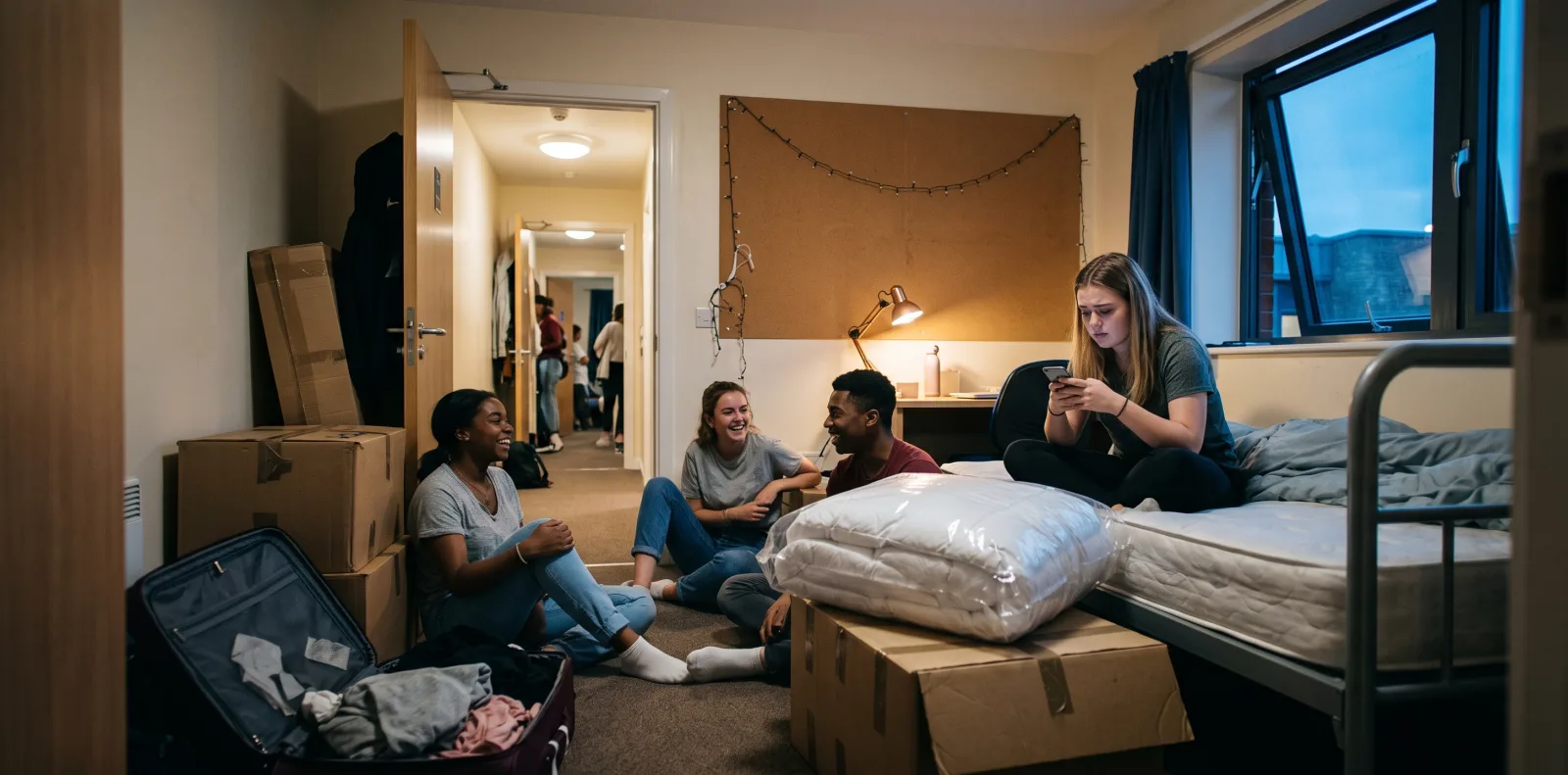
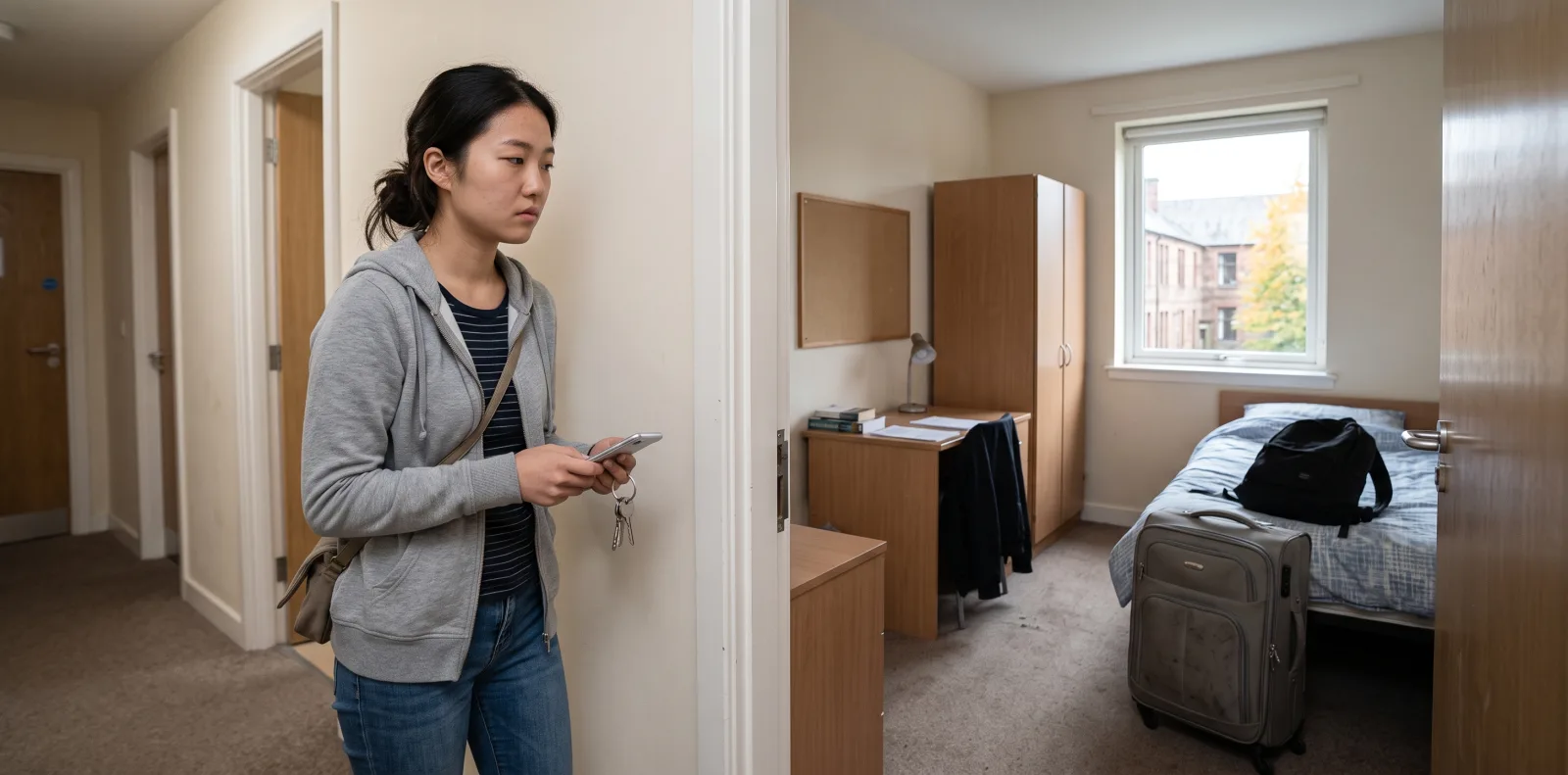
By Wednesday of freshers week, it can feel like everyone else has already signed a friendship contract. Your flatmate has a group chat with fourteen people in it. The girl three doors down has apparently known her "uni bestie" since Monday. You're still working out where the bins go, and underneath that is a quieter worry: what if you're just not built for this part?
That pressure is not paranoia. A government-backed survey of more than 1,000 UK students, run with YouGov in 2023 as part of a national loneliness campaign involving the charity Student Minds, found that 92% had felt lonely at least once during the previous academic year, and over half said they felt uncomfortable admitting it. The gap between how confident everyone looks in the corridor and how uncertain most of them feel is enormous, and almost nobody says so out loud.
If you don't find it easy to walk up to strangers, that doesn't mean you're doing university wrong. It means the standard advice, throw yourself out there, say yes to everything, was written for a personality type you may not have. There's a version that works for quieter people too, and it runs on a different mechanism.
Introvert, shy, or anxious? Three different problems#
Before fixing anything, it helps to know which problem you actually have, because these words get used interchangeably for different things.
Introversion is a preference, not a fear. Introverts can hold a conversation perfectly well; they just find socialising draining rather than energising, and recharge by spending time alone. It's a dimension of personality, not a deficit.
Shyness is discomfort in social situations despite wanting connection. The psychologist Jonathan Cheek, whose research at Wellesley College shaped much of the modern understanding of the trait, distinguishes shy subtypes: people who badly want company but feel anxious approaching it, and people who are quietly at ease with minimal interaction. Cheek's work also draws a firm line between shyness and clinical social anxiety, estimating that fewer than a quarter of self-described shy people would meet the criteria for social anxiety disorder.
Social anxiety goes a step further: a persistent, disproportionate fear of judgement that interferes with daily life. If that sounds like you, this article is a starting point, but a university wellbeing service or GP is the more useful next stop.
Most students reading this are simply introverted, or a bit shy, or both, and neither needs a personality transplant. What explains most friendship formation is far more mundane than charisma. In 1950, the psychologists Leon Festinger, Stanley Schachter and Kurt Back studied friendship patterns among students in Westgate, an MIT housing complex, and found that physical distance between front doors predicted friendship better than any personal quality did. Closeness to a stairwell or the mailboxes, and the repeated run-ins that created, explained most of who became friends with whom. This is often called the proximity effect, and it works alongside the mere exposure effect: people like someone more the more often they encounter them. You're not competing on personality. You're competing on repetition.
Why ten small hellos beat one big night out#
This is the most useful reframe for anyone who finds big social pushes exhausting: friendship is built by frequency, not intensity. A brilliant hour-long heart-to-heart with a stranger on night one of freshers week predicts a lasting friendship far less reliably than ten unremarkable thirty-second exchanges with the same person over three weeks.
That changes what "trying" looks like. You don't need to be the loudest person at the flat pre-drinks. You need to be in the kitchen again on Tuesday, and again on Thursday, saying something small each time. Familiarity does more of the work here than wit ever will.
It also helps to know that first conversations feel worse from the inside than they land from the outside. A 2018 study by Erica Boothby, Gus Cooney, Gillian Sandstrom and Margaret Clark, published in Psychological Science, identified the "liking gap": strangers, and first-year students getting to know new dorm-mates, consistently underestimated how much their conversation partner had enjoyed talking to them. People replay their own awkward pauses; the other person usually didn't notice. If a conversation felt clumsy to you, it probably felt normal to them, which is a good reason not to write someone off after one stilted exchange.
Let societies, seminars and halls do the introducing#
If starting conversations from nothing feels like too much, pick settings that generate the conversation for you. It's the proximity effect again, just arranged on purpose.
Seminars work because you already share a topic and a reason to be in the room; a comment on the reading is a ready-made opener with no risk of feeling random. Societies work like the MIT stairwell: turning up to the same weekly slot puts you next to the same faces repeatedly, without you inventing a reason. A UK-wide survey of over 500 first-year undergraduates found that induction satisfaction and a stronger sense of belonging to their course or accommodation were both linked to lower loneliness, which fits the idea that structure, not personality, does much of the work.
Halls corridors and kitchens matter for the same reason childhood friendships were often decided by whose house was nearest. You don't need an icebreaker game. You need to be around often enough that "how's your day going" is unremarkable rather than a leap.
What to say when you don't have a natural opening line#
Most people overestimate how clever an opening line needs to be. It mainly needs to be low-stakes enough that a shrug or a one-word answer wouldn't be awkward for either of you. A few settings and lines that ask almost nothing of the other person:
| Setting | Why it's low-pressure | Example opener |
|---|---|---|
| Halls kitchen | Shared, mundane task gives a built-in excuse to talk | "Is the toaster actually broken or is it just me?" |
| Seminar or lecture | Shared task, easy exit if it doesn't land | "Did that reading make sense to you? I got a bit lost after page two." |
| Society or club | Repeated weekly contact does the work for you | "First time here too, or have you been coming for a while?" |
| Halls corridor | Brief and passing, no pressure to sustain it | "Settling in alright? I'm still finding my way round the building." |
| Course group chat / library | Text first, face second, lower exposure | "Anyone know if the library extends hours near deadlines?" |
None of these require charm. They require showing up somewhere with other people more than once, which is the mechanism proximity research points to.
You're not behind just because your flatmate already has a squad#
It's easy to read an extroverted flatmate's instant friend group as proof you're falling behind. Two things are worth holding onto. Speed isn't the same as depth: friendships formed fast in week one sometimes fade by December precisely because they were built on shared excitement rather than repeated contact. And the pace of friendship-forming varies enormously between individuals, which isn't a red flag about your character or your university experience.
The liking gap research is relevant again here. It lingered among first-year students getting to know new dorm-mates over time, meaning "did that go okay?" doesn't necessarily resolve after one meeting. If you're still unsure how someone feels about you after a few weeks, that uncertainty is ordinary, not a signal you've missed your window.
If nothing has clicked by reading week, here's what that means#
If it's week six and you still feel like a spare part, you're further from alone in that than it feels. Loneliness among UK students is common enough to count as a population-level issue, not an individual failing: the 2023 survey mentioned earlier found it affected the overwhelming majority of respondents at some point across the year.
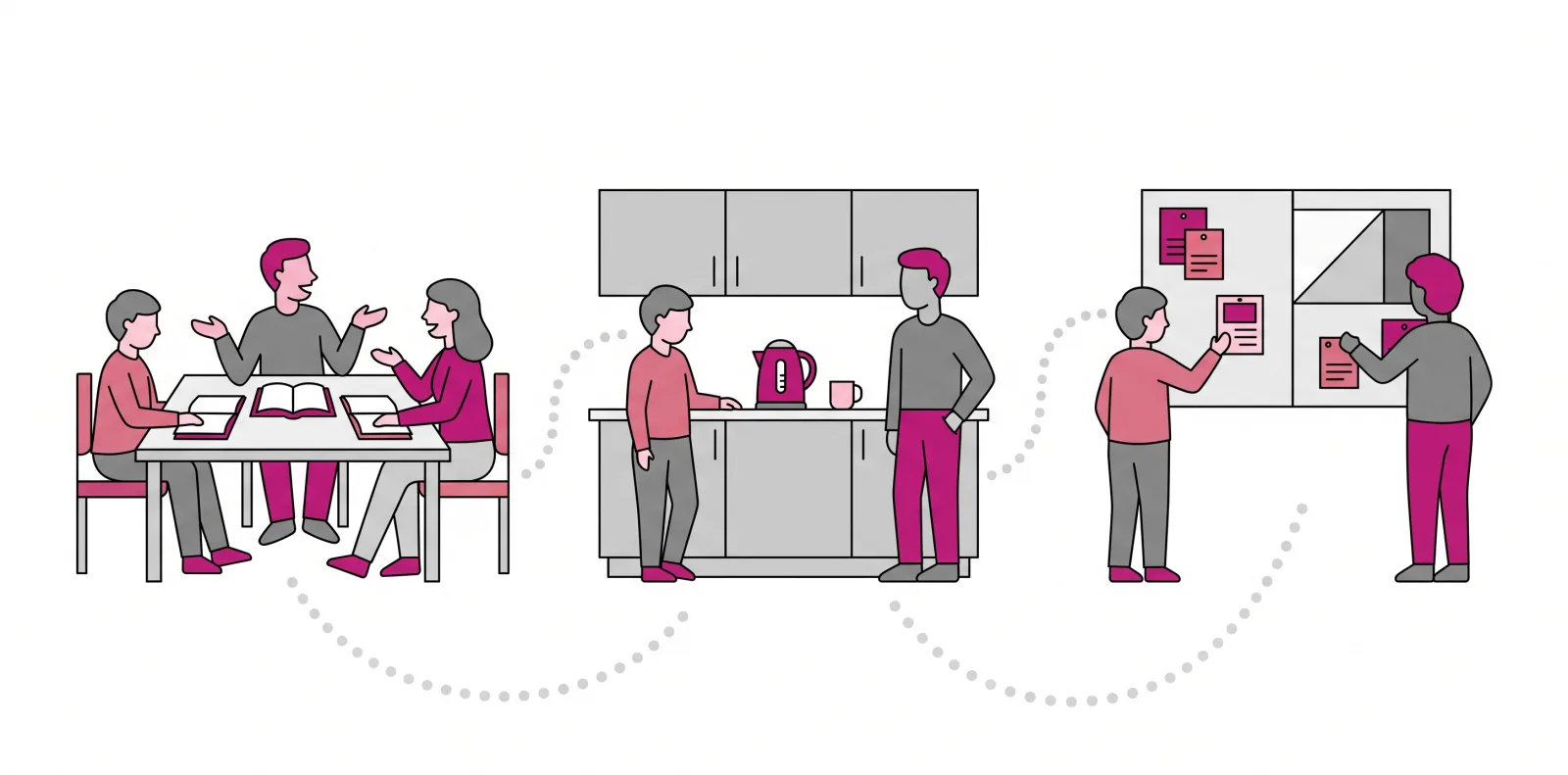
A flat start to term one is rarely permanent. Course and society friendships tend to consolidate later, once assignments, shared deadlines and repeated proximity have had time to work. The fix isn't to try harder in the way freshers week implies, louder, busier, more nights out, but to try more often in smaller ways: the same society slot each week, the same seat in seminars, the same "you joining the kitchen chat?" energy.
If it's gone beyond ordinary slow-starting into something heavier, persistent low mood, avoiding people altogether, anxiety that stops you leaving your room, raise it with your wellbeing or counselling service rather than waiting it out. Student Minds and most UK university wellbeing teams treat this as routine, not exceptional.
Quick answers to the questions you're too awkward to ask aloud#
Am I too introverted to make friends at university?#
No. Introverts form close, lasting friendships at the same basic rate as extroverts; what differs is process, not outcome. Introverts tend to prefer fewer, deeper connections over a wide circle, and both routes work.
I'm shy but not anxious, do I still need to push myself?#
A little, but that can just mean showing up to the same low-pressure setting again, not performing extroversion. Shyness responds well to repeated, low-stakes exposure, because the discomfort tends to fade with familiarity rather than needing to be argued away.
How many close friends do I actually need in first year?#
There's no evidence-backed number, and treating it as a target backfires. A small handful of people you see regularly matters more for wellbeing than a large acquaintance network you barely speak to.
Is it normal to still feel lonely at Christmas?#
Yes. Most students report loneliness at some point across the year, so feeling unsettled three months in is closer to typical than unusual. Worth watching, not panicking over.
Should I go to every event in freshers week even if I hate it?#
No. A handful of things that match genuine interests, one society, one course social, tends to work better than exhausting yourself at everything, because burnout makes you withdraw rather than return for the second, more valuable encounter.
What if my flatmates have already formed a group without me?#
Flat friendship groups formed in week one aren't fixed. Keep having small, repeated interactions, and put comparable energy into course or society settings, since those friendships often outlast flat ones by second term anyway.
When should I actually speak to someone about how I'm feeling?#
If low mood, avoidance or anxiety persists for several weeks, disrupts sleep, eating or attendance, or feels heavier than "settling in is hard," contact your university's wellbeing service. That threshold should be lower than most students set for themselves.