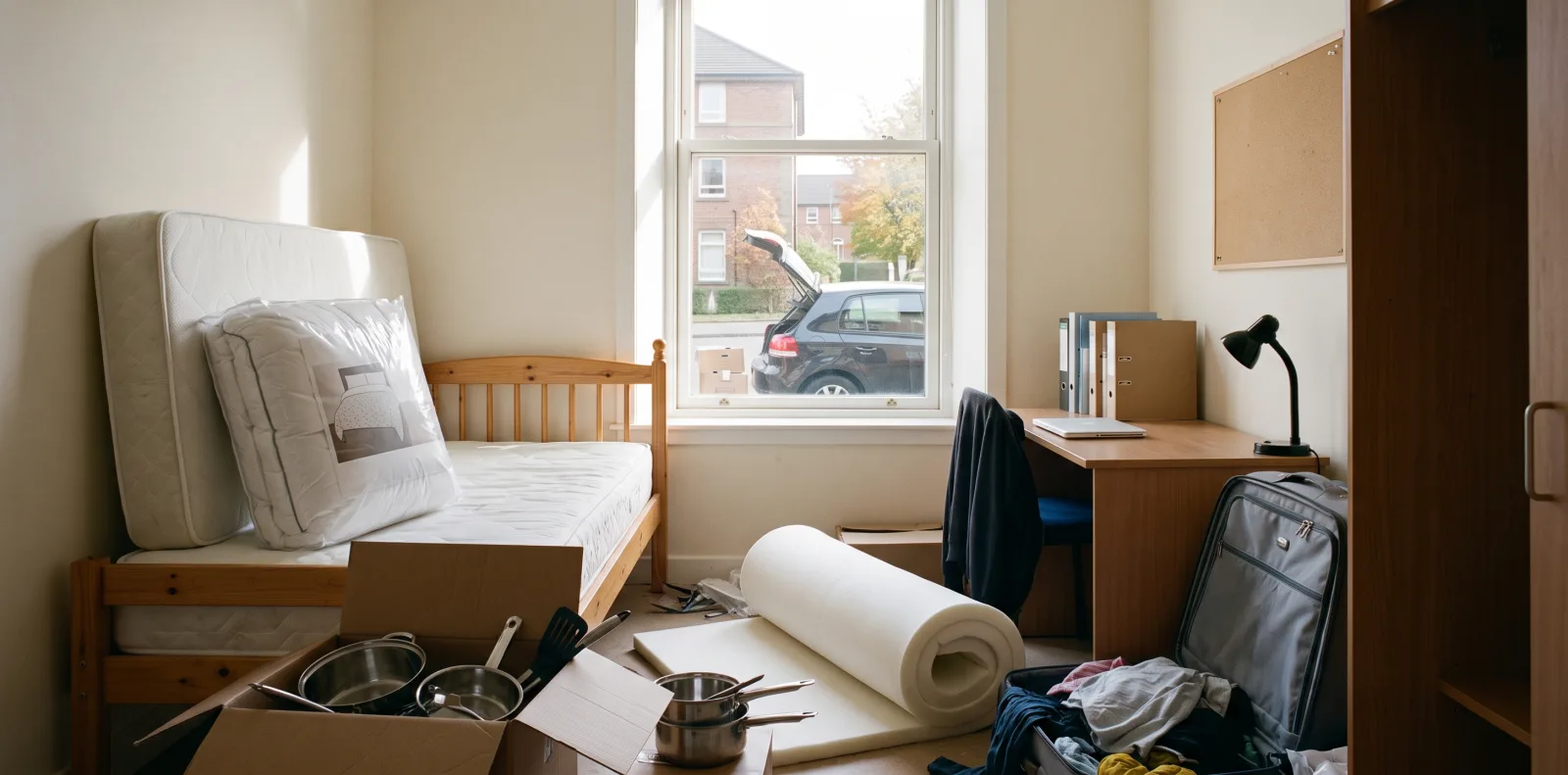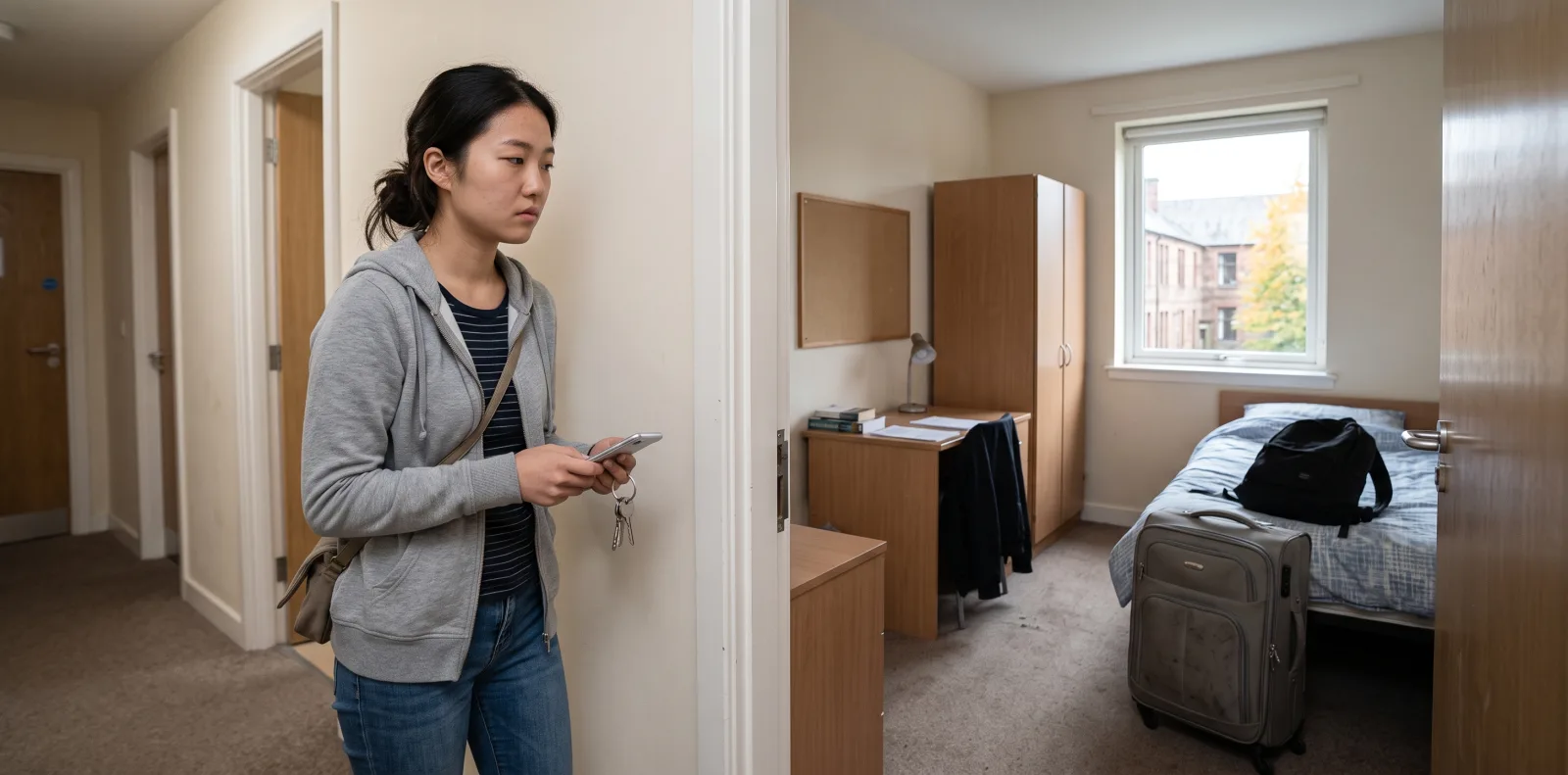

The washing-up bowl that started a cold war#
By the second week, one bowl had been sitting in the sink so long it had its own weather system. Nobody had used it. Nobody would move it. Group chat messages got passive-aggressive, then pointed, then stopped altogether, replaced by the specific silence of four people who now actively avoid the kitchen at the same time.
It was never really about the bowl. It was about the fact that nobody had ever said, out loud, what "clean" meant to any of them, so each flatmate had quietly assumed everyone else shared their own default. One person's normal was doing the dishes straight after eating. Another's was once a day. A third's was whenever the pile became a moral crisis. None of these people were messy or difficult. They just grew up in different houses.
This is the pattern behind most student flatshare conflict, and it is also the good news. Living with flatmates tips that focus on personality clashes miss the actual mechanism. Most of the friction in a first shared house comes from mismatched, unstated expectations rather than incompatible people, and unstated expectations are exactly the kind of thing a short, slightly awkward conversation in week one can fix before they set like concrete.
Why nobody warned you about silent house rules#
Every shared house runs on norms, the informal, usually unspoken understanding of what counts as normal behaviour in that specific space. Who buys the bin bags. Whether the front room television stays on until 2am. Whether a "quick shower" means five minutes or twenty. Nobody votes on these things. They simply happen, once, and then happen again, and by the third repetition they have become the house rule, agreed by nobody and binding on everyone.
The trouble is that norms set themselves by default, and the first two weeks of a flatshare are precisely when that quiet negotiation happens, usually while everyone is too polite to say anything. A 2023 study of first-year dormitory pairs found conflict clustered around two mismatches: one flatmate feeling help was not reciprocated, and one simply not factoring the other person into their plans, noise or schedule. These mismatches were more common between students from different family backgrounds, because background hands you different defaults for what counts as considerate.
None of that is really about character. You have all arrived with a fully formed idea of "normal" and no reason to think anyone else's differs, until it obviously does. A short, direct conversation early on does what months of low-grade irritation otherwise do badly: it makes invisible assumptions visible while they are still cheap to adjust, rather than after they have hardened into a grievance.
Whose turn is it: cleaning and the shared spaces nobody owns#
Communal areas are the classic flashpoint because nobody individually owns them, which means everybody can plausibly decide it is someone else's turn. University residence teams, including pastoral support services at Leeds and Sussex, routinely field exactly this complaint, and their advice converges on the same fix: agree the standard for shared spaces specifically, rather than assuming good manners will sort it out.
You do not need a rota with a laminated chart, unless your flat genuinely wants one. What you do need is a two-minute conversation covering the kitchen counters and hob, the bathroom, and bins, plus what happens on the fairly predictable week when someone falls behind through illness, deadlines or simply forgetting. Agreeing in advance that a gentle flatmate reminder is fine, rather than something to take personally, removes most of the sting later. The point is not to eliminate mess. It is to agree what "your turn" even means before the first bowl goes feral.
The sofa-surfer question: guests, partners and who gets a say#
A partner who starts sleeping over four nights a week changes a flatshare's dynamics for everyone else, even if nobody says anything. Student housing guidance from providers and university accommodation teams consistently flags overnight guests as one of the more persistent sources of tension, because it touches privacy, shared costs, and a sense of who actually lives in the flat versus who is visiting it.
This is worth raising early precisely because it is awkward later, once a routine has formed and any objection sounds like it is about the person rather than the frequency. A workable conversation covers how much notice feels fair for a guest staying over, whether there is an informal cap on consecutive nights before it feels like a fifth flatmate, and how visitors factor into shared costs like heating and communal food. None of this needs to be rigid. It needs to exist, so you are adjusting an agreement later rather than inventing a rule mid-argument.
Deadline week versus flat party: noise, sleep and clashing timetables#
Nobody in a shared house has the same timetable, and that is the whole problem. One flatmate has 9am lectures three days a week. Another works evening shifts and gets in at midnight wanting to unwind. A third pulls all-nighters before deadlines and resents anyone still up. Noise complaints are rarely about volume in the abstract. They are about whose schedule the house is quietly organised around.
University wellbeing services, including dedicated flatmate conflict guidance at Loughborough, treat this as common enough to warrant its own support pathway, which tells you it is not a niche problem. A useful early conversation is less about banning noise and more about naming the predictable pressure points: exam periods, early starts, and whether headphones are the house default for music after a certain time. Agreeing this while everyone is still in a reasonable mood means quiet hours read as a shared plan during deadline week, not a rule invented in the heat of a 1am complaint.
Splitting the bill: shared costs before anyone is skint#
Money causes disproportionate friction because it combines two things people avoid discussing: what they can afford, and what they think is fair. With rents, energy and food prices all having climbed in recent years, shared basics like loo roll, washing-up liquid and communal wifi are no longer trivial enough to just wing.
The fix is unglamorous but effective. Decide early who buys the recurring basics and how repayment happens, whether that is a shared kitty, a splitting app, or taking turns. Agree what happens if someone is properly skint one month, because it will happen to somebody, and a flat that has discussed this handles it with a conversation rather than a reckoning. The point is not micromanagement. It is removing money as a subject nobody can raise without it sounding like an accusation.
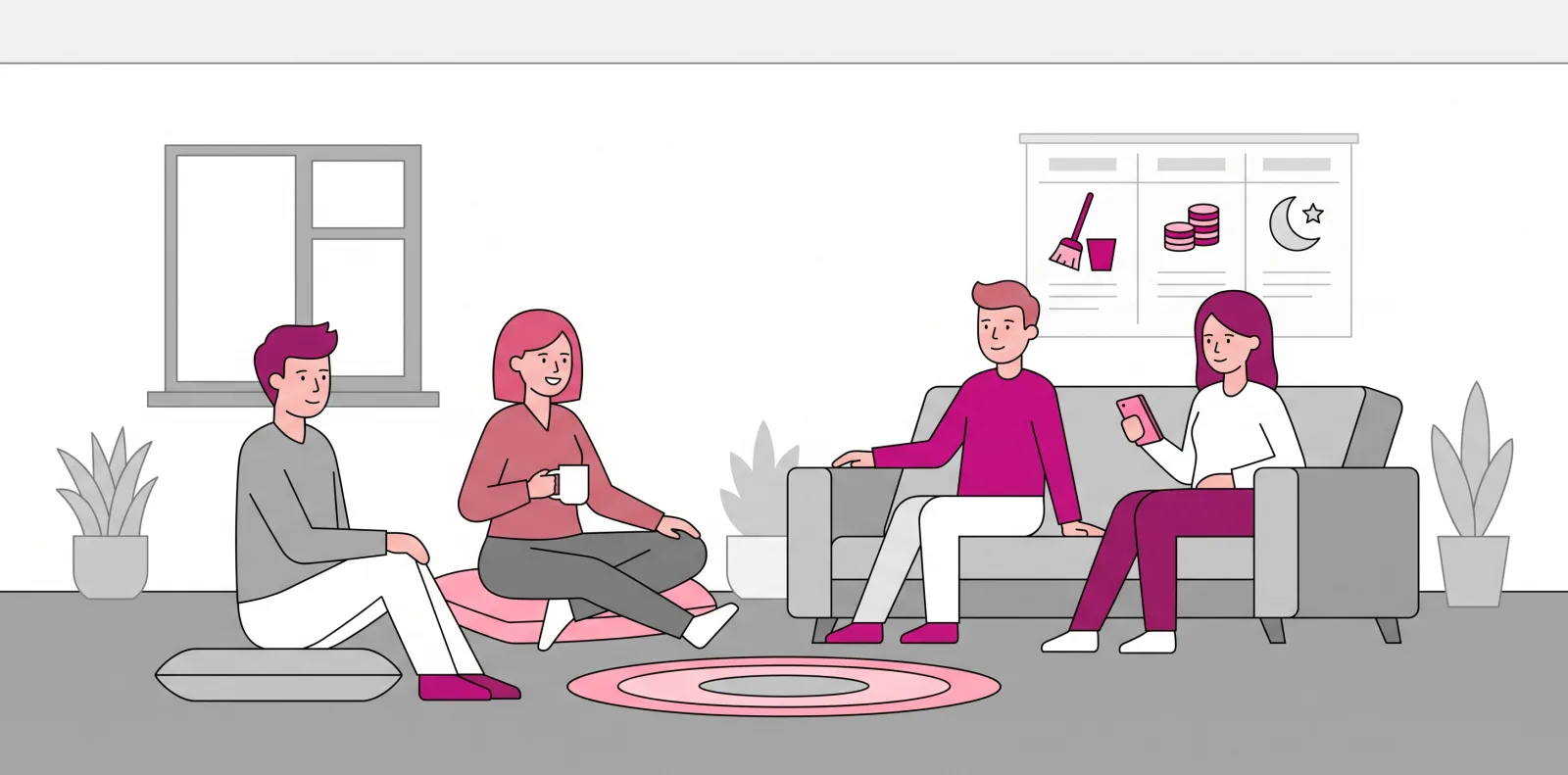
How you'll actually sort it out when it goes wrong#
This is the conversation flats are most likely to skip, because agreeing on a system for disagreement feels like planning for a row you'd rather not have. Worth having it anyway, and here's why.
Research on first-year university roommates found that most default to avoiding conflict, hinting at problems or hoping they resolve on their own, while a smaller group address issues directly. The direct communicators reported meaningfully better relationships with their roommates than the avoiders did. Avoidance feels like keeping the peace. It usually just delays the argument and makes it bigger.
The practical version of this conversation is small. Agree, before you need it, roughly how the flat will raise a problem, whether that is a quick word one-to-one, a message in the group chat, or a short flat catch-up if something keeps recurring. Agree that raising something is not an attack. And agree, honestly, that some friction is normal in any shared house full of people who did not choose each other and were never going to agree on everything. That is not a sign your flat is badly matched. It is what living with strangers actually involves, handled well or handled badly.
If something does escalate past what a flat conversation can fix, most UK universities' accommodation or residence life teams offer informal mediation, and it is worth knowing that route exists before you need it rather than discovering it mid-crisis.
Questions about setting up house rules with new flatmates#
What if my flatmates think a "house rules" chat is awkward or unnecessary?#
Frame it as practical rather than formal. A five-minute conversation over the first shared meal about bins, guests and noise lands very differently from a scheduled meeting with an agenda. Most flatmates are relieved someone raised it, because they were quietly wondering the same things.
Is it normal to clash with flatmates even if we all get on personally?#
Yes. Conflict in shared student housing is close to universal and is not, on its own, evidence of poor compatibility. Studies of university roommates treat some friction as an expected feature of unrelated adults sharing space, not a personality failure on anyone's part.
Should we write agreements down, or is that overkill?#
A short shared note or pinned group chat message is usually enough, it just needs to exist somewhere everyone can refer back to. A formal contract is rarely necessary for friends or first-years.
What if we're already close friends rather than strangers?#
Do the conversation anyway. Existing friendships can make norm mismatches worse, not better, because raising a small issue feels riskier when you are worried about the friendship itself, so problems get avoided for longer before they surface.
How do we revisit an agreement that isn't working without it turning into a row?#
Name it as a review rather than a complaint: "can we rethink the guest thing, it's not quite working for me" lands better than raising it only after resentment has built. Renegotiating an early agreement is far easier than challenging an unspoken norm that has been running for months.
What if a flatmate keeps breaking an agreed rule?#
One missed cleaning turn is life. A repeated pattern is worth a direct, calm conversation rather than passive-aggressive notes, which research on roommate communication consistently links to worse outcomes than addressing things explicitly.
When should we involve our landlord or university accommodation team?#
When a disagreement affects the tenancy itself, such as unresolved bill disputes, safety concerns, or a breakdown serious enough that flatmates are avoiding each other entirely. University residence life teams and accommodation offices generally offer mediation before things reach a formal complaint, and using it early tends to work better than waiting.
Living with flatmates tips are, in the end, mostly about timing. The conversations about cleaning, guests, noise, money and how you will sort things out are exactly as awkward in week one as they are in week eleven. The difference is that in week one, nothing has calcified yet.