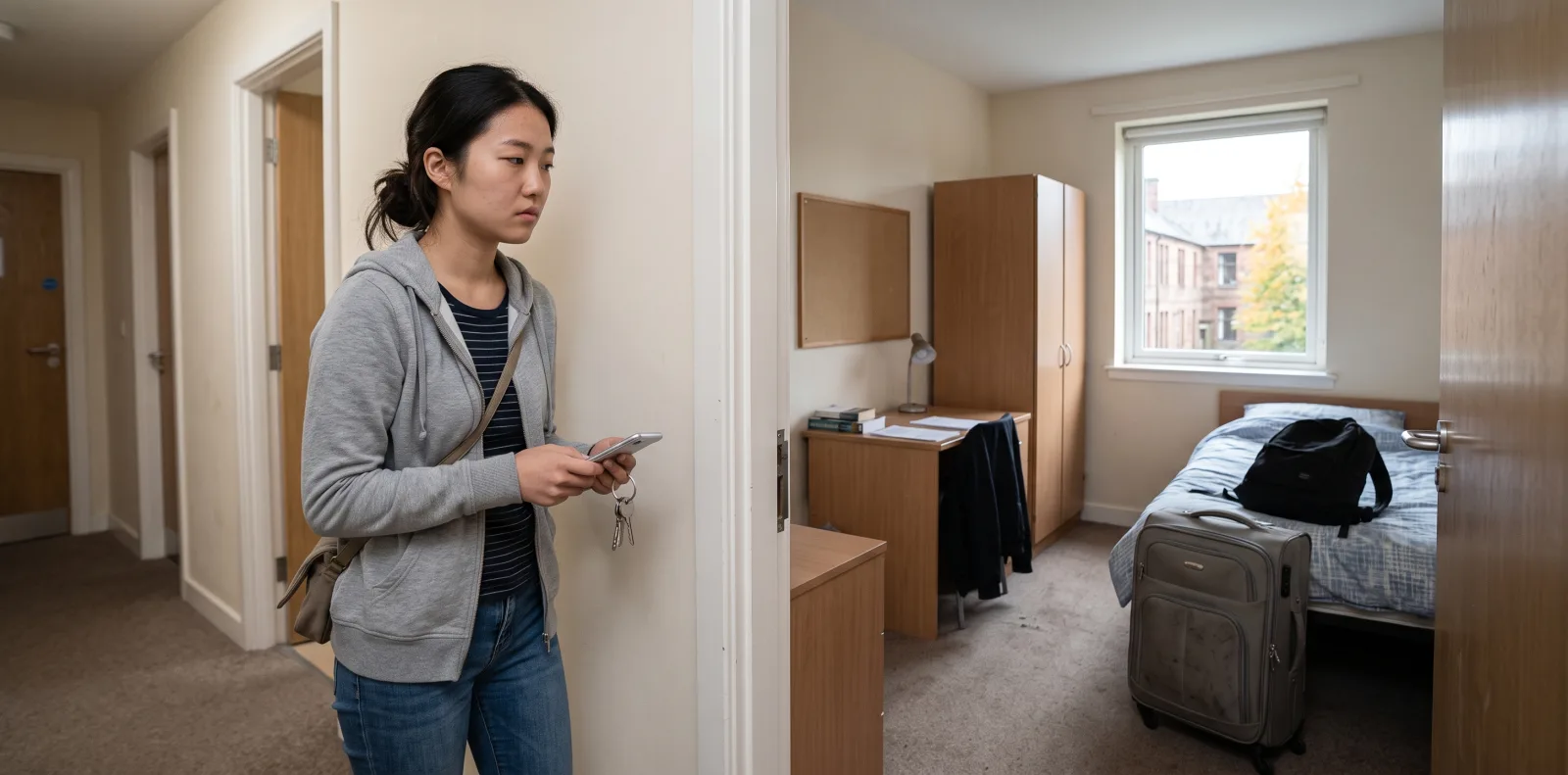

The week nobody tells you who to ask#
It rarely starts with a crisis. It starts with a missed alarm, then a missed seminar, then three unanswered emails from a tutor you've started avoiding. You're behind on a deadline, you haven't slept properly in a fortnight, and the flat feels quieter than it used to. You know, vaguely, that "there's support" somewhere in the university. What you don't know is what it's called, where it lives on the website, or whether asking ends up on some permanent record.
That gap, between knowing help exists and knowing how to reach it, is where a lot of students get stuck. A 2023 Office for Students review found that while nearly all English universities now provide some form of mental health and wellbeing service, awareness and uptake remain inconsistent. This piece is the map that's usually missing: what UK universities generally offer, and how to actually get in the door.
How university support is actually organised#
Every university structures things slightly differently, and the names change from campus to campus, but the underlying shape is similar almost everywhere. Think of support as sitting in four rough categories, plus one layer outside the university altogether.
Wellbeing and counselling services deal with the emotional side of things: stress, low mood, anxiety, relationship problems, homesickness, grief. These are usually free, confidential, and open to self-referral, so you don't need a doctor's note or a tutor's permission to get in touch.
Disability and mental health advisers work with students who have, or think they might have, a condition that affects their studies, and help arrange reasonable adjustments such as extra time in exams or flexible deadlines.
Academic and student support staff, often personal tutors or student support officers, handle the practical side: extenuating circumstances claims, interruptions of study, and rules and deadlines.
Students' union advice services sit independent of the university, staffed by trained advisers who support academic appeals, housing disputes, and complaints, sometimes more bluntly than staff can when the university is part of the problem.
Outside all of that sits the NHS, where diagnosis, medication, and specialist treatment actually happen. University wellbeing services aren't a substitute for NHS care; they're a bridge to it, which is why a counsellor might see you for six sessions and then refer you onward rather than treating you indefinitely.
Which service handles what, and roughly how fast#
Exact structures and turnaround times vary by institution, so treat the "typical speed" column as a rough steer rather than a promise.
| What's going on | Who typically handles it | Roughly how quickly |
|---|---|---|
| Low mood, stress, anxiety, general struggling | University wellbeing or counselling service | Initial triage often within days to two weeks; ongoing counselling may involve a longer wait |
| Diagnosed mental health condition affecting study | Disability and mental health advisers | Initial appointment usually within a few weeks; adjustments take longer to set up |
| Missed deadline or exam due to illness or crisis | Extenuating circumstances process (via department or student support officer) | Deadline-driven; claims usually need submitting within days of the affected assessment |
| Considering a break from your course | Student support officer or personal tutor, alongside wellbeing services | Can be arranged within weeks, though the decision itself deserves proper thought |
| Rent, bills, or general money worries | Students' union advice service or university hardship fund | Advice often same week; hardship fund payments can take several weeks to process |
| Complaint or dispute with the university | Students' union advice service | Initial advice usually within days |
| Immediate risk to life or safety | 999, nearest A&E, or Samaritans (116 123) | Immediate |
Counselling and wellbeing teams: what actually happens after you ask#
Most university wellbeing or counselling services work on a triage model. You fill in a short form or have a brief conversation, and a member of staff assesses what fits best: a single advice session, a short course of counselling, a wellbeing workshop, or a referral elsewhere. Student Minds, the UK's dedicated student mental health charity, notes that demand has grown substantially over the past decade, and waiting times vary widely between institutions and time of year, often lengthening around exam periods.
That variability is worth naming honestly. If your service has a waitlist, ask what you can do meanwhile, many offer interim workshops, self-help resources, or peer support groups. If your need feels more urgent than a routine wait allows, say so explicitly when you first make contact; most services have some same-day or next-day option for exactly this, even if it isn't advertised prominently.
Disability and mental health advisers: adjustments, not just diagnoses#
This is the part of the system people most often assume doesn't apply to them, because they associate "disability service" with physical access needs alone. In practice, these teams also support students with anxiety, depression, ADHD, autism, and other conditions affecting concentration, attendance, or exam performance, whether or not a formal diagnosis exists yet.
Reasonable adjustments can include extended coursework deadlines, rest breaks in exams, permission to leave lectures, or alternative assessment formats. You usually don't need a diagnosis to start the conversation; many services will support you through getting an assessment, and can put interim adjustments in place while that process runs. If you're on, or might be eligible for, Disabled Students' Allowance, this is usually the team that handles the application.
When your work suffers: extenuating circumstances and stepping back#
Extenuating circumstances processes exist for exactly the situation many students dread admitting to: illness, bereavement, a mental health crisis, or a family emergency that genuinely affected your ability to study or sit an assessment. Submitting a claim usually means providing some evidence, a GP note, a counsellor's letter, or a supporting statement, though universities increasingly accept self-certification for shorter issues. Deadlines are usually tight, often within days of the missed assessment, so contact your department as soon as you know there's a problem.
For more serious or prolonged difficulties, an interruption of studies (sometimes called intermission or a leave of absence) lets you pause your course and resume later without it counting as a failed year. This carries real implications for funding, visas, and accommodation, so discuss it with a student support officer or your students' union advice service before deciding, rather than treating it as either a last resort or an easy fix.

Money worries: hardship funds and where to actually ask#
Financial stress and mental health difficulties feed each other constantly, and UK research on student finance has repeatedly linked money worries to poorer wellbeing outcomes. Most universities hold some form of hardship or access-to-learning fund, a discretionary pot for students facing unexpected financial difficulty, covering rent shortfalls, essential equipment, or emergency costs. These funds sit separate from your student loan and don't need repaying, though eligibility differs between institutions.
Students' union advice services are often the most practical first stop, partly because they're independent of the university and partly because their advisers handle hardship applications, benefit queries, and budgeting as routine work. Ask early, since many funds are allocated on a rolling basis and can run out before term ends.
If things turn urgent, do this instead of searching further#
If you are thinking about suicide, feel unable to keep yourself safe, or are supporting someone in that position, this is not a moment for browsing a university website or waiting for an appointment slot. Call 999 or go to your nearest A&E if there is immediate risk to life. You can also call the Samaritans free, any time, on 116 123, or call NHS 111 and select the mental health option for round-the-clock crisis support.
Many universities also run out-of-hours lines or link students to Nightline, a confidential, student-run listening service at some UK institutions during term time. Save these numbers in your phone before you need them, not in the moment. None of these routes require contacting a university service first, and none are a lesser option than "properly" going through the wellbeing team. Crisis support exists because ordinary channels aren't built for emergencies.
Common questions about getting support#
Do I need a diagnosis to ask for help?#
No. Wellbeing and counselling services are open to any student, diagnosed or not. Disability and mental health advisers can also support you before a formal diagnosis, and often help you access an assessment.
Will asking for support affect my academic record?#
Contact with wellbeing, counselling, or disability services is normally confidential and separate from your academic file; staff can't share details without your consent, except where there's serious risk to you or others. Extenuating circumstances claims are visible to relevant academic staff, since that's the point of the process, but personal details are usually handled discreetly.
What if I'd rather not talk to anyone at my university?#
That's what students' union advice services and external options like Nightline, Student Minds' online resources, or NHS-commissioned services such as Qwell exist for. You're not obliged to disclose anything to university staff to access support elsewhere.
How long will I actually wait for counselling?#
It varies by institution and time of year, often longer around exam periods, so there's no single honest answer. Ask directly what the current wait is, and what's available in the meantime if it's longer than feels manageable.
Can international students access the same support?#
Mostly yes. Wellbeing, disability, and hardship services are usually open to all enrolled students regardless of fee status, though NHS registration and some external services vary by visa type. Check with your international student office alongside wellbeing services.
What's the difference between university support and the NHS?#
University services are usually short-term and focused on getting you through your studies; the NHS provides longer-term treatment, diagnosis, and medication. Universities often act as the first point of contact and can help you register with a GP or make an NHS referral.
I'm supporting a friend who's struggling. What should I do?#
Encourage them to contact wellbeing services or a GP, and let them know about Samaritans (116 123) or 999 if things feel urgent. Most universities have guidance for supporting a friend, and staff can advise you even before the friend has made contact themselves, within the limits of confidentiality.
Asking is the hard part. Once you know where to knock, the process is more ordinary than it feels from outside: a form, a short conversation, someone whose job is precisely this. Exact names differ by institution, but the shape holds steady across the UK, and every part of it is there to be used before things get harder rather than after.