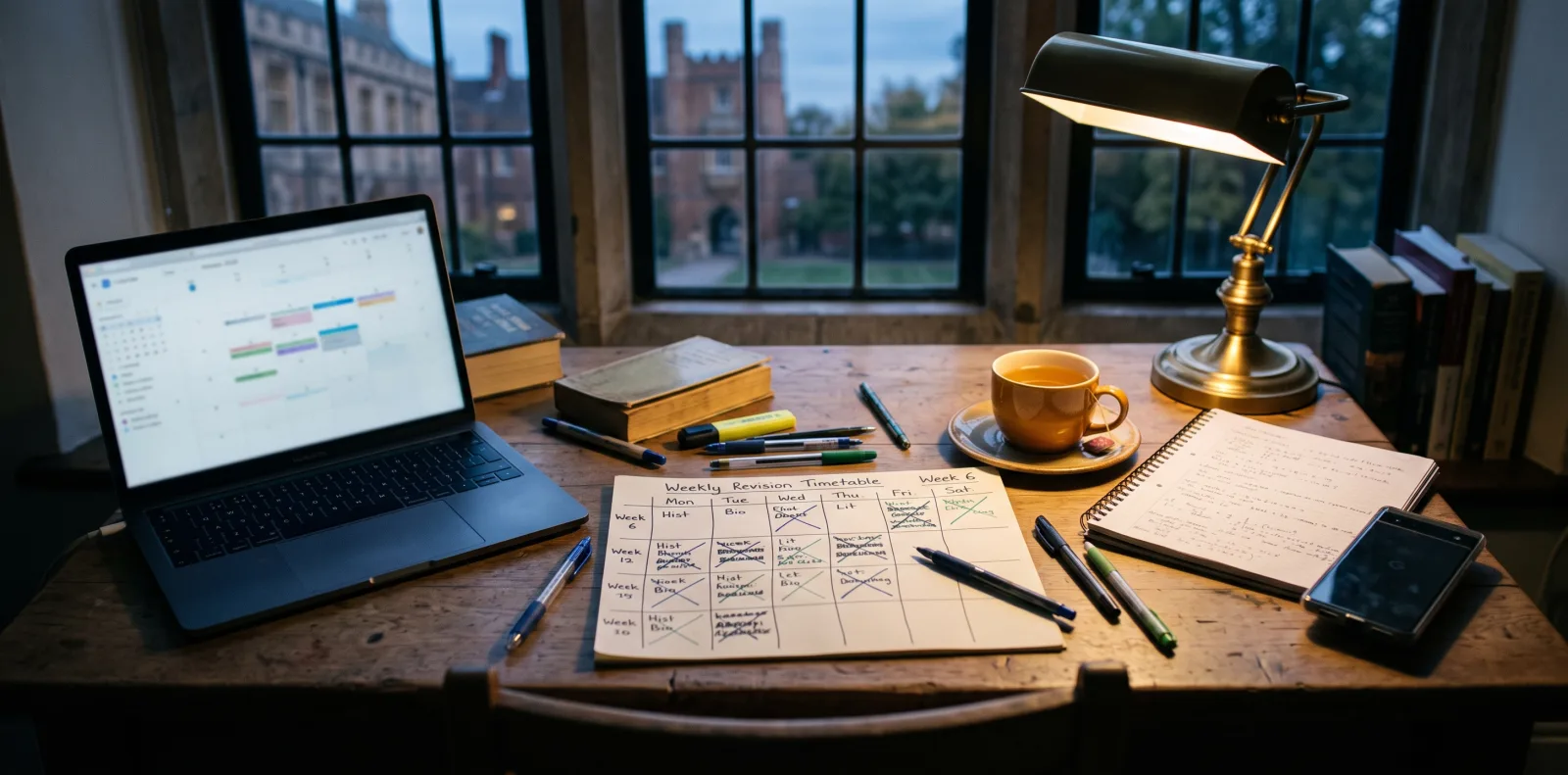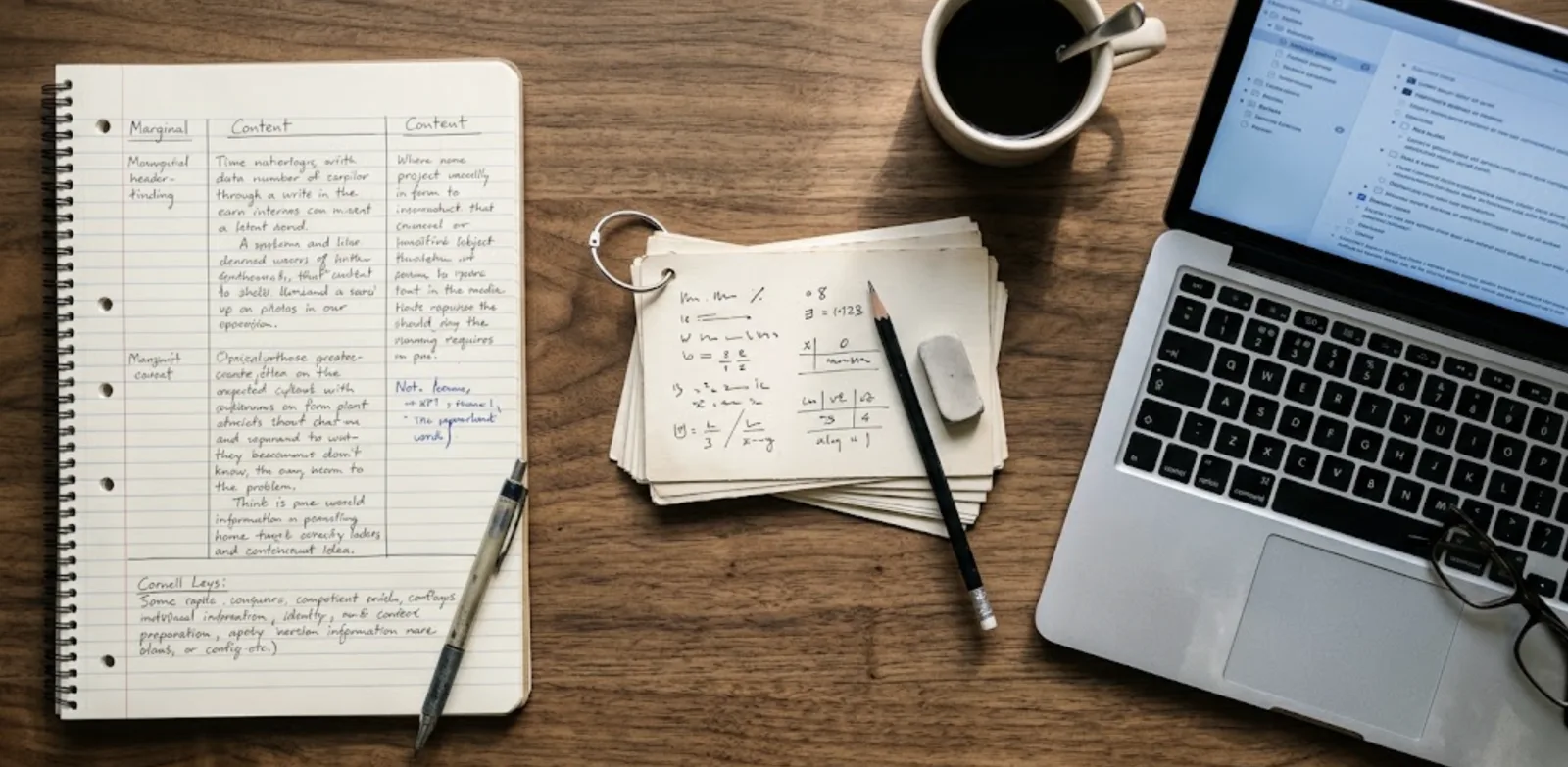

Seven days is enough. Rereading your notes is not#
There is a specific feeling that comes with a week to go. You open the module notes, read a page, recognise everything on it, and feel a small wave of relief. That relief is the problem.
Recognising material is not the same as being able to produce it. Rereading generates a strong sense of familiarity and very little retrieval strength, which is why students who reread confidently walk into exams and freeze. The gap between those two states is where most lost marks live.
A week is enough time to close it. What follows is what the evidence supports, and then three different plans, because a maths paper, a history paper and a coding exam fail for entirely different reasons.
What the research actually rates highly#
In 2013, John Dunlosky and colleagues reviewed ten common study techniques for Psychological Science in the Public Interest and rated each for utility across different learners, materials and test formats. The findings are unusually clear for educational research.
Two techniques came out with high utility. Practice testing means retrieving information from memory rather than reviewing it, whether through flashcards, past papers or covering the page and writing what you remember. Distributed practice means spreading study across several sessions rather than massing it into one.
Three came out moderate: elaborative interrogation, which is asking why a fact is true; self-explanation, which is talking through your own reasoning as you work; and interleaved practice, which is mixing problem types rather than doing twenty of the same kind.
Five came out low, and this is the uncomfortable part, because they are the popular ones. Summarising, highlighting, the keyword mnemonic, imagery for text learning, and rereading.
Highlighting and rereading are rated low not because they do nothing but because they do very little for the time they consume. In a normal term, that inefficiency is survivable. With seven days left, it is fatal.
The practical translation is a rule you can apply without thinking: if your revision does not involve producing something from memory, it is not revision.
The seven-day skeleton, and why the last two days are not for learning#
The general shape holds across subjects.
Days one and two are diagnostic. You find out what you do not know, which is a different activity from studying and takes less time than people expect. Attempt a past paper or a problem set cold, without notes, under something close to exam conditions. It will feel bad. That feeling is information.
Days three to five are the actual work, targeted at the gaps the diagnostic exposed rather than at the syllabus in order. Most students revise chapter one hardest because they start there every time, which is why chapter one is the only topic they know well.
Day six is consolidation, which means a full timed paper and a review of errors.
Day seven is light retrieval and sleep. Sleep consolidates memory, and a night lost to cramming costs more in recall and decision-making than the extra hours add. The temptation to break this rule is strongest for students who feel underprepared, which is exactly when it does most damage.
| Day | Maths and quantitative | History and essay subjects | Coding and CS |
|---|---|---|---|
| 1 | Past paper cold, no notes. Mark honestly. Tag each error as concept, method or arithmetic | Plan three essays in outline only. Note where evidence runs thin | Solve two past problems on paper, no compiler. Note where syntax or logic broke |
| 2 | Rebuild the two weakest concepts from first principles, then redo those questions | Build an evidence grid: for each theme, the key dates, figures and historiography | Reimplement one core algorithm from memory, then test it |
| 3 | Interleaved problem set: mix topics deliberately so you must identify the method | Write one full essay to time. Do not look anything up mid-write | Timed problem set mixing data structures. Debug from error messages, not guesses |
| 4 | Redo failed questions from day one. Aim for method fluency, not speed | Self-quiz the evidence grid from blank paper. Fill only the gaps | Write out complexity analysis for each structure from memory |
| 5 | Interleaved set again, harder questions. Add exam-condition timing | Second timed essay on a different theme. Compare against the first for structure | Second timed paper. Focus on edge cases and off-by-one errors |
| 6 | Full timed paper. Review every error, not just the wrong answers | Full timed paper. Check whether arguments answer the question asked | Full timed paper, handwritten if the exam is handwritten |
| 7 | Flashcards of formulas and standard methods. Early night | Skim your own essay plans only. Early night | Skim your own notes on syntax quirks. Early night |
Maths and quantitative subjects: you are not short of understanding#
The classic maths revision failure is reading worked solutions and nodding along. Following someone else's solution requires almost nothing of you, and it produces the same false familiarity as rereading a chapter.
Work problems without the solution visible. When you get stuck, note exactly where, then look. The location of the stall is the information.
Interleaving matters more here than in any other subject. If you do twenty integration-by-parts questions in a row, you never practise the hardest step in the actual exam, which is looking at an unlabelled integral and deciding which method applies. Mix topics deliberately. Your accuracy will drop and your exam performance will improve, which is the counterintuitive finding at the heart of desirable difficulty research.
Tag every error by type. Conceptual errors need rebuilding. Method errors need repetition. Arithmetic errors need slowing down and are usually not worth revising at all, though they are the ones students obsess over.
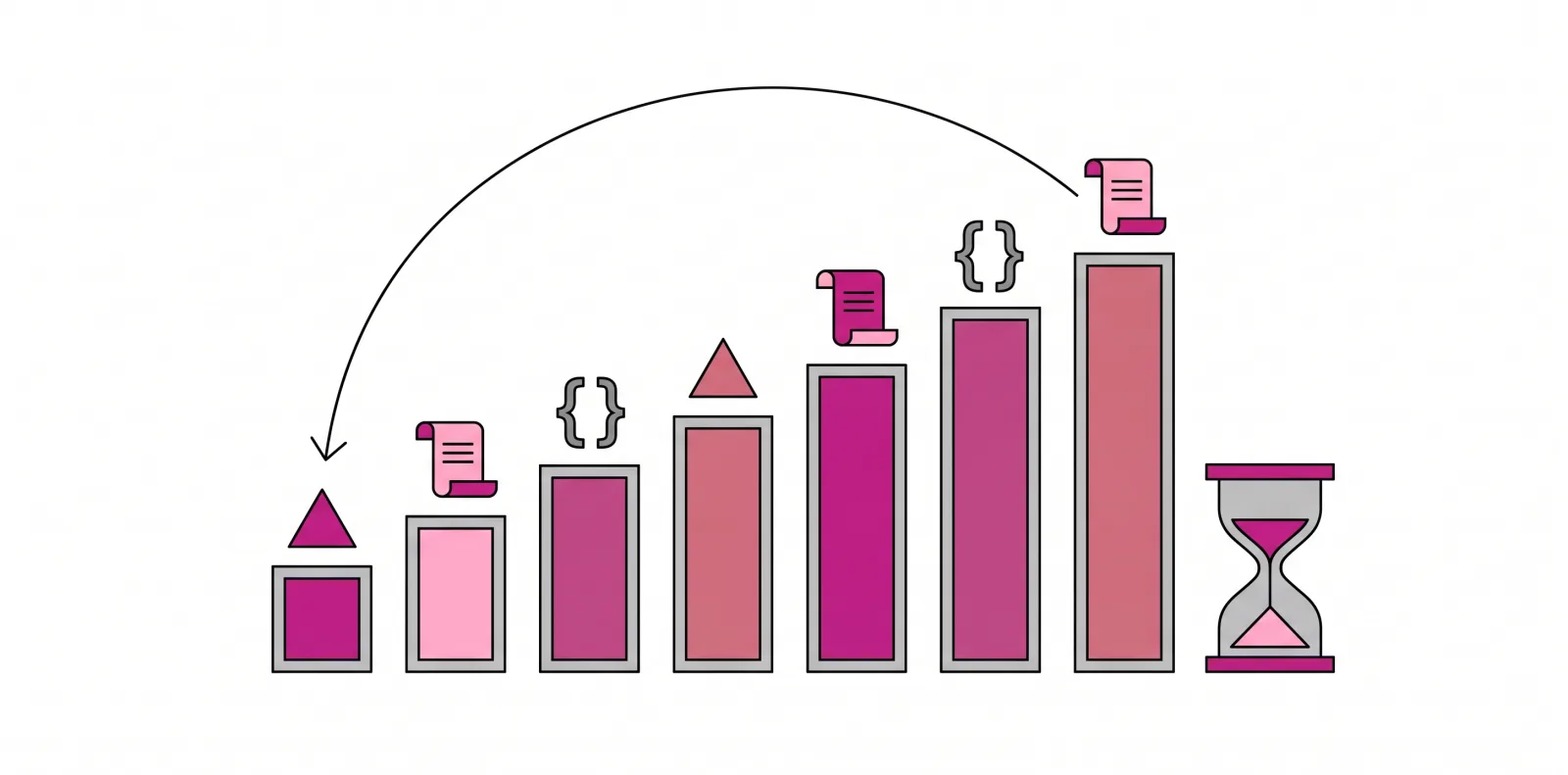
History and essay subjects: your problem is retrieval under time pressure#
You know more history than you can write in forty minutes. The exam tests the second thing.
Notes are not the bottleneck. Almost every student has enough notes. What they lack is practice converting a pile of knowledge into an argument quickly, under pressure, in response to a question they did not choose.
So write essays to time, and write them without your notes open. An essay written with tabs open is a research exercise. An essay written from memory is the exam.
Build an evidence grid instead of rereading: for each major theme, list the dates, figures, statistics and named historians you can deploy. Then test yourself on it from blank paper. The gaps that appear are the ones that would have appeared in the hall.
Planning is the highest-value drill in the last week because it is quick. You can plan six essays in the time it takes to write one, and planning is where most marks are won or lost. A strong plan with average prose beats brilliant prose with no argument.
Coding and computer science: the exam is not the IDE#
The thing that undoes strong programmers in exams is that the machine is gone. No autocomplete, no red underline, no run button, no stack trace. Students who have never written code on paper discover in the hall that a large share of their fluency was actually the editor's.
So write code by hand, on paper, with a pen, for at least two of the seven days. It feels absurd until the first time you cannot remember whether the method takes one argument or two.
Reimplement core algorithms from memory rather than reading them. If you can write a binary search from blank paper without an off-by-one error, you understand it. If you can only recognise a correct one, you do not.
Complexity analysis is high-yield and under-revised because it looks like something you either know or do not. It is learnable in an afternoon and appears on almost every paper.
For theory papers, treat proofs the way a history student treats essays: plan them, do not just read them.
The two habits that waste the most time in the final week#
Making new notes. Producing beautiful fresh summaries feels productive and rates as low utility in the research. If you are still writing notes with three days to go, you are avoiding testing yourself, because testing yourself is unpleasant and note-making is soothing.
Studying in order. Almost nobody needs to revise the syllabus evenly. Diagnose, then spend your time where the marks are missing. Skipping topics you already know is meant to feel wrong.
One more: group revision works when everyone is testing each other and fails when it becomes a group reread with snacks. Agree the format before you sit down.
Frequently asked questions#
Is seven days really enough? Seven days is enough to convert knowledge you already partly have into knowledge you can produce under pressure. It is not enough to learn a module from scratch. If you have genuinely never engaged with the material, prioritise ruthlessly: pick the topics most likely to appear and accept that you will leave some marks on the table.
How many hours a day should I do? Four to six hours of genuine retrieval practice is more than most people manage. Twelve-hour days are usually two hours of work and ten hours of sitting near work. Measure output, not duration.
Are flashcards worth it this late? Yes for anything factual: formulas, dates, definitions, syntax. No for anything requiring extended reasoning. Making flashcards for an essay question is a way to avoid writing the essay.
Should I use past papers if the format has changed? Yes. The value is in retrieval and timing, not in the specific questions. Check your department's sample paper for the new format, then use old papers for practice.
What about all-nighters before the exam? Sleep deprivation degrades recall, working memory and decision-making, which is most of what an exam tests. An all-nighter reliably costs more than the extra hours gain. If you are tempted, that is a signal you needed this plan a week earlier, not a reason to break it now.
How do I revise when I have three exams in five days? Diagnose all three first, in one day, then allocate by gap size rather than by exam order. Revising for the nearest exam first is intuitive and usually wrong, because the exam three days out is the one you can still change.
Does any of this work for open-book exams? More than you would think. Open-book exams punish students who plan to look things up, because finding and understanding material under time pressure is slow. Know the material, and use the book to check rather than to learn.